Objectively Pro-Planet

earth-shineEarth, that is.

Is there a consensus that this is the best planet? I mean, everyone talks about Mars and then there’s Jupiter. Saturn has those rings… but Earth? Do we care about it? Is it a question on familiarity? Are we bored with seven continents and the oceans maintaining certain levels, the tides and one moon? Asking for a friend.

The idea of a climate war should be the height of absurdity. But do we even register affront when news is reported this way? Maybe the media on other planets is also better.

the end of a sure beginning

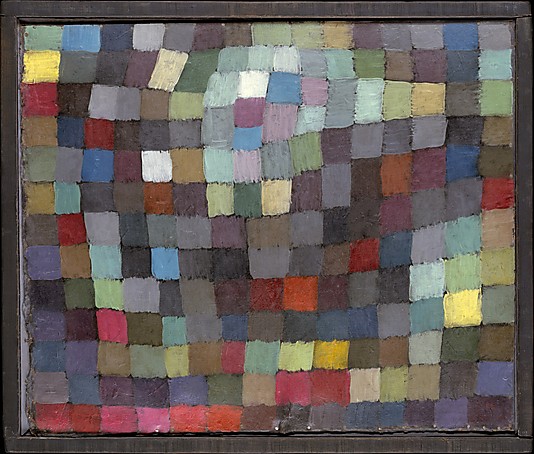
Klee_MayRest in peace, our dear Maya Angelou (1928-2014).

Here is Passing Time, from the 1975 anthology “Oh Pray My Wings Are Gonna Fit Me Well.”

Your skin like dawn
Mine like musk

One paints the beginning
of a certain end.

The other, the end of a
sure beginning.

Image: May Picture, by Paul Klee. 1925. Oil on cardboard. The Met has put a great deal of their collection online and I’ve been staring at this one for a while.

The Boutique Age of journalism

Not my phrase. From a podcast between Neil DeGrasse Tyson and Miles O’Brien where they cast CNN as the Wal-Mart of journalism:

They then discussed the notion of “fair and balanced” reporting, with O’Brien recounting an occasion in which he brought his producers a story that 95 percent of the scientific community agreed on. “Is it fair in a story about climate change,” O’Brien said, “which is clearly what I’m talking about, to do this journalistic convention of equal time for both sides. This is a huge mistake for journalism.”

Tyson agreed, saying that the conventional solution means that you get “one person to represent that 5 percent, but then he gets 50 percent of your time.”

They went on to discuss the use of a Jessica Yellin hologram during the 2008 election, which is not that far off from my assertion that actors will begin to be portrayed by avatars, instead of humans, in the not to distant future.

Dystopia? How would we know?

The larger curve

I love this stuff. From Henry David Thoreau‘s Journal, July 18, 1851:

Here I am thirty-four years old, and yet my life is almost wholly unexpanded. How much is in the germ! There is such an interval between my ideal and the actual in many instances that I may say I am unborn. There is the instinct for society, but no society. Life is not long enough for one success. Within another thirty-four years that miracle can hardly take place. Methinks my seasons revolve more slowly than those of nature; I am differently timed. I am contented. This rapid revolution of nature, even of nature in me, why should it hurry me? Let a man step to the music which he hears, however measured. Is it important that I should mature as soon as an apple tree? aye, as soon as an oak? May not my life in nature, in proportion as it is supernatural, be only the spring and infantile portion of my spirit’s life? Shall I turn my spring to summer? May I not sacrifice a hasty and petty completeness here to entireness there? If my curve is large, why bend it to a smaller circle? My spirit’s unfolding observes not the pace of nature. The society which I was made for is not here. Shall I, then, substitute for the anticipation of that this poor reality? I would [rather] have the unmixed expectation of that than this reality. If life is a waiting, so be it. I will not be shipwrecked on a vain reality. What were any reality which I can substitute? Shall I with pains erect a heaven of blue glass over myself, though when it is done I shall be sure to gaze still on the true ethereal heaven far above, as if the former were not, – that still distant sky o’er-arching that blue expressive eye of heaven? I am enamored of the blue-eyed arch of heaven.

The ruin that crowns the rocks

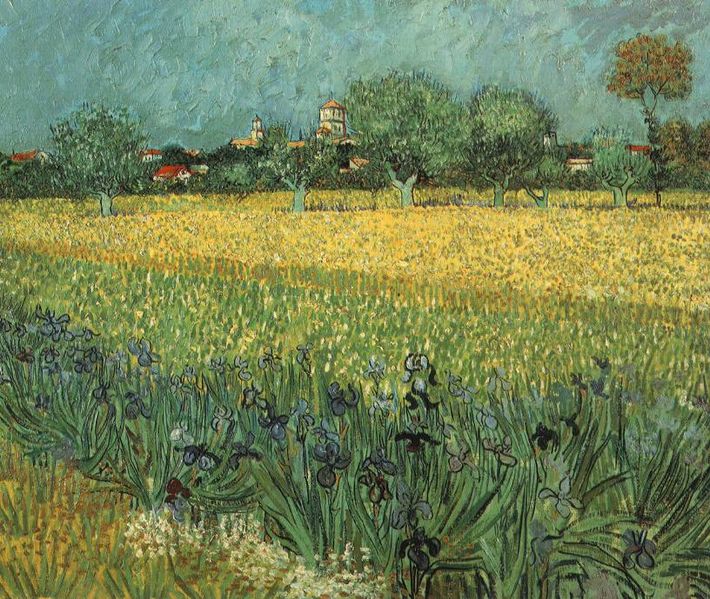
VanGogh-View_of_Arles_with_IrisesFrom Volume II of the Complete Letters of Vincent Van Gogh, Vincent writing to his brother Theo from Arles, 26 May 1888:

My dear Theo,

I read an announcement in L’Intransigeant that there’s going to be an exhibition of the Impressionists at Durand-Ruel — there’ll be some works by Caillebotte —I’ve never seen anything of his, and wanted to ask you to write and tell me what they’re like — there are certainly other noteworthy things too.

I sent you some more drawings today, and I’m adding two more. They’re views taken from a rocky hill from which you can see in the direction of the Crau (an area from which a very good wine comes), the town of Arles and in the direction of Fontvieille. The contrast between the wild and romantic foreground — and the broad, tranquil distant prospects with their horizontal lines, shading off until they reach the chain of the Alpilles — so famous for the great feats of climbing of Tartarin, P.C.A., and the Alpine Club. This contrast is very picturesque.

The two drawings that I’m now adding afterwards will give you an idea of the ruin that crowns the rocks. But is it worth the trouble of making frames for this Dordrecht exhibition? I find it so silly and I’d prefer not to be part of it.

I prefer to believe that Bernard or Gauguin will exchange drawings with us in which the Dutch will see nothing.

Have you met the Dane Mourier-Petersen — he’ll have brought you another two drawings as well.

He studied to be a doctor, but I suppose he was discouraged in that by the student life, discouraged by both his pals and his professors. He never said anything to me about it, though, except that he once declared: ‘but doctors kill people’.

When he came here he was suffering from a nervous condition that came from the strain of the examinations. How long has he been doing painting — I don’t know — he’s certainly made little progress as a painter, but he’s good as a pal and he looks at people and often judges them very accurately. Could there be a possible arrangement whereby he could come to live with you? As far as intelligence goes, I think he’d be far more preferable to that Lacoste, of whom I don’t think highly, I don’t know why. You’ve absolutely no need of 6th-rate Dutchmen or worse, who when going back to their country do nothing but say and do idiotic things. A dealer in paintings is, unfortunately, more or less a public figure.

Anyway, there’s no serious harm done.

The Swede is from a good family, he has order and regularity in his means of support, and as a man he makes me think of those characters Pierre Loti creates11. For all that he’s phlegmatic, he has a good heart.

I plan to do a lot more drawing. It’s already jolly hot, I can assure you.

I must add an order for colours to this letter — however, if you’d prefer not to get them immediately I’d do a few more drawings and wouldn’t lose anything by it.

I’ll also divide the order into two according to what would be more urgent or less.

What’s always urgent is to draw, and whether it’s done directly with a brush, or with something else, such as a pen, you never do enough.

I’m trying now to exaggerate the essence of things, and to deliberately leave vague what’s commonplace.

I’m delighted that you’ve bought the book on Daumier — but if you could add to that by buying some more of his lithographs that would be absolutely good — because in the future Daumiers won’t be easy to get hold of.

How’s your health, have you seen père Gruby again? I’m inclined to believe he exaggerates your heart condition a bit, to the detriment of the need to treat you rigorously for your nervous system. Well, he’ll certainly realize it as you follow his treatment; with Gruby you’ll last, but unfortunately for us père Gruby himself won’t last, because he’s getting old and when we need him the most he won’t be there any more.

I’m thinking more and more that we shouldn’t judge the Good Lord by this world, because it’s one of his studies that turned out badly. But what of it, in failed studies — when you’re really fond of the artist — you don’t find much to criticize — you keep quiet. But we’re within our rights to ask for something better. We’d have to see other works by the same hand though. This world was clearly cobbled together in haste, in one of those bad moments when its author no longer knew what he was doing, and didn’t have his wits about him. What legend tells us about the Good Lord is that he went to enormous trouble over this study of his for a world. I’m inclined to believe that the legend tells the truth, but then the study is worked to death in several ways. It’s only the great masters who make such mistakes; that’s perhaps the best consolation, as we’re then within our rights to hope to see revenge taken by the same creative hand. And — then — this life — criticized so much and for such good, even excellent reasons — we — shouldn’t take it for anything other than it is, and we’ll be left with the hope of seeing better than that in another life. Handshake to you and to Koning.

Ever yours,

Vincent

I hope to have news from you tomorrow, otherwise I’d be in quite a tight corner as I only have money left for tomorrow, Sunday.
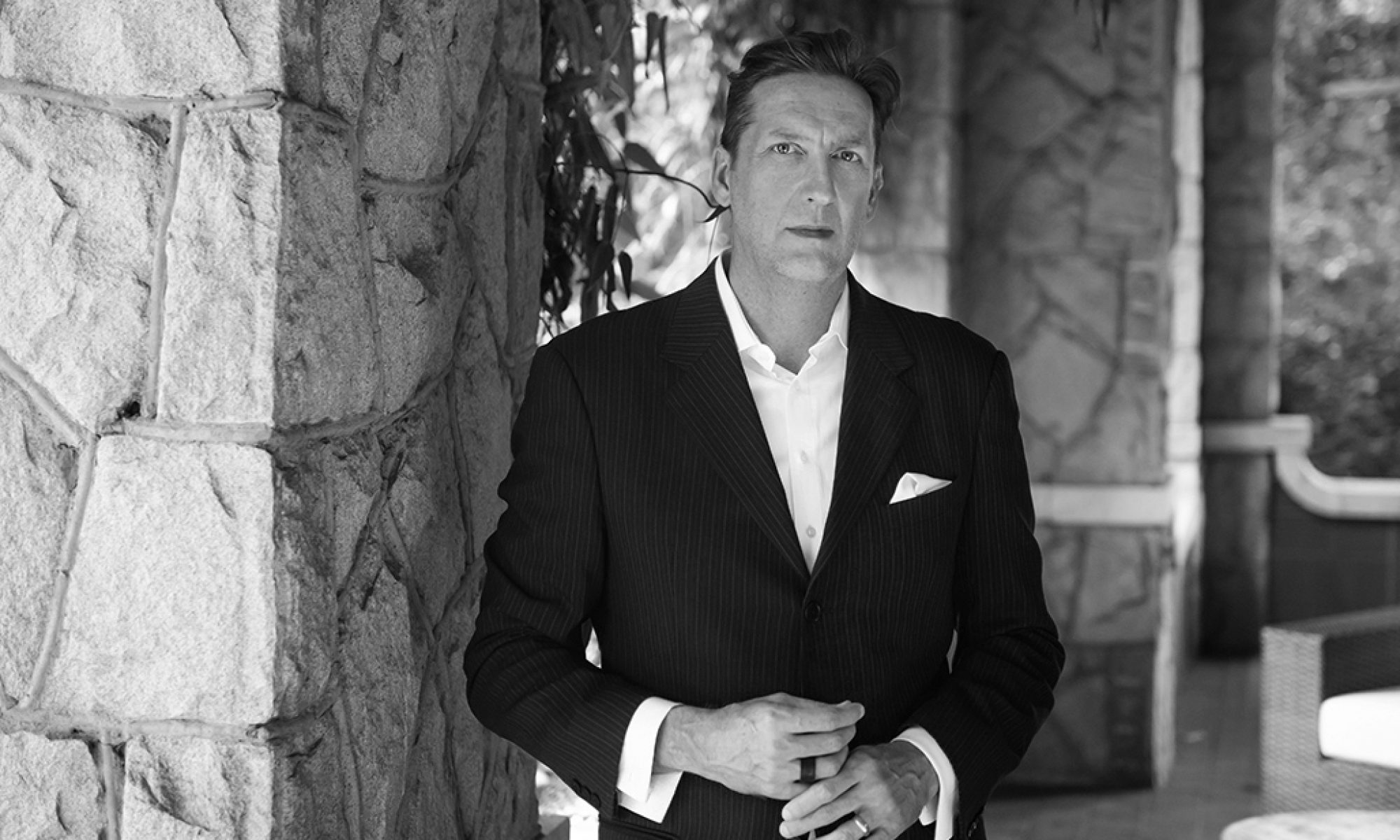

Image: View of Arles with Irises, May 1888, oil on canvas, Vincent van Gogh

Paying energy companies to arrest climate change

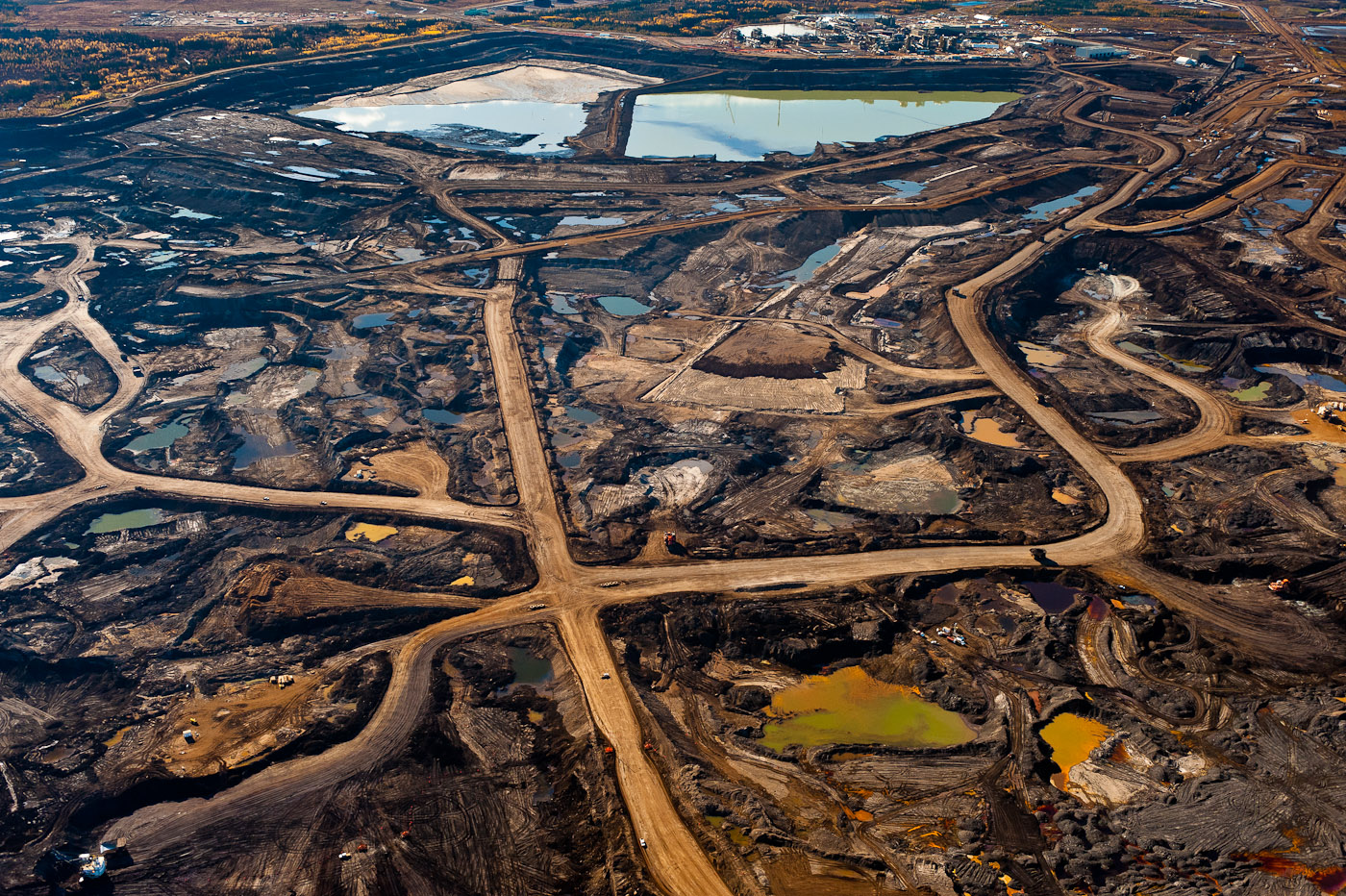
Tar Pit #3In a piece about a new essay by MSNBC host and Nation editor-at-large Chris Hayes, an interesting view on the climate crisis and a new notion (to me) about what might be required:

Drawing off of an earlier essay written by climate activist and expert Bill McKibben — as well as the work of the Carbon Tracker Initiative — Hayes notes that the total amount of carbon in the proven fossil fuel reserves of the world’s energy corporations and fossil fuel-producing countries (2,795 gigatons) vastly exceeds the amount scientists say we can release into our atmosphere by the middle of this century before risking catastrophic climate change (565 gigatons). And what makes this disparity even more alarming is the fact that these carbon reserves are worth an estimated $20 trillion. If we’re going to save the planet, in other words, then a lot of powerful interests in the energy sector will have to leave a lot of money on the table.

Taking into consideration the enormous amount of wealth that will have to be nullified if climate activists are to achieve their goal, Hayes draws an intriguing parallel between the modern divestment movement and the abolitionist movement of the 19th century. While he makes pains to emphasize that he doesn’t see people in the energy industry as morally equivalent to slaveholders, Hayes argues that the only precedent in American history of a political group relinquishing so much wealth is the emancipation of the South’s slaves in the 1860s — an achievement that was reached in part through a hideous Civil War.

So… are we going to have to compensate energy companies not to take more carbon out of the ground? While not as crazy as you might think (it’s in some way crazier), this gambit has some historical analogs in the immediate pre-Civil war that were also seen as desperate, last gasp efforts. And abandoned. What the suggestions say about us and craven lack of ability to deal with our own planetary suicidal tendencies, they say rather loudly. This type of self-extortion should be reserved for dystopian sci-fi adventures. And the [horrible] thing is, I’m not at all certain that we shouldn’t do it!

Paying companies for not making money from poisoning us all. Do not attempt to think about this for extended periods, or depression may occur.

Image: Alberta Tar Sands, via Occupy.com

May your Neck be Hung with the Beads of Various Gods

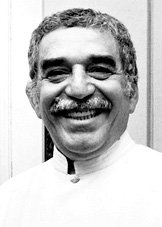
marquezI wanted to put this up in memoriam, but I had to find the book first. I finally did. Of Love and Other Demons isn’t one of the big ones, but it’s great nonetheless. To wit:

One morning, during a late rainstorm and under the sign of Sagittarius, Sierva Maria de Todos los Angeles was born, premature and puny. She looked like a bleached tadpole, and the umbilical cord wrapped around her neck was strangling her.

“It’s a girl,” said the midwife. “But it won’t live.”

That was when Dominga de Aviento promised her saints that if they granted the girl the grace of life, her hair would not be cut until her wedding night. No sooner had she made the promise than the girl began to cry. Dominga de Adviento sang out in jubilation: “She will be a saint!” The Marquis, who saw her for the first time when she was bathed and dressed, was less prescient.

“She will be a whore,” he said. “If God gives her life and health.”

The girl, daughter of an aristocrat and a commoner, had the childhood of a fondling. Her mother hated her from the moment she nursed her for the first and only time, and the refused to keep the baby with her for fear she would kill her. Dominga de Adviento suckled her, baptized her in Christ, and consecrated her to Olokun, a Yoruban deity of indeterminate sex whose face is presumed to be so dreadful it is seen only in dreams, and always hidden by a mask. Transplanted to the courtyard of the slaves, Sierva Maria learned to dance before she could speak, learned three African languages at the same time, learned to drink rooster’s blood before breakfast and to glide past Christians unseen and unheard, like an incorporeal being. Dominga de Adviento surrounded her with a jubilant court of black slave women, mestiza maids, and Indian errand girls, who bathed her propitiatory waters, purified her with the verbena of Yemaya, and tended the torrent of hair, which fell to her waist by the time she was five, as if it were a rosebush. Over time the slave women hung the beads of various gods around her neck, until she was wearing sixtenn necklaces.

Thank you, dear Sir. Safe travels.

On not cutting emissions immediately

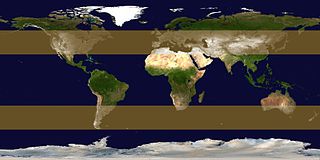
Extratropical_formation_areasOr, as we say around the schoolyard, a 2° Celsius rise in global temperatures. Or maybe not:

“At some point, scientists will have to declare that it’s game over for the 2°C target,” says Oliver Geden, a climate policy analyst at the German Institute for International and Security Affairs. “But they haven’t yet. Because nobody knows what will happen if they call this thing off.” The 2°C target was one of the few things that everyone at global climate talks could agree on. If the goal turns out to be impossible, people might just stop trying altogether.

Recently, then, some scientists and policymakers have been taking a fresh look at whether the 2°C limit is still the best way to think about climate change. Is this simple goal actually making it harder to prepare for the warming that lies ahead? Is it time to consider other approaches to climate policy? And if 2°C really is so dangerous, what do we do when it’s out of reach?

The best way to think about climate change – that is quite the challenge. What we can tolerate, what the remaining flora and fauna can tolerate, what does tolerate mean? how hot is too hot? These are but the tip of the iceberg of stupid questions, because if we’re asking them, we are looking for ways to put off doing anything about the reasons the temperatures are going up. In the meantime, evidence is mounting that cutting carbon emissions makes economic sense, smashing the most constant rationale for just sitting there (in traffic). Start by decarbonizing some part of your life today and begin to work out from there. Think of it as freeing yourself from something, if you have to. Take some individual steps, and don’t worry about what China or India isn’t doing. As the article points out, if our body temperature goes up 2°C, we have a significant fever.

Image: extratropical cyclone formation areas, between approximately 30° and 60° N/S latitude, via wikimedia commons.

Brave Old Monde

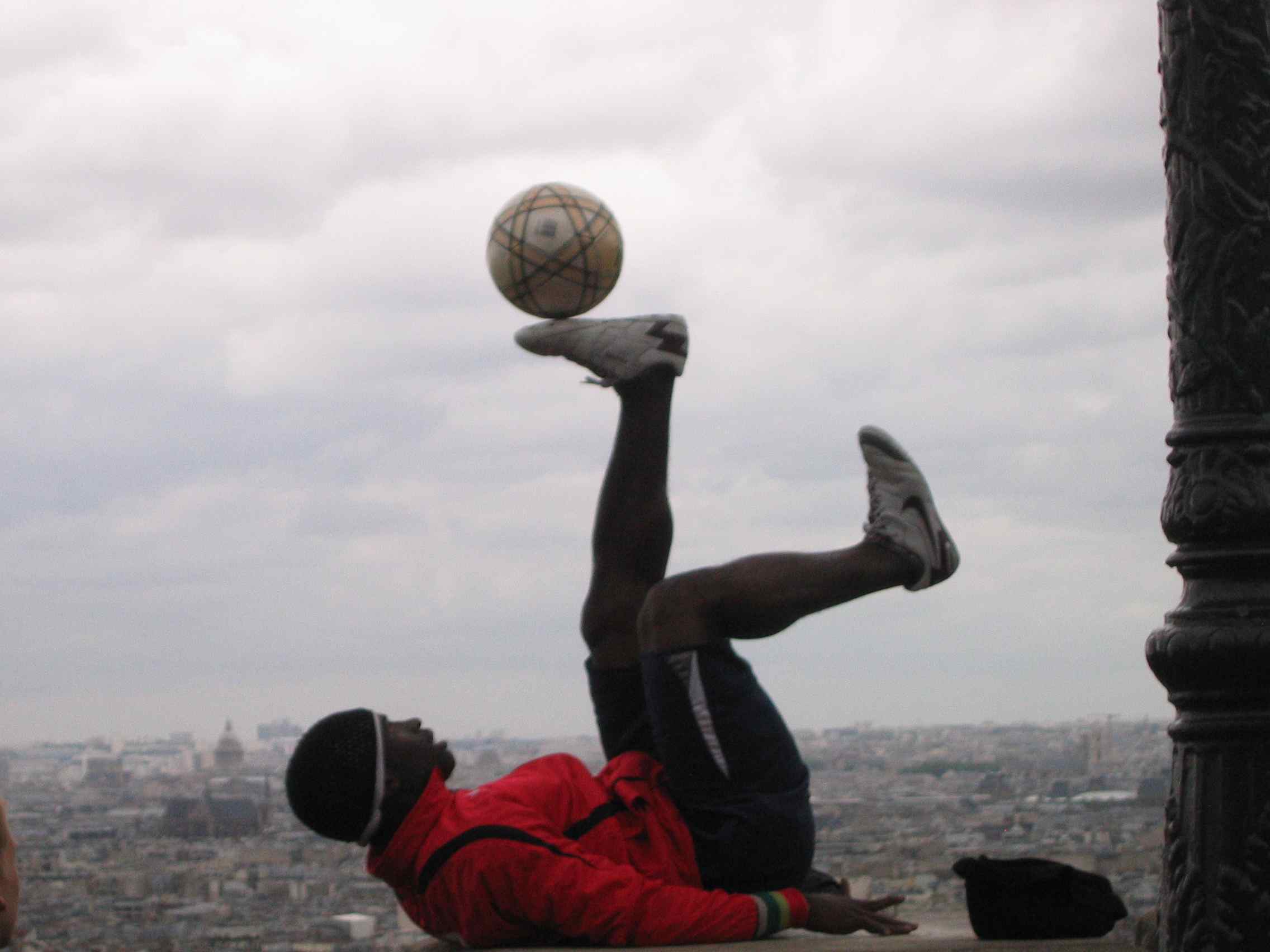
Man with futbol_s'coeurSo… more income, more money, should mean we could work less, right. So… what happened? People at every notch on the spectrum are working more than ever, and feel like they are. The marginal utility of more and more money notwithstanding, we have affirmed the precept that our work equals our worth. Full stop. What about all the things we are supposedly working for?

Just in case you weren’t jealous enough of the French already, what with their effortless style, lovely accents and collective will to calorie control, they have now just banned bosses from bothering them once the working day is done.

Well, sort of. Après noticing that the ability of bosses to invade their employees’ home lives via smartphone at any heure of the day or night was enabling real work hours to extend further and further beyond the 35-hour week the country famously introduced in 1999, workers’ unions have been fighting back. Now employers’ federations and unions have signed a new, legally binding labour agreement that will require employers to make sure staff “disconnect” outside of working hours.

deal, which affects around 250,000 employees in the technology and consultancy sectors (including the French arms of Google, Facebook, Deloitte and PwC), employees will also have to resist the temptation to look at work-related material on their computers or smartphones – or any other kind of malevolent intrusion into the time they have been nationally mandated to spend on whatever the French call la dolce vita.

Easy for the Guardian to be cheeky about this, but some acknowledgement of just how out of whack things have become – with constant access to technology – it’s not if you want to be connected, plugged-in, whatever. You are. What now?

The idea of being without four bars (Bukowski: “They got the wrong kind of bars in this place.”) or wifi seems so quaint as to be misplaced and perhaps even inappropriate. What’s left of your life? What does leisure time even mean? Let me look it up on freakingcrazylifeapedia.

Of Thermoclines and Open Spaces

The sudden temperature change between the warmish surface water of the ocean and colder deeper zone is known as the thermocline. The thermocline effects the way sounds move through water (the warmer the faster), so sound waves can hit it and bounce all kinds of weird directions. The phenomenon is connected to detections of a pulse signal from Malaysia Air Flight 370, making it still hard to pinpoint, even though the black box signals are an encouraging lead.

But I received a signal of different kind, similarly bouncing, a couple of days ago during a visit to Boston. That’s Boston Common above, a stunning example of devoted public space in a city with space at a premium. While not the biggest or perhaps best such park in the world, it makes Boston a proper city – considerate of its population as a place for people to breath, sit, walk, hold hands, fly a kite, propose. The Common makes the urban density not only more appealing, but workable and livable. It might have 99 other problems but those aren’t one.

Image: author photo(s) clumsily spliced using fancy software.