Money and How You Spend It

There was a weird point about ‘political capital’ George W. Bush kept making after he won the 2004 election: he had it (via beating Kerry) and he was going to spend it. A non-sensical notion outright, talking about political capital this way always seemed like one of those things he didn’t understand – to which we can now add painting – whose utilization in this case was not only inappropriate but ultimately futile. Recall that he was going to used his to privatize Social Security. Amazing.

For some reason this comes to mind with the news that the half-billion dollars spent in anti-Obamacare advertising has actually led to increased enrollments in the program.

Divestment is almost political capital in reverse; you have little or no political momentum whatsoever, and so you resort to your next best, perfectly legitimate weapon in a capitalist system  becomes making a moral distinctions about how you spend your money. It might be one of the only uses of morality relevant in a capitalist system, but we’ll leave that to Adorno. The Unitarian Universalist Association, however, have decided to exercise their full rights:

An overwhelming number of the 2,000 delegates present at the meeting voted to approve the resolution. But some did raise concerns about the influence the divestment movement actually has on companies. “Some people said that disinvestment is ineffective because it doesn’t actually affect companies,” Tim Brennan, Chief Treasurer and Chief Financial Officer, told us. “But it’s not about affecting the companies as much as it is about making a strong moral statement.

This a very political use of capital. Identifying Carbon Tracker 200 companies is an aggressive attempt to inform and speed the divestment movement. Just like physicians and insurance companies were within their rights to spend in the service of protecting the status quo, so to are groups seeking to upend the fossil fuel economy. Will it work? Can the moral case be made? Past attempts can be instructive.
 

Quitting the Gang

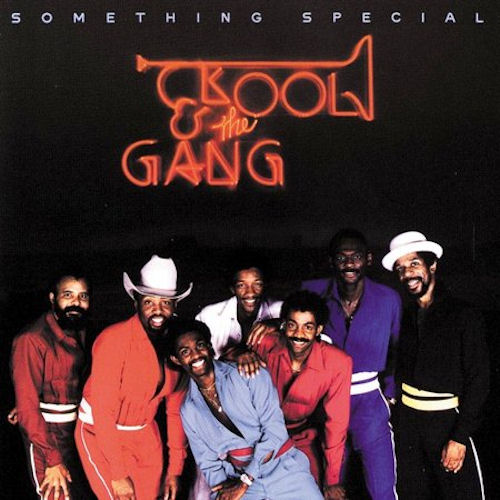
kool_and_the_gangsomethin__specialYou may wonder, as I do, why and how conservatives (Republicans… however you choose to respectfully refer to them) can continue to fuel climate change denial. Evidence suggests that the house-of-cards policy package ( low taxes, drill everywhere, no regulations) they support cannot admit one such reality without a torrent of others coming into the discussion and justification for their political existence vanishing overnight. A pathetic justification, it also makes the most sense.

However, there are conservative pockets drawing pretty ‘reform conservative’ stick figures in the wet cement. As the concrete dries, so do their creaky explanations evaporate. Especially when it comes to climate change, one extraordinarily sawn limb gets walked out on, and it’s really something. A crazy metaphor involving an insurance salesman at your door is proffered to explain why now is still not the time to do anything about carbon emissions… caveat lector. But a rejoinder is offered in the comments that is quite instructive:

I generally think you show a good appreciation for the explanatory power of metaphor and incentives, but this piece is a disappointment. Your insurance policy description is fundamentally flawed: insurance exists to refund some of the losses that will indisputably occur if a low-probability event takes place. Changing our energy consumption and production habits is an action designed to reduce the probability of the catastrophic events occurring. Let’s think about a high-pollution lifestyle as similar to gang membership in the inner city, a popular conservative issue. It may cost a gang member real present resources and satisfaction to quit the gang. It may not even improve the gang member’s chance of not being shot, unless others also stop the violence. But the gang member has no moral claim on others to cease their violence unless he quits as well. And if he continues his present lifestyle he is unlikely to live a healthy or successful life. Based on your recommendation, if fewer of his friends than he expected were killed last year even though he didn’t quit the gang, and he could really use some drug money now, he should stick with it- after all, it’s uncertain future benefit versus known present costs.

People around the world are losing their homes and dying while we argue about whether or not the causality is strong enough, or what magnitude of impact we’re trying to avert.

Lying or stupid was a 2004-vintage take on why Republicans said or supported certain things. Perception certainly evolves and as they get closer and closer to honesty, the trend horizon  collapses on available policy prescriptions. That is intentional, and candidates with (R) should rewarded for learning how to run out the clock for the sake of propping up their ideology. One prize we might suggest is election losses, constant and everywhere.

Image: One of my very favorite bands and records of 1981. Never quit this gang.

Paying energy companies to arrest climate change

Tar Pit #3In a piece about a new essay by MSNBC host and Nation editor-at-large Chris Hayes, an interesting view on the climate crisis and a new notion (to me) about what might be required:

Drawing off of an earlier essay written by climate activist and expert Bill McKibben — as well as the work of the Carbon Tracker Initiative — Hayes notes that the total amount of carbon in the proven fossil fuel reserves of the world’s energy corporations and fossil fuel-producing countries (2,795 gigatons) vastly exceeds the amount scientists say we can release into our atmosphere by the middle of this century before risking catastrophic climate change (565 gigatons). And what makes this disparity even more alarming is the fact that these carbon reserves are worth an estimated $20 trillion. If we’re going to save the planet, in other words, then a lot of powerful interests in the energy sector will have to leave a lot of money on the table.

Taking into consideration the enormous amount of wealth that will have to be nullified if climate activists are to achieve their goal, Hayes draws an intriguing parallel between the modern divestment movement and the abolitionist movement of the 19th century. While he makes pains to emphasize that he doesn’t see people in the energy industry as morally equivalent to slaveholders, Hayes argues that the only precedent in American history of a political group relinquishing so much wealth is the emancipation of the South’s slaves in the 1860s — an achievement that was reached in part through a hideous Civil War.

So… are we going to have to compensate energy companies not to take more carbon out of the ground? While not as crazy as you might think (it’s in some way crazier), this gambit has some historical analogs in the immediate pre-Civil war that were also seen as desperate, last gasp efforts. And abandoned. What the suggestions say about us and craven lack of ability to deal with our own planetary suicidal tendencies, they say rather loudly. This type of self-extortion should be reserved for dystopian sci-fi adventures. And the [horrible] thing is, I’m not at all certain that we shouldn’t do it!

Paying companies for not making money from poisoning us all. Do not attempt to think about this for extended periods, or depression may occur.

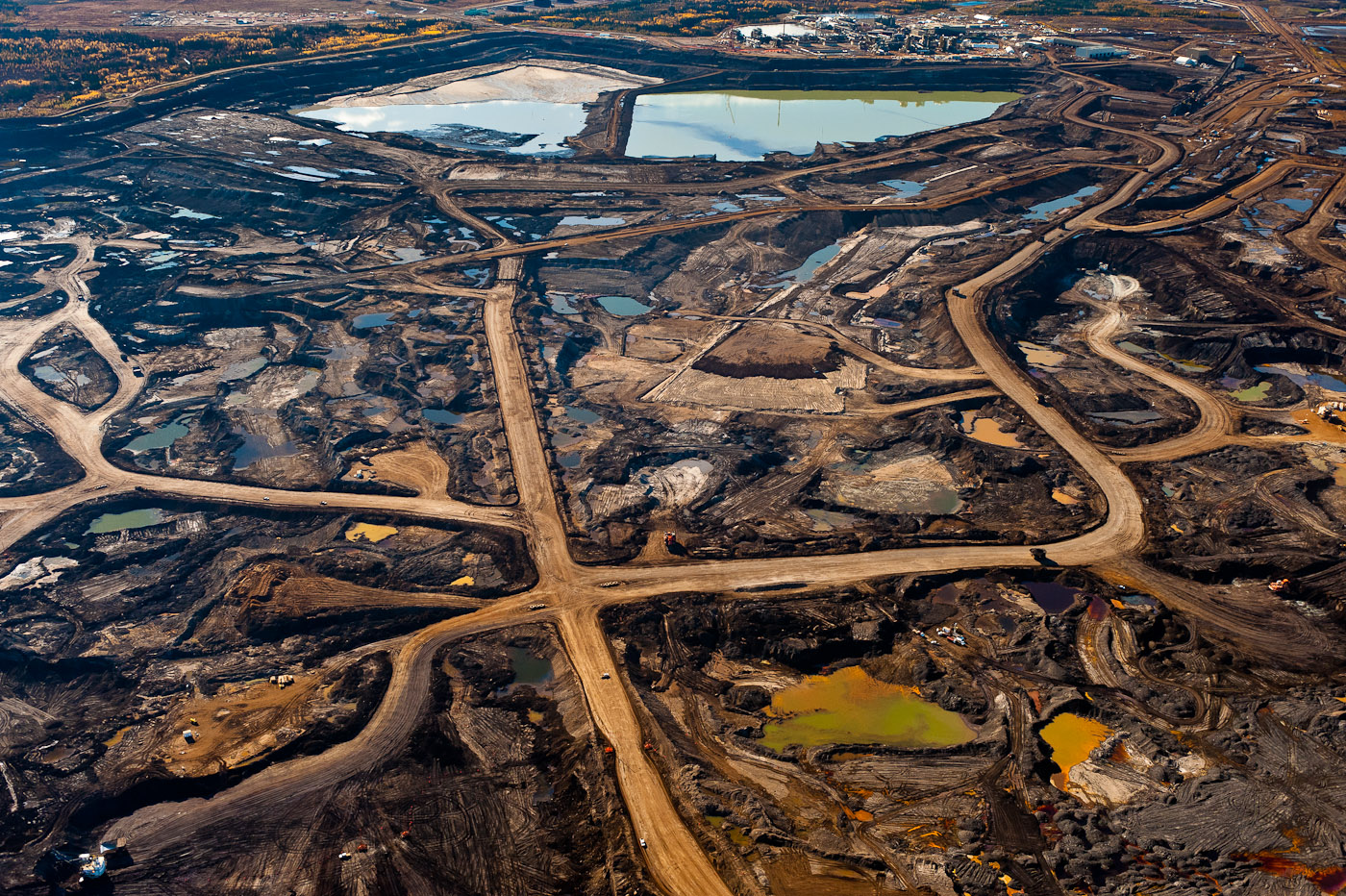
Image: Alberta Tar Sands, via Occupy.com

On not cutting emissions immediately

Extratropical_formation_areasOr, as we say around the schoolyard, a 2° Celsius rise in global temperatures. Or maybe not:

“At some point, scientists will have to declare that it’s game over for the 2°C target,” says Oliver Geden, a climate policy analyst at the German Institute for International and Security Affairs. “But they haven’t yet. Because nobody knows what will happen if they call this thing off.” The 2°C target was one of the few things that everyone at global climate talks could agree on. If the goal turns out to be impossible, people might just stop trying altogether.

Recently, then, some scientists and policymakers have been taking a fresh look at whether the 2°C limit is still the best way to think about climate change. Is this simple goal actually making it harder to prepare for the warming that lies ahead? Is it time to consider other approaches to climate policy? And if 2°C really is so dangerous, what do we do when it’s out of reach?

The best way to think about climate change – that is quite the challenge. What we can tolerate, what the remaining flora and fauna can tolerate, what does tolerate mean? how hot is too hot? These are but the tip of the iceberg of stupid questions, because if we’re asking them, we are looking for ways to put off doing anything about the reasons the temperatures are going up. In the meantime, evidence is mounting that cutting carbon emissions makes economic sense, smashing the most constant rationale for just sitting there (in traffic). Start by decarbonizing some part of your life today and begin to work out from there. Think of it as freeing yourself from something, if you have to. Take some individual steps, and don’t worry about what China or India isn’t doing. As the article points out, if our body temperature goes up 2°C, we have a significant fever.

Image: extratropical cyclone formation areas, between approximately 30° and 60° N/S latitude, via wikimedia commons.

Solar Power Projects vs. Casinos

As public investments go, there’s one and then there’s the other. Let’s compare this:

Minnesota soon could see at least a sevenfold expansion of solar power.

In an unprecedented ruling, a judge reviewing whether Xcel Energy should invest in new natural gas generators vs. large solar power arrays concluded Tuesday that solar is a better deal.

If the finding by Administrative Law Judge Eric Lipman is upheld by the state Public Utilities Commission (PUC), Edina-based Geronimo Energy plans to build about 20 large solar power arrays on sites across Xcel’s service area at a cost of $250 million.

“It says solar is coming in a big way to the country and to Minnesota,” Geronimo Vice President Betsy Engelking said of the ruling.

Geronimo’s Aurora Solar Project would receive no state or utility subsidies, but would qualify for a federal investment tax credit. Engleking said it is the first time in the United States that solar energy without a state subsidy has beaten natural gas in an official, head-to-head price comparison.

“The cost of solar has come down much faster than anyone had anticipated,” she said in an interview. “This is one of the reasons solar is going to explode.”

to this:

Revel has been, to put it lightly, a disaster. Originally imagined as more of a resort than a casino, Revel cost $2.4 billion to open. Even before Revel opened it was considered a high risk investment in a city already on the decline due to gambling competition from Delaware and Pennsylvania. Progressives opposed state investments in the project which came during the same time Governor Christie was cutting education and healthcare services for women. Christie invested $261 million of New Jersey tax money via credits as Morgan Stanley backed out of Revel fearing it was a loser.

Not soon after Revel opened it became clear the resort idea was as dumb as many thought it was and “Revel Atlantic City” went into bankruptcy. The bankruptcy put the State of New Jersey on the hook as Revel announced that the casino’s value had dropped from $2.4 billion to $450 million. Ouch.

So these arguments about public infrastructure and investment as economic development are all just gas baggery if actually beneficial projects aren’t part of the calculus. And even that argument aside, solar’s ascendancy seems clear. But we shouldn’t leave it to the side at all – that’s the point. Hydrocarbon energy production will begin to loses its privileged place regarding public support (and hopefully casinos as well) and the howling will be intense. But make no mistake about how we’ve been explicitly supporting senseless gambling/retail fiascos for so long. A turn toward making sense might someday actually feel like it does.

Operation Free

lavender_windmillIt’s the best use of either word I’ve seen or heard in a while:

Ohio’s clean energy law has come under attack by a lawmaker affiliated with the American Legislative Exchange Council (ALEC), the group funded by fossil fuel companies, corporate interests and the ultra-conservative billionaire Koch brothers — but local vets are taking a stand.

Despite failing in its previous effort to repeal any state renewable energy standards, ALEC convened for its 40th annual meeting in late July and leaked documents show the organization has no intention of backing down from its attacks on popular clean energy laws.

But in Ohio, a group of 2,000 veterans, military family members and supporters is pushing back against Seitz’s effort and other bills aimed at weakening Ohio’s renewable energy standard. Zach Roberts, a National Guard veteran and the Ohio director of Operation Free, a national campaign that gathers veterans and national security experts to advocate for clean energy policies, told Climate Progress that S.B. 58 would, “radically change the state’s clean energy standard,” and it ultimately “weakens Ohio’s energy security.”

The law in question, passed in 2008, requires Ohio to generate 25% of its electrical supply through alternative energy sources by 2025. Half of that must be from renewables and 0.5 percent specifically from solar. Is that too much? What are goals, enforced by law in this case, designed to achieve? A perfunctory ratio would have been 5%; a quarter is going to cause some pain but show people (and companies) how to move forward. Freedom, indeedom.

Image: Author photo, not from Ohio but just a bit east of that.

Good faith vs. Bad

Sometimes, within the context of a supposed competition and especially one between competing ideas, it’s instructive to remember that the two sides might not even be playing the same game. One example.

Students at Harvard and other universities are agitating for the university to divest themselves of investments in the fossil fuel industry. Last week the President of Harvard Drew Faust issued a statement saying thanks but no thanks harvard will no do no such thing. Here’s a response from Divinity School student and climate activist Tim DeChristopher (who served a two-year federal sentence for civil disobedience):

Drew Faust seeks a position of neutrality in a struggle where the powerful only ask that people like her remain neutral. She says that Harvard’s endowment shouldn’t take a political position, and yet it invests in an industry that spends countless millions on corrupting our political system. In a world of corporate personhood, if she doesn’t want that money to be political, she should put it under her mattress. She has clearly forgotten the words of Paolo Freire: “Washing one’s hands of the conflict between the powerful and powerless means to side with the powerful, not to remain neutral.” Or as Howard Zinn put succinctly, “You can’t be neutral on a moving train.”

She touts all the great research on climate change that is done at Harvard, but she ignores the fact that the fossil fuel industry actively works to suppress or distort every one of those efforts. To seriously suggest that any research will solve the climate crisis while we continue to allow the fossil fuel industry to maintain a stranglehold on our democracy is profoundly naive.

Emphasis mine. One side is trying to convince the public that climate change is real, the other is working, and largely succeeding, at stifling debate. Climate change denialists aren’t even that – they can’t and won’t debate the issue on the merits, and the public should take note. What they choose to do is attack the open system whereby society can debate what is happening to it and decide what to do. This course is at least as pernicious as the effects of the dirty energy of which it is service, as it provides for a comprehensive anti-democratic attack on the objective of self-government itself.

Forever changing

the climate.

It seems that potential new Shale oilfields in Argentina, Russia and Algeria also hold giant reserves of expensive, hard-to-get, difficult-to-refine, sludge to pout in our gas tanks.

Analysis by IHS published on Tuesday morning suggests fields including the Vaca Muerta of Argentine, the Bazhenov shale of Siberia and the Silurian shales of north Africa could produce more than the Bakken shale of North Dakota and the Eagle Ford of Texas.

However, the research group’s findings also show that costs for extracting “tight oil” reserves, held in shales and other challenging rocks, are significantly higher in other countries than in North America, suggesting they will need a higher oil price to be commercially viable.

Choice of Words

We all make these choices constantly, but the terms and context of the way people describe certain things always bares some unpacking.

Example: Canada’s natural resources minister, Joe Oliver, in Washington, D.C., trying to drum up support for the Keystone XL pipeline and criticizing NASA’s James Hansen for the dramatic terms he uses to frame opposition to the project

In Oliver’s view, however, the scientist has had no business to keep speaking out as he has. “He was the one who said four years ago that if we go ahead with development of the oil sands it’s game over for the planet,” Oliver told the audience at the Centre for Strategic and International Studies. “Well, this is exaggerated rhetoric. It’s frankly nonsense. I don’t know why he said it but he should be ashamed of having said it.”

It’s not clear why Oliver was so vehement. The minister launched his attack on Hansen just 48 hours after a report from the Environmental Protection Agency essentially reaffirmed the climate scientist’s concerns about the development of the tar sands.

Emphasis mine, and the words before the quote are the Guardian‘s, but this whole idea about whose business it is to do what is, um… interesting. People opposed to the further opening of yet another carbon spigot, one that could also accidentally poison the aquifer beneath the world’s breadbasket, have no business using vehement rhetoric to emphasize their opposition. But fossil oil interests are perfectly within their rights when they assure the public that this project will create jobs, is environmentally sound and will decrease gas prices.

All of these claims are demonstrably false. What’s really revealing and worth looking into is why the First Nations are opposed to the pipeline – after all, it would be much easier for TransCanada, and closer to China, if they just went west with tar sands crude to Vancouver.

As much as we are surrounded by euphemism and Orwellian doublespeak, people still reveal just what they mean by the words they use.

The 2nd Law of Thermodynamics and change

Our societies are built to move slowly, says Bill McKibben in the Guardian. And that’s the difficulty with climate change:

We’re talking about a fight between human beings and physics. And physics is entirely uninterested in human timetables. Physics couldn’t care less if precipitous action raises gas prices, or damages the coal industry in swing states. It could care less whether putting a price on carbon slowed the pace of development in China, or made agribusiness less profitable.

Physics doesn’t understand that rapid action on climate change threatens the most lucrative business on Earth, the fossil fuel industry. It’s implacable. It takes the carbon dioxide we produce and translates it into heat, which means into melting ice and rising oceans and gathering storms. And unlike other problems, the less you do, the worse it gets. Do nothing and you soon have a nightmare on your hands.

What are the dimensions to understanding climate change? He lists them, but what do you tell yourself that you have to know? More importantly, and this is the sticky part, what do you tell yourself so that you don’t have to think about it? This gets ugly, quickly, but it’s not like a +4 degree C is going to be a walk in the park.

I think we’ve figured out one of the key metrics – 350 PPM. Get down to that, charge people for the carbon we pump into the atmosphere and the problem… at least begins to change.