
Building the bridge

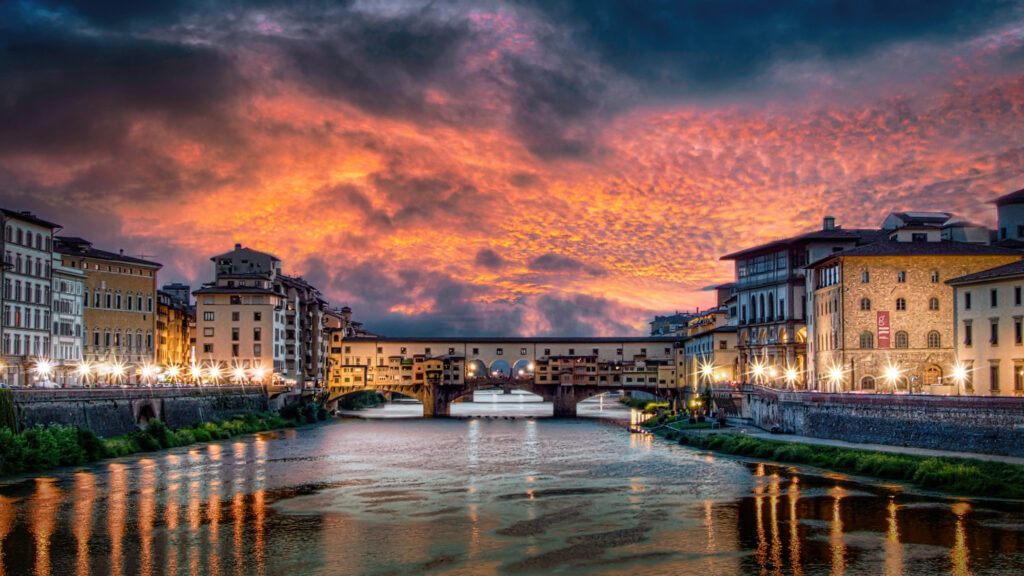
Ponte Vecchio Sunset, Florence, Italy

The metaphor that is also a method of crossing a divide, transporting the physical from one state to the next. Once side to the next – across the Arno, over the Hudson, spanning the Seine, connecting Brooklyn to Manhattan.

How many do you recall by name? Some for their beauty, others merely wondrous, the metaphor as well as the physical transference also apply to technology. The way we move improves, the power sources change, because they are forced to; we choose the worst methods first, to soothe our primitive ease, pressure and ideas allow conveyance to get better. Then a Roebling appears. Several Roeblings, a Strauss, and maybe an Eiffel.*

Lithium-ion batteries are the default chemistry used in EVs, personal devices, and even stationary storage systems on the grid today. But in a tough environment in some markets like the US, there’s a growing interest in cheaper alternatives. Automakers right now largely care just about batteries’ cost, regardless of performance improvements, says Kara Rodby, a technical principal at Volta Energy Technologies, a venture capital firm that focuses on energy storage technology.

Sodium-ion cells have long been held up as a potentially less expensive alternative to lithium. The batteries are limited in their energy density, so they deliver a shorter range than lithium-ion. But sodium is also more abundant, so they could be cheaper.

Lithium-ion batteries have crowded out competitors like sodium-ion, but even these represent only the tip of the spear of the battery iceberg. There are a few others, a list that will expand and contract as ultimately the tech chases simpler as price, ease, waste, and availability dictate a new race to the other side.

New battery chemistry already feeds a breeding ground for competitors. The bridge builders are all over, chasing opportunity like the oilmen and the 49ers before them. No one will be accused of excessive optimism at the current moment. However, the fossil fuel-powered economy is living up to its name – a wonder of reverse marketing – done and dusted, as we scatter ourselves across the several states of realizing it. Nothing about it is salvageable. I trust that’s not our calling card.

It’s the meanwhile that deserves attention. The bridge can’t get built while you’re standing on it – and then you notice you’re suspended out over thin air, just as we’ve always been.

* I’m endeared of the story, perhaps apocryphal, that as the Tour rose of Paris in the late 1880s, the artists of the time considered it as sign marking the end of civilization, perhaps the world.
 

Be Moved

If you build it, will they take them? Trains, that is, super, high-speed and just regular intra-city transit. And Buses. Buses! But before even the lowest-frills fancy stuff, fix the bridges:

Most, if not all, Americans support the idea that bridges shouldn’t collapse as you drive over them, yet there are 44,741 bridges in the United States that are rated “poor” by the Federal Highway Administration. Nearly 45,000! That’s out of about 616,000, meaning that about 1 in 14 bridges indexed in the United States receive the government’s lowest rating.
But wait! It gets worse. The three ratings used — good, fair, poor — are simply reflections of the lowest rating a bridge gets on the condition of its deck, superstructure or substructure. (If you think of a standard highway bridge, the deck is what you drive on, the superstructure is what supports the deck and the substructure is what holds up the rest of it.) Those values are assessed on a zero-to-nine scale, with the average score for all three components being about 6.5 nationally.

There’s handy searchable map at that link where you can see the bridges in your area that need maintenance. Yikes! There‘s a are multiple tons of them.

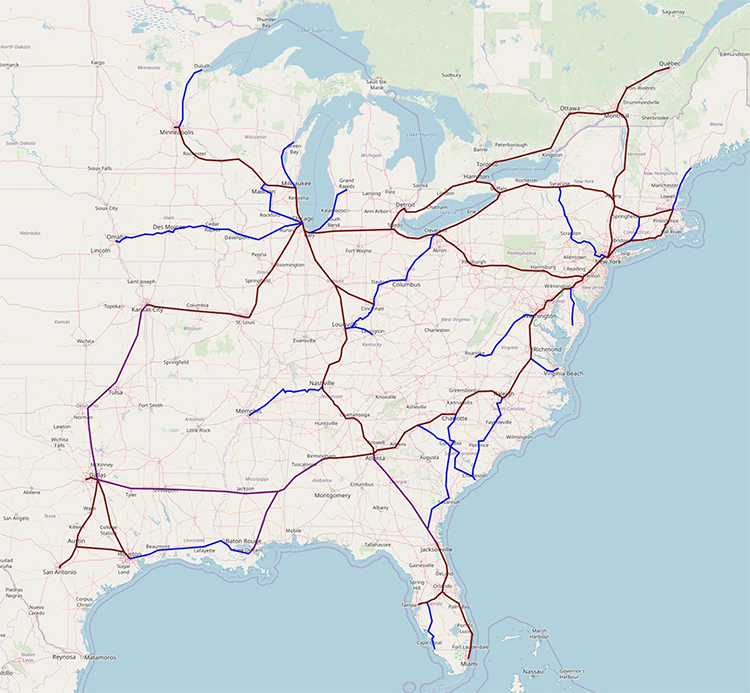
It’s also important that the Biden Infrastructure bill includes, among many other things, no money for expanding roads. Stop expanding already uncross-able roads and intersections. The BIKE is the answer, not the ambulance. This is one of the subtle keys to the shift in transit. And I’ve written previously about taking Amtrak below Richmond, VA. The trains themselves are very dated, but it’s the rickety tracks beneath them that feel like such a hazard. It’s a disgrace, and like the state of the postal system, it’s decline by design. It’s been left in purposeful, deliberate disrepair.

So there’s plenty to fix, and feel good about while we’re doing it. Not feel triumphant – it’s not necessary. Just responsible for taking care of our sh*t and making it useful. Buy yourself a nice pen with what’s left over and write someone a letter. You might get one back. Write the next one on the train. Feel romantic, be moved.

Front Foot

Stay on it.

White House officials are preparing to present President Biden with a roughly $3 trillion infrastructure and jobs package that includes high-profile domestic policy priorities such as free community college and universal prekindergarten, according to three people familiar with internal discussions.
After completing the $1.9 trillion coronavirus relief package this month, Biden administration officials are piecing together the next major legislative priority. Although no final announcement has been made, the White House is expected to push a multitrillion-dollar jobs and infrastructure plan as the centerpiece of the president’s “Build Back Better” agenda.

This will do multiple things, with hundreds of billions of dollars to repair roads, bridges, sewers, waterways and railways, as well retrofitting thousands of schools and other buildings, the bill also includes $400 billion to combat climate change, with $$$ for transit, and importantly, R & D. And this isn’t pouring money into nowhere – people will have to do that building, digging, measuring, research. So… jobs. Yes, boring and crucial.

And Republicans will fight it because of reasons. Let them. Make them. Remember: no tax cuts, especially the most recent ones, have ever been paid for. And the bugaboo of inflation will be what they betting on to argue against infrastructure investment. Let them explain. From the back foot.

What Does GreenLand Mean?

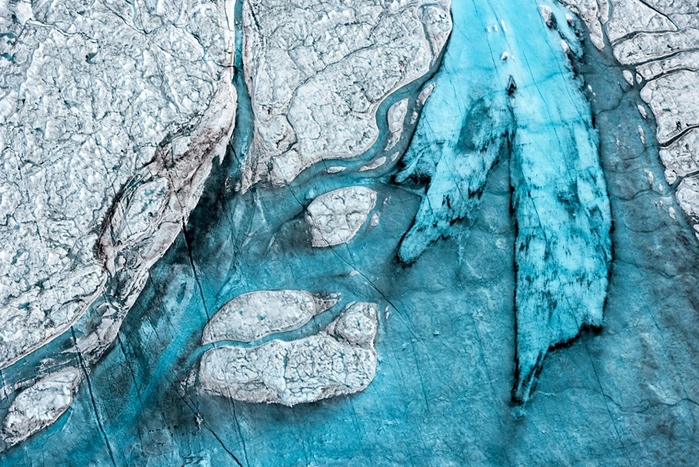
greenland_guardianRapid ice melts and calving glaciers are resulting in a dark snow phenomenon in Greenland. Look at these images in the Guardian and tell yourself over and over again that nothing is happening:

For most of us, science is an abstract subject but aerial photography is a powerful tool to translate what environmental science is telling us. It brings a different perspective to environmental problems. You can be very clear or very abstract to make images that are inspiring and beautiful, images don’t have to be read straight ahead. It’s sort of like teasing the viewer … to find clues in the image,’ say [photographer Daniel]Beltrá

In another coincidence I just noticed, this is the 1,001st post on the site.

The sound you hear

In a video I linked to previously, a visiting speaker gave a pretty rousing, if pessimistic, take on the current state of affairs in our lurch toward inalterable climate change, with added emphasis on how our renewable fuels development strategies are exacerbating the situation. He offered a pretty concrete demonstration of what happens when glaciers melt, using a chair and a table at the front of the room. It’s not like they slowly melt away to nothing over the course of eternity; instead, like a chair leaned against the end of a table, they reach a point, a tipping point, where their melting slide dissipates the friction holding it in place and allows the glacier to fall into the sea. Like the chair falling to the floor. Very dramatic.

Kind of like this.

Extra: Montana Governor Brian Schweitzer on renewable energy.