Of fulcrums and chasms

Given the very sleepy lead into 2025, despite the alarms blaring full bore, headwinds for clean energy seem to have roared to the forefront this year.

Tax credits expiring. Wind projects shelved or cancelled, often for extraordinarily petty reasons certainly consistent with the personality of leadership. Domestic US EV sales dipping.

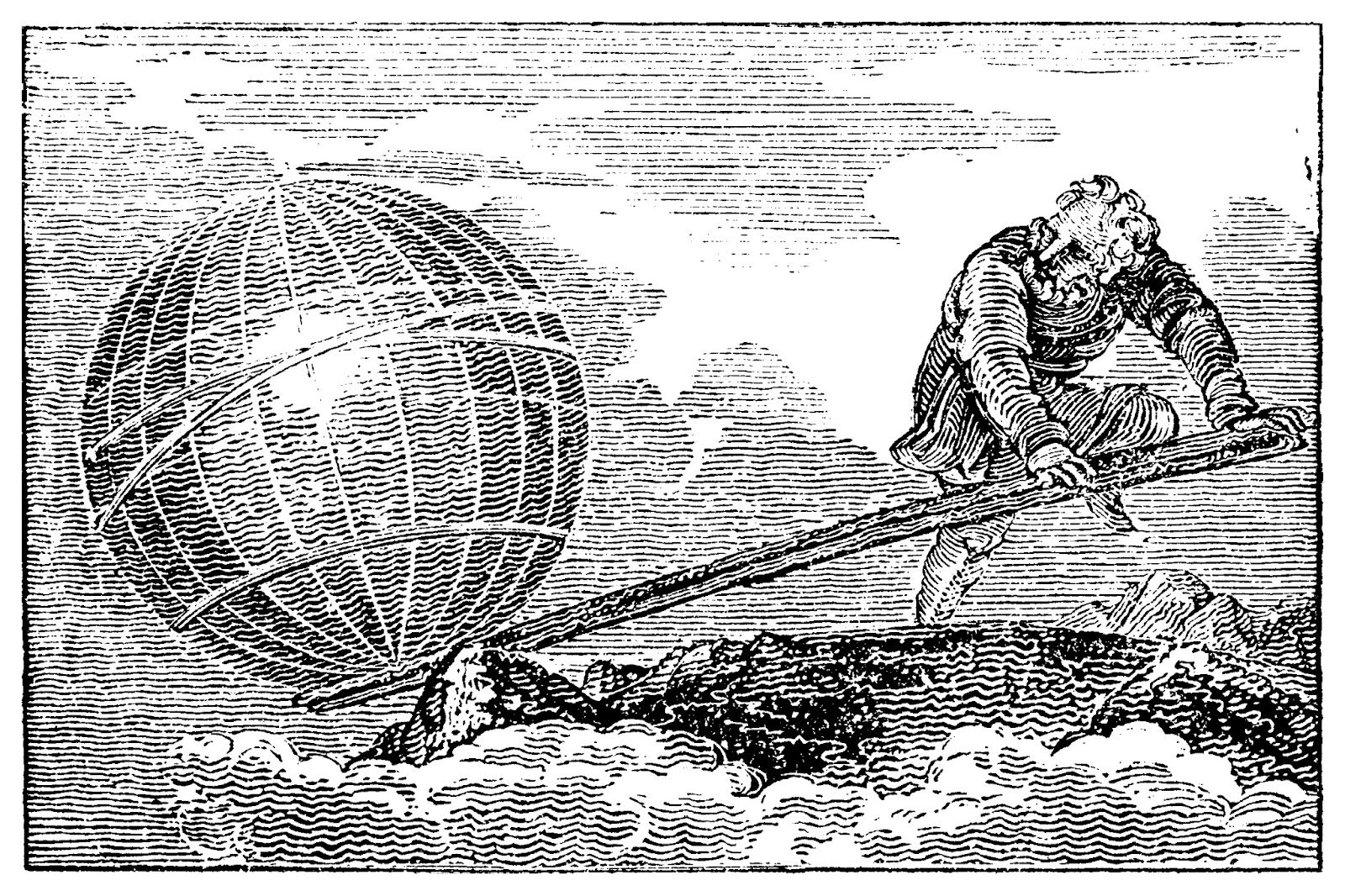
Despite the pettiness and short-sighted backwards-facing outlook, a cultural shift has been been leveraged into place. The ancient kind of leverage – with a rock and an iron bar:

“…as of the last three or four years, we finally have a tool, not at this point to stop global warming — it’s too late for that — but perhaps to at least shave some tenths of a degree off how hot the planet gets. And that tool is cheap energy from the sun and the wind and the batteries to store that power when the sun goes down or the wind drops. Alternative energy is the commonsense, obvious, straightforward way to make power on this planet, which is why 95 percent of new generating capacity around planet Earth last year came from these clean sources.

The authoritarian mindset –  which eschews progress on meaningful rights and resources for all in exchange for illusory safety from outside foes and forces – has always protected fossil fuel production by forgiving its destructive effects on people and planet in return for cheap energy. Another instant where the meaning of words carelessly cast aside returns for payment, with interest.

And now, that mindset is suspended over a chasm: destructive effects of global warming, coupled with cheap, clean energy increasingly available everywhere. Incompetent/compromised [let’s be honest] government is a distinct disadvantage. Can capitalism be saved?

Be neither depressed nor overly sanguine, as these were never the options. Instead, mock the laggards incessantly, especially your own. If you don’t know or feel unsure, find out. Use everything you have, make things. Row into the currents. Turn the beat around.

Image via

That’s Not Who They Are

cornvotesNPRThe inestimable Eschaton:

If We Pretend Those Bookish Conservatives on NPR are The Party
I suppose this is a proved fucking right kind of post, but there’s value in everyone else finally having to acknowledge it, if for only a few weeks or so. We’ve had decades of Very Serious Pundits ignoring both the words and deeds of the Republican party, and completely ignoring the words of Republican voters, in order to ignore the racism, misogyny, homophobia, and xenophobia that is a huge motivator for many of those voters and the people they elect. Only silly internet commenters (mostly) ever saw, or at least admitted to seeing, this reality, and got painted as irrational extreme partisans as a reward. I’m not happy about being right, but I am happy about some other people finally having to notice, or to stop pretending to not notice.

We didn’t point out the racism so that our team, Team D, could win the match, we pointed it out because it’s there and it’s repugnant. I’m not even sure that pointing it out helps Team D win the match.

Having been a guest on and had projects promoted by pubic radio, and of course plenty steeped in my own public television-ness, I don’t want to seem disingenuous or an ingrate. But the nice people that represent Republicans in these media are not the ones in the party, in office or that go to the polls. You could even make the case that some of most pleasant-seeming ones are among their nastiest partisans. At any rate, what Atrios said.

The Entitlements entitlement

social securityWho is entitled to endlessly concoct reasons to tear apart a perfectly functional social safety net? Republicans, apparently:

With a little-noticed proposal, Republicans took aim at Social Security on the very first day of the 114th Congress.

The incoming GOP majority approved late Tuesday a new rule that experts say could provoke an unprecedented crisis that conservatives could use as leverage in upcoming debates over entitlement reform.

The largely overlooked change puts a new restriction on the routine transfer of tax revenues between the traditional Social Security retirement trust fund and the Social Security disability program. The transfers, known as reallocation, had historically been routine; the liberal Center for Budget and Policy Priorities said Tuesday that they had been made 11 times. The CBPP added that the disability insurance program “isn’t broken,” but the program has been strained by demographic trends that the reallocations are intended to address.

On the one hand this is sneaky, and on the other it is completely duplicitous. That’s all the hands we have. The retirement fund and the disability fund can be made completely solvent with an easy and frequently used reallocation. The entire conceit of a “broke’ government – concerned citizens in rural towns across the country love to erect these billboards denoting how we are out of money – is simply a rationale constructed to support policy ends otherwise unsupportable. Alongside the fact that no republicans actually campaign on this and such a scheme as outlined in the article must come cloaked in euphemism and  only quietly discussed.

All the while, real opportunities to correct budget priorities are beyond discussion. Entitled to be wrapped in a flag, indeed.

But the real question is, why do we even want to take care of people?

Image:Following the passage of the Social Security Act of 1935, a visiting nurse visits a rural family. Franklin D. Roosevelt Presidential Library and Museum, courtesy http://www.archives.gov


Conservatives versus Science

Sometimes the most important news isn’t breaking, isn’t something you learn about in 140 characters or between baby photos on fB (God love ’em), but a reality that you become acquainted with over time, are in danger of forgetting – or worse – forgiving as some kind of difference of opinion. WMD in Iraq, for example, a lie that we used to justify the murder of many, many innocent people. The reason that we couldn’t find the WMD in Iraq was because they didn’t have any. QED.

Another example, Republicans, at all levels, construct a distrust of science when they don’t like its conclusions. This is the reason there is still a debate about climate change.

The research is by Gordon Gauchat of the University of North Carolina at Chapel Hill, and published in the prestigious American Sociological Review. In the study, Gauchat uses a vast body of General Social Survey data to test three competing theses about the relationship between science and the U.S. public:

1) the cultural ascendancy thesis or “deficit model” view, according to which better education and engagement with science lead all boats to rise, and citizens across the board become more trusting of scientists and their expertise;

2) the alienation thesis, according to which modernity brings on distrust and disillusionment with science (call it the “spoiled brat” thesis if you’d like); and

3) the politicization thesis—my thesis—according to which some cultural groups, aka conservatives, have a unique fallout with science for reasons tied up with the nature of modern American conservatism, such as its ideology, the growth of its think tank infrastructure, and so on.

Then you have this Pew Report from 2008.

Someone had sent me a 2008 Pew report documenting the intense partisan divide in the U.S. over the reality of global warming.. It’s a divide that, maddeningly for scientists, has shown a paradoxical tendency to widen even as the basic facts about global warming have become more firmly established.

Those facts are these: Humans, since the Industrial Revolution, have been burning more and more fossil fuels to power their societies, and this has led to a steady accumulation of greenhouse gases, and especially carbon dioxide, in the atmosphere. At this point, very simple physics takes over, and you are pretty much doomed, by what scientists refer to as the “radiative” properties of carbon dioxide molecules (which trap infrared heat radiation that would otherwise escape to space), to have a warming planet. Since about 1995, scientists have not only confirmed that this warming is taking place, but have also grown confident that it has, like the gun in a murder mystery, our fingerprint on it. Natural fluctuations, although they exist, can’t explain what we’re seeing. The only reasonable verdict is that humans did it, in the atmosphere, with their cars and their smokestacks.

Basically, you can read all you want and see that intransigence on this issue is one-sided, systematic, on-going and most of all, deliberate. But based on nothing but not liking the results of what we have done, plus a fear of losing something they have decided to destroy anyway? It’s incoherent as ideology and contemptible as policy. Subservient politicians need to pay a price for this willingness to just blow the whole thing up.

Six Less Votes

That’s how many votes the millions Romney spent in Iowa this year (30,015) won him, versus how many he garnered (30,021) in a second place finish in 2008.

Pathetic on many levels, and yet gratifying on some others – the extent to which the Republican candidates cannot move the needle. Again, the inability of the Republican party to put forward a candidate who espouses the tenants of the party AND that people will like/vote for is scandalous. The country needs (at least) two viable governing parties; the Republican party is determined not to be one of them.

That Sound You Hear, part MCMXLV

biff-21

This is, just, hilarious. If you think dumb is funny.

The cover story of this week’s National Journal takes a deeper dive into a question we’ve explored before: What happened to the Republican consensus on climate change?

Three years ago, prominent Republicans including Mitt RomneyNewt Gingrich, Rep. John Boehner (R-OH), Rep. Fred Upton (R-MI), Tim Pawlenty, and Sarah Palin all expressed belief in human-caused climate change. Several even voiced strong support for policies to cap and reduce carbon pollution. Today, all six of these leaders have joined the rest of the Republican Party in a sudden and near-unified retreat to silence or denial.

When contacted by the National Journal, only 65 out of all 289 GOP lawmakers in Congress would agree to be interviewed on the topic. Of those interviewed, only 19 said they believed that human activities are at least partly responsible for climate change. Of the 19, only five (or fewer than 2 percent of GOP lawmakers) attributed a “significant amount” of climate change to human activity.

So, what happened?

It’s not the science that has changed — it’s only gotten stronger. As Ralph Cicerone, president of the National Academy of Sciences and chair of the National Research Council, said: The level of scientific certainty that human-induced greenhouse gas emissions are causing climate change is comparable to the strength of our understanding that vaccines prevent measles and polio.

They don’t deserve to lead a line to the port-o-let.

Let’s Do Nothing

Let’s do nothing! is a children’s book and I have a promotional button for it, some non-currency in which my daughter was ‘paid’ for taking part in a review of the book. The button is stuck up in my office, occasionally catches my eye and is, in general, a good reminder.

And doing nothing, wasting time, is in general a very solid idea. Because, of course, you’re not literally doing nothing – you’re thinking, reflecting, being still… not to mention all of things you’re not doing: driving, talking, watching. And certainly if you’ve avoided these things for any length of time today or any day, it is not time wasted. So generally speaking, doing nothing is the route to all things good, and even green.

But there is such a thing as wasting time, just as there is a time beyond which when doing nothing is advisable. And these are precisely the things in which Republican presidential candidates (no need for a link, because it’s all of them) are telling us they will be engaged in, if any of them is elected:

“Do I think the world’s getting hotter? Yeah, I don’t know that but I think that it is,” Romney told a crowd in New Hampshire Wednesday, according to Reuters. “I don’t know if it’s mostly caused by humans.”

Romney then tilted over and grabbed some of Rick Perry’s Sen. James Inhofe (R-OK)-endorsed ideas on the environment. That is, let’s not spend a time doing anything about it.

“What I’m not willing to do is spend trillions of dollars on something I don’t know the answer to,” Romney said.

We must take them at their word. It seems obtuse to point this out, but when it comes to climate change, ghg emissions, energy and the closely-related issue of jobs, the time for doing nothing is quite past. Even the polluting industries are waiting to see what the new regulations will be so that they can adjust – even they don’t believe they can keep doing things the same way indefinitely – even if someone manages to abolish the EPA. The realities on the ground won’t change, and at some point we’ll see that we’ve truly been wasting time, and not in a good way.

Expense of the Environment

It’s an interesting concept, especially as we’ve all but stopped letting the costs of war preclude us from war-making, but how much should protecting the environment cost us? In money and competitiveness, the issue is contentious, rife with conflicts, false promises and disinformation. But, let no one tell you that Republican officeholders at every level stand for anything but rolling back regulations and agencies charged with protecting the environment. While there was hardly ever any doubt about this, now there is not even a pose.

The budget approved by the legislature, led by Republicans for the first time in a century, eliminates the program as part of roughly $23 million in environmental program cuts that would chop more than 150 positions. All told, the department’s budget would be cut by 12 percent, more than double the cuts proposed by Gov. Bev Perdue, a Democrat.

The legislative budget also would shift some operations to the Department of Agriculture and Consumer Services, which is led by a Republican commissioner, a move some fear would change the focus from environmental protection to business enhancement.

That’s in North Carolina, but it is everywhere the same. Democrats get elected promising to enact new regulations and fund alternatives; Republicans get elected promising to rein in regulations and lavish spending on boondoggles. Eye; beholder. I especially like this:

“I don’t want to destroy anything,” said state Sen. Don East, a Surry County Republican and an environmental budget writer. “I just don’t think these very stringent environmental rules that we are living under are going to do what the environmentalists say they do.”

How could they? I believe he doesn’t want to do any harm to anything, including taking any power away from anybody to release anything anywhere. You know, the little guy. Sorry, dude. That’s not a choice anymore. Now you have to actually make choices. Oh: you are.


New Dual Suspension, Now with More Disbelief

The Economist, today:

By itself, as we always say, one hot year doesn’t prove anything. The fact that every one of the twelve hottest years on record has come since 1997 is a little harder to wave away. 2010 was also the wettest year ever, corresponding to the expectation that higher heat means more water vapour. More countries set national high-temperature records in 2010 than ever before, including the biggest one, Russia. Arctic sea ice in December was at its lowest level ever, temperatures across a broad swathe of northern Canada have been 20° C higher than normal for the past month, the record temperatures are coming despite the lowest levels of solar activity in a century and a La Nina effect that should be making Canada colder rather than warmer, and so on. It is of course possible that global warming plateaued this year; it’s also possible that it plateaued this morning. One can always hope!

Complete with a nice graph. But is this thing settled? Far from it apparently. Can’t begin to do anything that might be too expensive until every last numb-nut is convinced, every last remote possibility that nothing is happened vanquished. Then what? A study group? They don’t believe in human-caused global warming because of the same reason they don’t believe in making Medicare universal – it’s un-American. Yes, it’s that incoherent. If you think you’re reasoning with people who can be convinced, you haven’t been listening to what they have been saying. And so amateur deniers and professional politicians continue to propose cuts to clean energy, yell about business regulations strangling growth and about how the debt is the evil to end all evils.

I think Republicans believe that we can keep doing things the way we always have (only with way lower taxes) and get much the same wholesome results. It’s this point that is already frustrating them in ways, besides race, that I don’t believe have actually set it in with the folks who carry the water. And until they can openly say they don’t like the results without another of their team calling them America-haters, they just have to keep professing to love the results.

Meanwhile, ticktock… and the incremental, practically unnoticeable damage will continue until it becomes more noticeable and there’s a special Fox News report on the real news that global warming actually hurts liberals and helps Republicans. And so it must be real and irreversible. And then it finally will be.

Yay?

When We Ask Not What

Reminiscent of this,

Is this darling little site.

Really, I’m fine with Boehner becoming speaker; it will be infuriating for a while, but he certainly should be able to spout his nonsense from the highest tree, as should Cantor and Pence. They’re complete fools and should be allowed to advertise their ignorance as loudly as possible so they and the pseudo-ideology they represent can more properly be sent packing. If given the opportunity – they’ll do most of the work themselves to convince a supermajority that,

Republican leadership has no future – except for the coming spike in bullet-resistant shoes of all styles.