Energy diversification

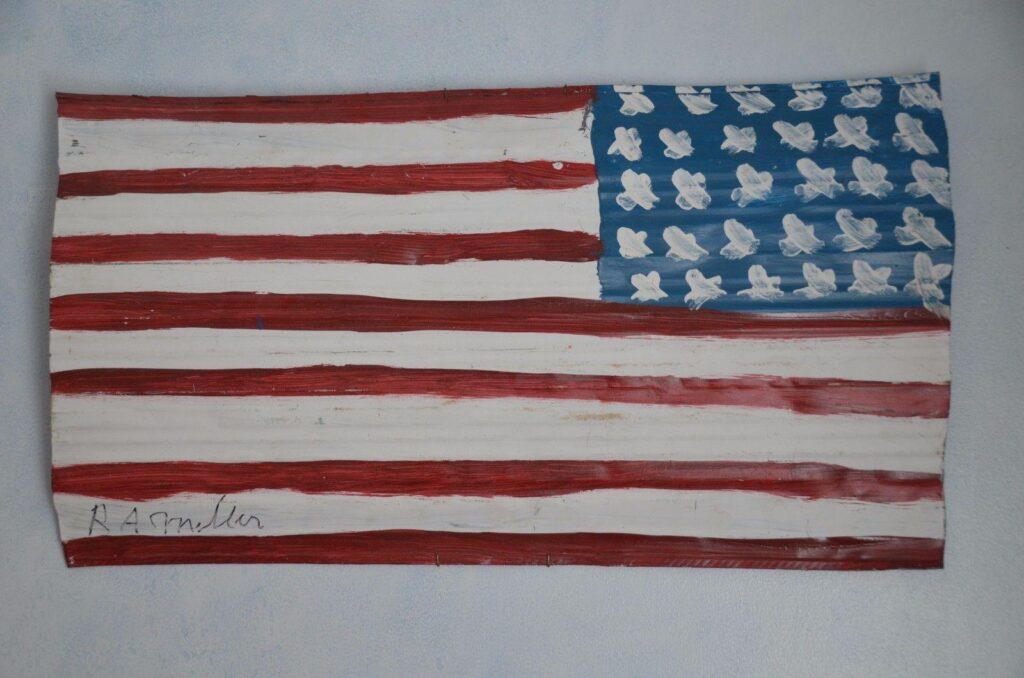
photo of flag painted on tin

Yours, mine, ours.

I recently finished reading a book about being trapped in the same day over and over again, which presented the concept of a rift in time in the context of complex minutiae and how we factor small events into larger ones. Even our best sense of recall leaves out quite a bit. The actual route between kitchen and bath, for example; or what happens on the other side of the switch that allows our betting apps to re-charge.

The low and slow approach to movement or reading by candlelight dispenses a luster all its own. We are free to partake, understand its nourishing powers, and to ignore these in lieu of better light and quicker options, to relegate them to novels and the pity of grateful authors.

Legs may tire and the candle burns down, marking progressive time very distinctly in ways that are only typically confusing. And these methods share something else: a hovering sense of the immediate. We declaim poetry in the same manner that we accept a holiday, earned or not, observant of its nature or not. That is, gladly. Attuned to bare arms and all they may evoke, how they interrupt our struggle for productivity with suggestion. Seen in this light, the need to produce, develop, accrue is as unnatural as time travel. The many dumb reasons behind events of note and other current happenings dumb us down, so be wary. Be suspect, call out. Use fancy old words if you so choose. Declaim.

Baudelaire was unsparing and left so much popcorn on the forest floor it can be hard to discern the trail. But discern we must. Find your way. Write your music and play it.

Happy Holiday.

Image: American Flag by R. A. Miller
Be Moved

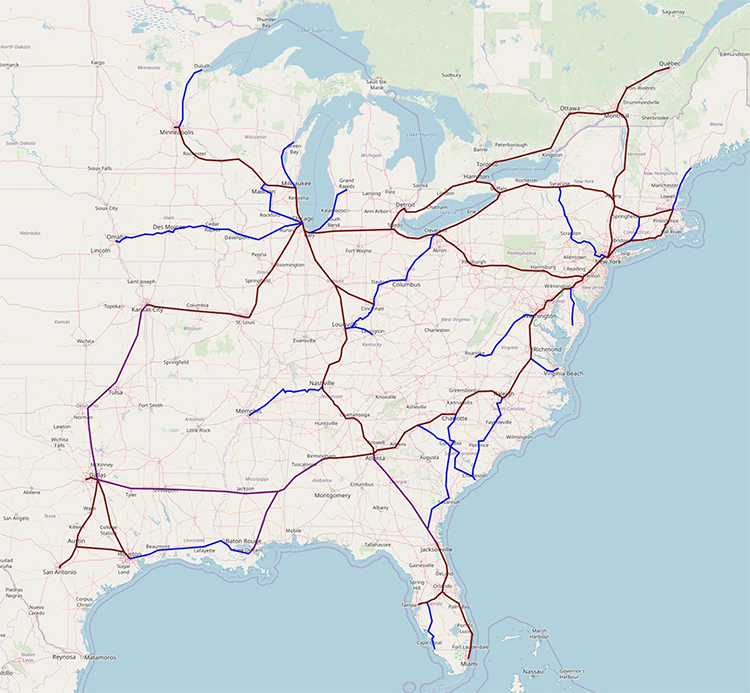
If you build it, will they take them? Trains, that is, super, high-speed and just regular intra-city transit. And Buses. Buses! But before even the lowest-frills fancy stuff, fix the bridges:

Most, if not all, Americans support the idea that bridges shouldn’t collapse as you drive over them, yet there are 44,741 bridges in the United States that are rated “poor” by the Federal Highway Administration. Nearly 45,000! That’s out of about 616,000, meaning that about 1 in 14 bridges indexed in the United States receive the government’s lowest rating.
But wait! It gets worse. The three ratings used — good, fair, poor — are simply reflections of the lowest rating a bridge gets on the condition of its deck, superstructure or substructure. (If you think of a standard highway bridge, the deck is what you drive on, the superstructure is what supports the deck and the substructure is what holds up the rest of it.) Those values are assessed on a zero-to-nine scale, with the average score for all three components being about 6.5 nationally.

There’s handy searchable map at that link where you can see the bridges in your area that need maintenance. Yikes! There‘s a are multiple tons of them.

It’s also important that the Biden Infrastructure bill includes, among many other things, no money for expanding roads. Stop expanding already uncross-able roads and intersections. The BIKE is the answer, not the ambulance. This is one of the subtle keys to the shift in transit. And I’ve written previously about taking Amtrak below Richmond, VA. The trains themselves are very dated, but it’s the rickety tracks beneath them that feel like such a hazard. It’s a disgrace, and like the state of the postal system, it’s decline by design. It’s been left in purposeful, deliberate disrepair.

So there’s plenty to fix, and feel good about while we’re doing it. Not feel triumphant – it’s not necessary. Just responsible for taking care of our sh*t and making it useful. Buy yourself a nice pen with what’s left over and write someone a letter. You might get one back. Write the next one on the train. Feel romantic, be moved.

On not cutting emissions immediately

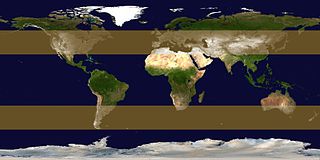
Extratropical_formation_areasOr, as we say around the schoolyard, a 2° Celsius rise in global temperatures. Or maybe not:

“At some point, scientists will have to declare that it’s game over for the 2°C target,” says Oliver Geden, a climate policy analyst at the German Institute for International and Security Affairs. “But they haven’t yet. Because nobody knows what will happen if they call this thing off.” The 2°C target was one of the few things that everyone at global climate talks could agree on. If the goal turns out to be impossible, people might just stop trying altogether.

Recently, then, some scientists and policymakers have been taking a fresh look at whether the 2°C limit is still the best way to think about climate change. Is this simple goal actually making it harder to prepare for the warming that lies ahead? Is it time to consider other approaches to climate policy? And if 2°C really is so dangerous, what do we do when it’s out of reach?

The best way to think about climate change – that is quite the challenge. What we can tolerate, what the remaining flora and fauna can tolerate, what does tolerate mean? how hot is too hot? These are but the tip of the iceberg of stupid questions, because if we’re asking them, we are looking for ways to put off doing anything about the reasons the temperatures are going up. In the meantime, evidence is mounting that cutting carbon emissions makes economic sense, smashing the most constant rationale for just sitting there (in traffic). Start by decarbonizing some part of your life today and begin to work out from there. Think of it as freeing yourself from something, if you have to. Take some individual steps, and don’t worry about what China or India isn’t doing. As the article points out, if our body temperature goes up 2°C, we have a significant fever.

Image: extratropical cyclone formation areas, between approximately 30° and 60° N/S latitude, via wikimedia commons.

Acqua alta

Unusually-high-water-leve-010This pains me. And it should you. This isn’t the point of the article, though it is its subtext.

We are used to thinking of Venice as a city in peril, a glorious relic of human creativity that is about to go under any day now – and suddenly the end looks closer. But there is another point of view. Venice is no longer alone in its peril. In the past few weeks we have even seen New York in peril. As climate change makes extreme weather more frequent, Venice looks less like a victim of the sea and more like an old survivor that can teach the rest of the world how to live with water.