Kicking over the tipping point

Dignity, restraint and action in a time of constitutional crisis. It’s amazing but, like the Steven Wright  joke where he realizes someone has been following him from in front, the Republican Party is re-enforcing community by galvanizing communities against it. And that for which it stands:

Within hours of taking office on Jan. 17, Spanberger signed an executive order that rescinded Youngkin’s order mandating that state agencies contract with ICE, but that alone left the agreements intact. She went a step further this week by actually pulling the plug and ordering four state agencies, including the state police and the Department of Corrections, to end their 287(g) agreements, terminating their role as force multipliers for federal immigration authorities.

“Virginians deserve to have their state and local law enforcement resources devoted to the safety and security of their communities, not federal civil immigration enforcement,” the governor said in her order. These agreements “improperly cede accountability and discretion over Virginia law enforcement to the federal government.”

That’s the result of people pressure. Forces of civil democracy aka you, me, and all of us. One neat trick to turn many disinterested and distracted people into pissed off voters. I have always detested irony but I’m willing to let this one slip.

Governors and lieutenants, secretaries of state, state attorneys general have always been important statewide races. Now they are critical. Let’s elect good ones. Find one, be one.
Slutty carbon

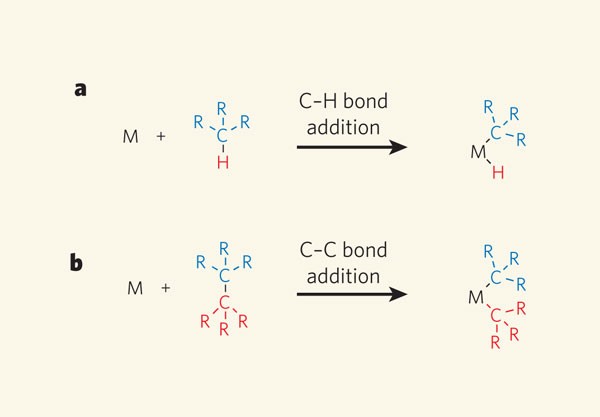
Sure, it will bond to any old thing – just a fun-loving, good time chemical element with the symbol C and atomic number 6. Call anytime.

And though carbon is not magnetic, it does attract kooks. Okay, no harm there, chacun à son goût and all that. We’re not all kooks. We even devise ways around it – solar, wind, other means of generating that dirty dirty electricity that we enjoy so much. And you won’t believe what happens next:

This scene from the village council meeting in June helps to explain why opponents of three solar projects proposed in Pickaway County, Ohio, can say they have the support of nearly every local elected official. It shows how a committed group of local residents have dominated the debate by packing county, village and township meetings, and making their displeasure known if officials don’t fall into line.

The prevailing emotion is fear, whether it’s fear of the solar projects—or fear of upsetting the people who oppose the projects.

And the local fight has broad implications. The world needs to increase its reliance on renewable energy, an essential part of avoiding the most destructive effects of climate change. Local opposition shows some of the disconnect between global needs and the concerns of some of the people who don’t want to live next door to wind and solar projects.

It’s a little beyond as well as different from traditional NIMBYism, though also quite similar in several ways, as the locals literally don’t want to be living next to utility-scale solar. They don’t want to see it and they don’t want to hear it. Though it’s not a discussion about energy and how they get it at all. “Just leave us alone,” they might say, then step back inside and to watch the ballgame. And there’s the rub.

Whether we blame them for not wanting to connect their own usage of dirty energy to their passions for their freedom not to see it, or blame the local school district that benefits from the increase in tax revenue for not being more vocal in their support for the solar projects, the moment and the conflicts should be noted. The difficulty of telling nominally self-governing people what to do when their own understanding of any right thing is itself in conflict with abstractions like freedom is certainly one of the more devious tricks slutty carbon has played on us.

It’s sort of a next-level struggle with renewables that has nothing to do with energy – because focused on how we’re gonna watch the game or dry the clothes, or even live that far from the grocery store [don’t get me started], the question changes entirely. At least the NIMBYism is familiar.

Image: Carbon–carbon bonds get a break | Nature

Skins in the game

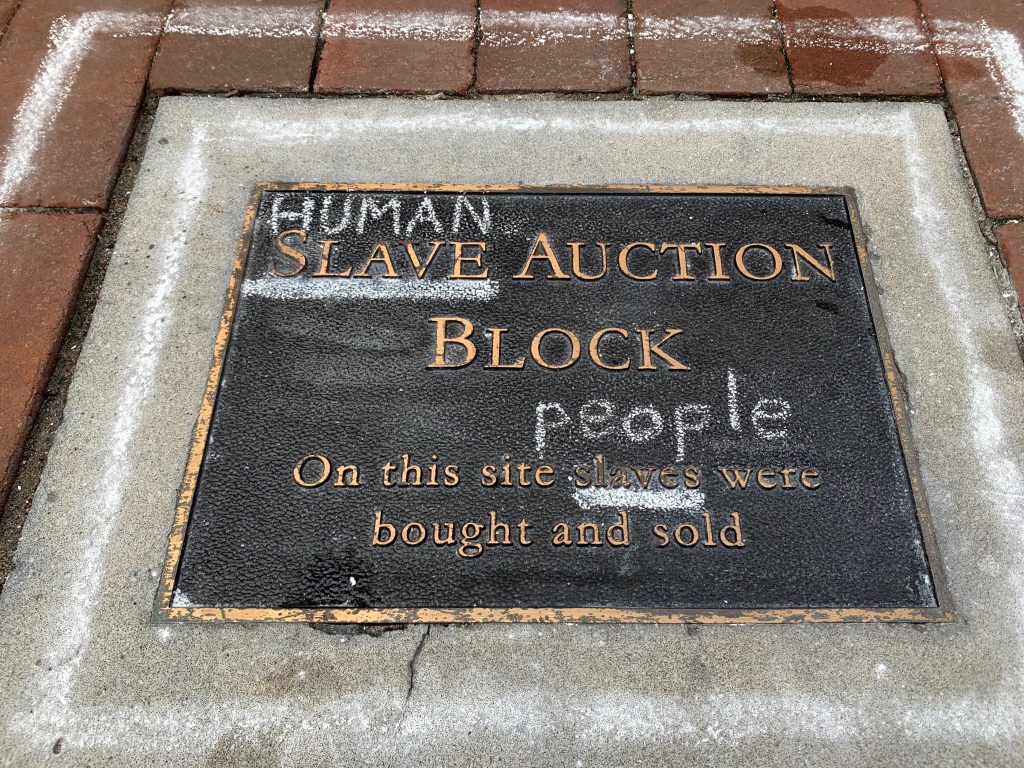
sidewalk plaque in Charlottesville, Virginia plaque featured chalk graffiti added by local artist Richard Parks.
(Courtesy of Richard Parks)

As if we need reminding (ed: we do!), set aside how much we hate women and remember how racist we are! The discussion about American universities – especially our oldest, most venerable institutions of higher learning – and their deep connections to slavery has barely begun to break through, even and especially at our oldest, most venerable institutions. So, while the public remains largely unaware of the history, we might wonder how universities have for so long escaped scrutiny about the past – about how they were built, how they succeeded, who they succeeded for, and how so much of this was connected to buying and selling people to use as free labor. The NYRB dives into a four new books, and sets the stage rather clearly:

One reason, perhaps, that academic institutions were spared from scrutiny was that they seemed, by design, to be physically removed from the vulgar transactions of commercial life. The trading houses where merchants contracted for consignments of cotton, rum, molasses, and human chattel; the insurance firms that indemnified slave owners for loss of human property; the clothiers that manufactured coarse smocks for enslaved field hands—all these were likely to be found among shops and markets, close to the banks from which they obtained credit and the wharves where human goods were loaded or unloaded for sale.

Think, on the other hand, of our early colleges: Harvard on its bluff above the Charles River, or Yale looking across New Haven Green toward the Long Island Sound, or Brown atop the heights of Providence. Their architecture (ecclesiastical) and setting (pastoral) seemed to say, “We stand above the fray, removed from the workaday world, in a high-minded sphere of our own.” For people like me whose shelves are filled with books about these colleges, it’s not a bad idea to paste a note every foot or so along the edge of the shelf bearing this reminder from the novelist James McBride: “The web of slavery is sticky business. And at the end of the day, ain’t nobody clear of it.”

And friends, of course it’s not just the Ivies. The preponderance of screaming denials (CRT!) and counter-recriminations (Woke!) arise out of fear and cowardice about facing this history as it bleeds to profusely into our present. Can’t stop the bleeding without finding the wound, cleaning it carefully, repairing as much damage as possible, dressing it and providing all available care for full recuperation. Only then can we attend and check on the healing.

Image via WAPO

Be Moved

If you build it, will they take them? Trains, that is, super, high-speed and just regular intra-city transit. And Buses. Buses! But before even the lowest-frills fancy stuff, fix the bridges:

Most, if not all, Americans support the idea that bridges shouldn’t collapse as you drive over them, yet there are 44,741 bridges in the United States that are rated “poor” by the Federal Highway Administration. Nearly 45,000! That’s out of about 616,000, meaning that about 1 in 14 bridges indexed in the United States receive the government’s lowest rating.
But wait! It gets worse. The three ratings used — good, fair, poor — are simply reflections of the lowest rating a bridge gets on the condition of its deck, superstructure or substructure. (If you think of a standard highway bridge, the deck is what you drive on, the superstructure is what supports the deck and the substructure is what holds up the rest of it.) Those values are assessed on a zero-to-nine scale, with the average score for all three components being about 6.5 nationally.

There’s handy searchable map at that link where you can see the bridges in your area that need maintenance. Yikes! There‘s a are multiple tons of them.

It’s also important that the Biden Infrastructure bill includes, among many other things, no money for expanding roads. Stop expanding already uncross-able roads and intersections. The BIKE is the answer, not the ambulance. This is one of the subtle keys to the shift in transit. And I’ve written previously about taking Amtrak below Richmond, VA. The trains themselves are very dated, but it’s the rickety tracks beneath them that feel like such a hazard. It’s a disgrace, and like the state of the postal system, it’s decline by design. It’s been left in purposeful, deliberate disrepair.

So there’s plenty to fix, and feel good about while we’re doing it. Not feel triumphant – it’s not necessary. Just responsible for taking care of our sh*t and making it useful. Buy yourself a nice pen with what’s left over and write someone a letter. You might get one back. Write the next one on the train. Feel romantic, be moved.

Disastrophe

When I started writing this blog back in 2008, it included no small measure of wise-acre impatience with how green sustainability was quickly becoming just another fashion in marketing trend. Sure, ‘sustainable’ is an unimaginably low bar, but it had a kind of odd staying power – people though they understood it, even if they ignored it. Maybe it allowed them to ignore the greater crisis, so thoroughly did it couch the entire concept in ‘meh’. Why be alarmed? You/they didn’t come up with an alarming word. Sustainable. It seemed to infer, ‘We’ve got plenty of time.’
Well, now that the alarm has taken the shape of an iridescent human, it has brought with it a slew of other factors that must be ignored first, before we get back to ignoring the great existential thing we’ve been trying to ignore all along. Excusing and thus normalizing racism, sexism, homophobia, classicism, fascism and treason have now re-presented as the ante quod nihil of dealing with any of this planetary crisis business.

Remember, Tking-tides-globeides,
global warming is a hoax.
Exemplary measures,
equaling at most
a dollop
of time. Before we wade and watch.
Instead of just watch.

Categorical Dissonance

hwy-80Not a Can’t be sure it’s not a GBV song but, one of the most visible business news outlets tisk-tisks environmental groups in Washington State opposing the upcoming carbon tax ballot initiative,

Those groups haven’t put their own proposal on the ballot, so they’re saying it’s better to do nothing than vote for Initiative 732. This position is absurd. Curbing carbon emissions is, or ought to be, the primary goal, and the plan would do that. In addition, it’s an opportunity to prove the viability of the carbon-tax approach and set a valuable example for the rest of the country.

While climate change goes all but unmentioned at all three four presidential debates

But none of the moderators asked about global warming at all. Not in the first presidential debate. Not in the vice presidential debate. Not in the second presidential debate.* Not in the third presidential debate. Hillary Clinton name-checked the topic, occasionally, but that was it. Humanity is departing from the stable climatic conditions that allowed civilization to thrive, yet the most powerful nation on Earth can’t set aside five minutes to discuss.

It’s possible the debate moderators don’t understand what’s at stake. It’s possible they don’t care. Or it’s possible they’re afraid that any question on the topic might seem too partisan. After all, Clinton thinks the issue is pretty serious and has a bunch of proposals around it, whereas Trump says it’s all a hoax invented by the Chinese. Under the circumstances, even a halfway intelligent question about climate policy would sound “biased.”

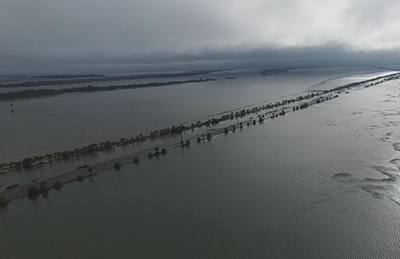
Here we go, looking for validation from the business press – even the single-bottom line thinkers are acknowledging reality, but it’s still okay not to ask prospective leaders anything related, for fear of seeming partisan simply because they still claim not to believe it’s a real thing. The folks on Tybee will be relieved to know.
Image: Weather.com photo of Hwy 80 to Tybee Island, Georgia

What Does GreenLand Mean?

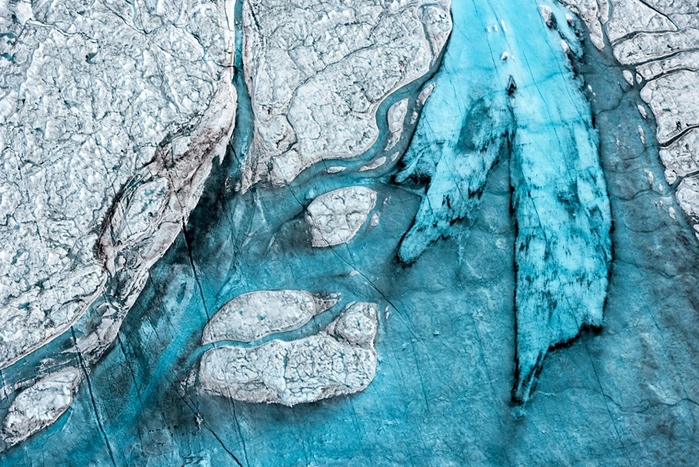
greenland_guardianRapid ice melts and calving glaciers are resulting in a dark snow phenomenon in Greenland. Look at these images in the Guardian and tell yourself over and over again that nothing is happening:

For most of us, science is an abstract subject but aerial photography is a powerful tool to translate what environmental science is telling us. It brings a different perspective to environmental problems. You can be very clear or very abstract to make images that are inspiring and beautiful, images don’t have to be read straight ahead. It’s sort of like teasing the viewer … to find clues in the image,’ say [photographer Daniel]Beltrá

In another coincidence I just noticed, this is the 1,001st post on the site.

No So Gently Lapping at Your Chamber Door

The globally averaged temperature over land and ocean surfaces for 2014 was the highest among all years since record keeping began in 1880. The December combined global land and ocean average surface temperature was also the highest on record.

And:

The acceleration of the rate of sea level rise over the past couple decades is even higher than scientists had thought, according to a new study that uses a novel method to estimate the global rise of the oceans.

The reason? The rate of rise across the 20th century has actually been overestimated — by as much as 30 percent — meaning there’s been a bigger jump in sea level rise rates from the beginning of the 1900s to now than previously thought.

But you know what? VousetesCharlieSelmaGotRobbedAllCountryMusicSoundsTheSameAmericaDoesn’tTortureElCapitanBokoHaramDukeSCOTUSIslam Gas prices are down.

It’s… It’s…

bus_week

Via DL, on fB, Bloomberg looks downtown:

Climate deniers exploit scientific complexity to avoid any discussion at all.

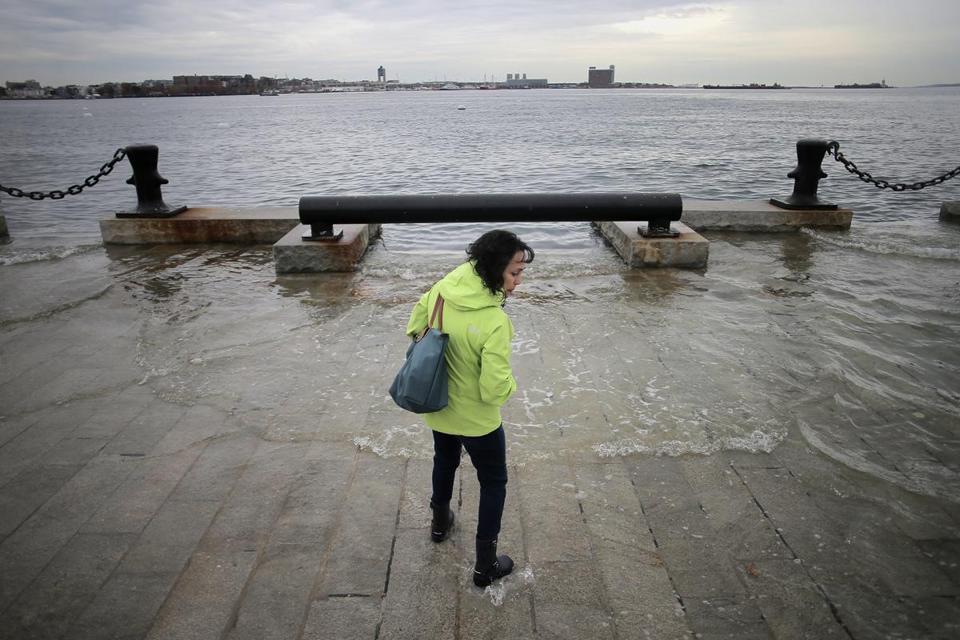
Clarity, however, is not beyond reach. Hurricane Sandy demands it: At least 40 U.S. deaths. Economic losses expected to climb as high as $50 billion. Eight million homes without power. Hundreds of thousands of people evacuated. More than 15,000 flights grounded. Factories, stores, and hospitals shut. Lower Manhattan dark, silent, and underwater.