
So, this is clear as mud.
All the discussion amid the smoking ruins of the U.S.-Canada trade relationship (conceding how few people think about this, even as it’s happening, so deeply is it without cause or sense) the whole concept of the U.S.-backed global order provides a kind of backdrop. What was it? Why was it?
The U.S. has been a great power by various definitions for more than a century. It was one of two for most of the latter half of the 20th century and the sole one starting in the final decade of the 20th century.
To understand this now-receding era, we must recognize that U.S. power functioned differently with the relatively wealthy states primarily in the global north and those poorer states mainly in the south. Its power was based largely on two key alliance structures: One based in Europe (NATO) which is really the western fringe of Eurasia and another based on the littoral and island fringe of East Asia — Japan, South Korea, Taiwan, et al.
We don’t have to believe, nor should we, in the idea or reality of the U.S. as a beneficent global hegemon. But as JMM points out, its terms were generous; getting other countries to go along with you is a team sport, much more arguable for when they and their people benefit. It’s the positive sum dynamic and makes a great deal of sense while also being the golden key to soft power, the whole boring concept of pulling together to benefit everyone. You can make that argument when you’re putting your money down and can point to improvements in societies not your own.
We can and should talk about all the ways the current administration doesn’t understand military or economic power, that if you want to see the limits of either, just begin using them imprudently as they have.
But to pan out even a bit wider, though not to take away from damage being done by our current Know Nothings, the Cold War itself and its era began the unraveling process of this global order long before it actually happened. Before 1991, the collapse of the USSR or the Berlin Wall, the focus of the bi-polar (yikes – was not expecting that bit of convergence) order had begun to decay. Corporate engagement in domestic politics has long been part of the dynamic, with this or that shadow government advocating for against certain actions. Behind-the-scenes influence to protect the bottom line is as American as Apple Baseball, and these influences can be as nefarious as they are [much too infrequently] positive. However, when the corporate line is the guide, appeals to societal benefits are useless, perhaps even senseless. Like prohibiting horses from playing chess.
In my messy little history, as the focus of the global order disintegrated, multi-national business was quick to give it order, even as media and some more than few politicians crowed about the peace dividend at the end of the Cold War. So quaint.
Corporations had better ideas, had identified new threats. The 1970s energy crisis was one rallying cry for better solutions and even presented a possible, new focus for the global order. By the time Jimmy Carter had solar panels installed on the White House roof, the global warming denial complex had gone to college, found a sweetheart, married, had kids and gotten divorced.
Exxon, Shell, Texaco, few even have the same names now. But even as they try to shirk responsibility for those now-adult children, it’s important to imagine a better, different path for global prosperity and security. Because it can all seem so fore-ordained, but it wasn’t. Even into the 1980s, the nascent environmental movement provided a powerful organizing principle for a new global order, as outgunned as it was. Why it was outgunned is important for us to understand now – not just about the money but grappling with the shortsightedness itself. It’s less an alternate history than the beginnings of a new next, because the lack of a new global focus brought us exactly to the results of a decayed one.
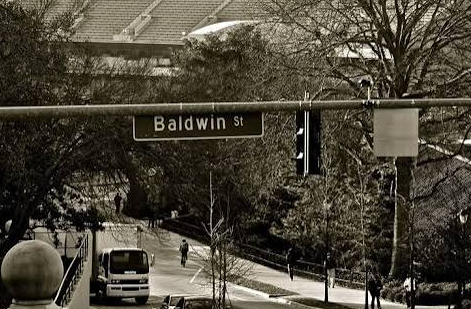
I interviewed a DJ from Johannesburg a few years ago, a wonderful person as well as a super sharp journalist. After we wrapped and as I drove him back to his hotel, he remarked with some wonder as we passed a sign for Baldwin Street. He thought it remarkable that a prominent street had been named to honor the great author James Baldwin; I smiled as I explained that in fact, the street was named for one of the most important white supremacists of the 18th century. A small town with a street named after James Baldwin would be in an altogether much different country.