
Of fulcrums and chasms

Given the very sleepy lead into 2025, despite the alarms blaring full bore, headwinds for clean energy seem to have roared to the forefront this year.

Tax credits expiring. Wind projects shelved or cancelled, often for extraordinarily petty reasons certainly consistent with the personality of leadership. Domestic US EV sales dipping.

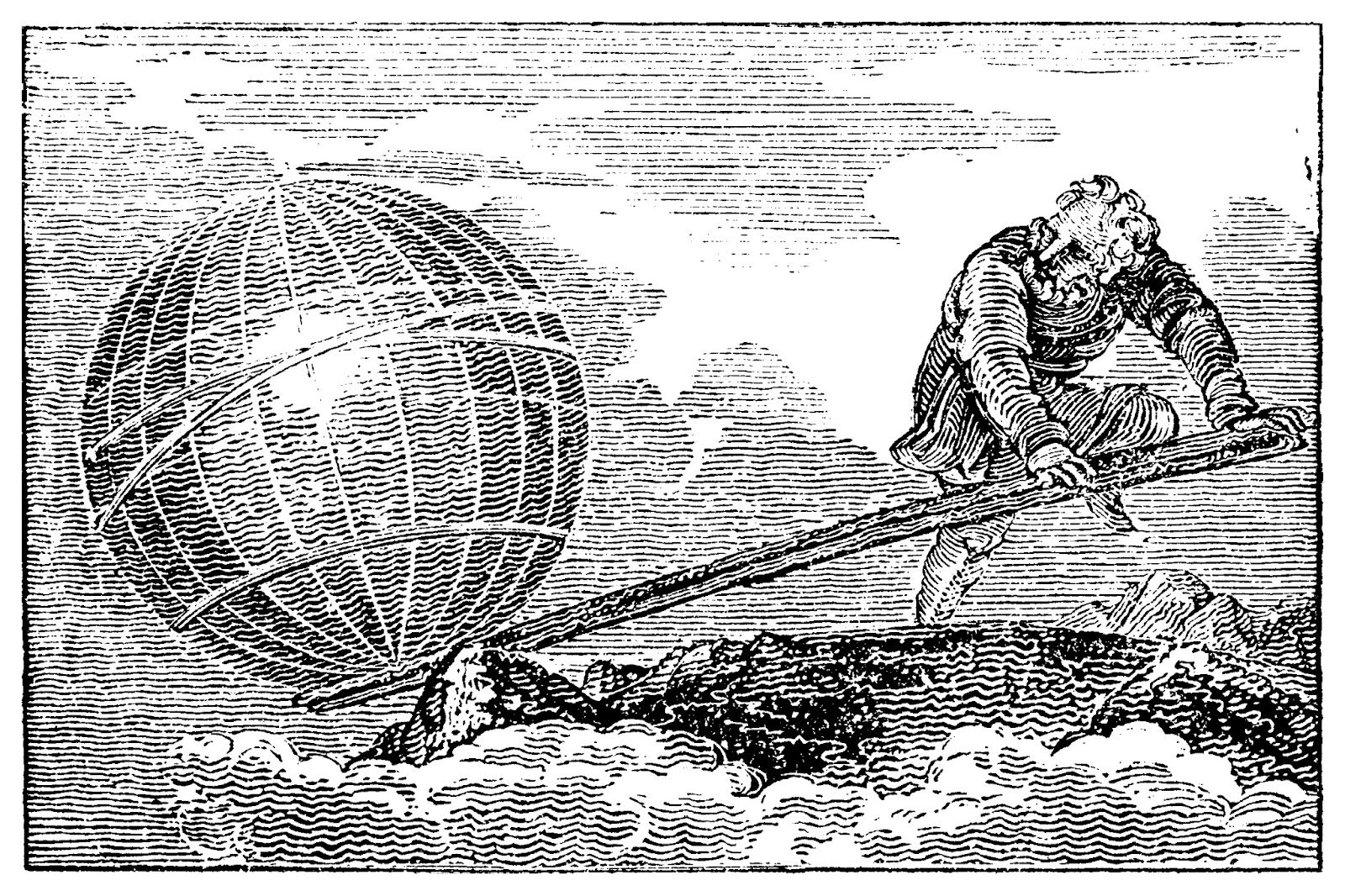
Despite the pettiness and short-sighted backwards-facing outlook, a cultural shift has been been leveraged into place. The ancient kind of leverage – with a rock and an iron bar:

“…as of the last three or four years, we finally have a tool, not at this point to stop global warming — it’s too late for that — but perhaps to at least shave some tenths of a degree off how hot the planet gets. And that tool is cheap energy from the sun and the wind and the batteries to store that power when the sun goes down or the wind drops. Alternative energy is the commonsense, obvious, straightforward way to make power on this planet, which is why 95 percent of new generating capacity around planet Earth last year came from these clean sources.

The authoritarian mindset –  which eschews progress on meaningful rights and resources for all in exchange for illusory safety from outside foes and forces – has always protected fossil fuel production by forgiving its destructive effects on people and planet in return for cheap energy. Another instant where the meaning of words carelessly cast aside returns for payment, with interest.

And now, that mindset is suspended over a chasm: destructive effects of global warming, coupled with cheap, clean energy increasingly available everywhere. Incompetent/compromised [let’s be honest] government is a distinct disadvantage. Can capitalism be saved?

Be neither depressed nor overly sanguine, as these were never the options. Instead, mock the laggards incessantly, especially your own. If you don’t know or feel unsure, find out. Use everything you have, make things. Row into the currents. Turn the beat around.

Image via
An oil rig in the wind

There’s a broad truth about solar power – that more energy hits the Earth every morning than every person on it uses in 27 years. It’s the challenge of the harnessing that energy and making it available for everyone that continues to vex.

But buried in an article about wind turbines in the Gulf of Mexico is this little corollary gem:

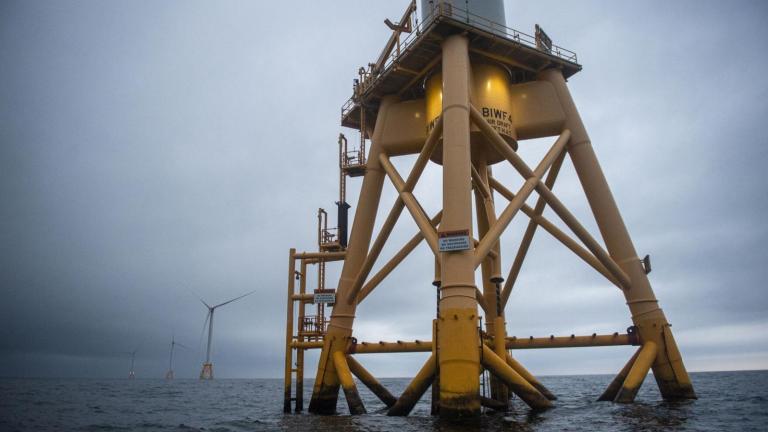
Wind turbines in the Gulf of Mexico could generate up to 508 gigawatts of electricity, according to a 2020 study by the National Renewable Energy Lab, twice as much energy as Gulf states cumulatively consume. The 700,000-acre area the Biden administration now wants to open up for wind farm development could eventually supply enough electricity for over three million homes, according to a White House fact sheet.

Emphasis added. I mean, come on. There it is, and not to mention other recent stories about have these wind turbines installed by oil rig workers, otherwise known as cowboys already accustomed to working on dangerous platforms out in the ocean.

To repeat: come on.

Image source

Making climate reduction technologies sexy

Or… sexier than ape cartoons.

My head, it shakes. Because no matter how seriously and soberly one might approach the financial dilemma of bringing promising technologies to maturity by broad investments, there are always hand-scrawled love notes, or pictures of pictures, or the newest version of L.H.O.O.Q., not to mention instant toothbrush delivery schemes to entice the ridiculously wealthy or even the passingly prosperous. It’s a problem:

Tony Fadell, who spent most of his career trying to turn emerging technologies into mainstream products as an executive at Apple and founder of Nest, said that even as the world faces the risks of climate change, money is flooding into less urgent developments in cryptocurrency, the so-called metaverse and the digital art collections sold as NFTs. Last year, venture capitalists invested $11.9 billion in renewable energy globally, compared with $30.1 billion in cryptocurrency and blockchain, according to PitchBook.

Of the $106 billion invested by venture capitalists in European startups last year, just 4% went into energy investments, according to PitchBook.

“We need to get real,” said Fadell, who now lives in Paris and has proposed ideas on energy policy to the French government. “Too many people are investing in the things that are not going to fix our existential problems. They are just investing in fast money.”

Even so-called ESG funds and investor movements run the risk of becoming fads, passing, allowing a regression toward the mean, also know as same old, same old. Governments have to do more to leverage current investments and attract new. But there also has to be some boring seriousness to guide the reckless speculation, as contradictory as that sounds. Otherwise, we’re still speculating alright, on something.

Image: Not a new version. Duchamp would be kicking himself

Re-enforcing the Supply lines

So… one man’s colossal miscalculation is another man’s a planet’s sped-up timeline for addressing climate change? I’m not trying not to see it that way, and energy efficiency guru Amory Lovins doesn’t need to convince me. But the winds are at somebody’s back:

Lovins, an adjunct professor of civil and environmental engineering at Stanford University, has been one of the world’s leading advocates and innovators of energy conservation for 50 years. He wrote his first paper on climate change while at Oxford in 1968, and in 1976 he offered Jimmy Carter’s government a blueprint for how to triple energy efficiency and get off oil and coal within 40 years. In the years since there is barely a major industry or government that he and his Rocky Mountain Institute have not advised.
But for much of that time efficiency was seen as a bit of an ugly sister, rather dull compared with a massive transition to renewables and other new technologies. Now, he hopes, its time may have come. Lovins is arguing for the mass insulation of buildings alongside a vast acceleration of renewables. “We should crank [them] up with wartime urgency. There should be far more emphasis on efficiency,” he says.
He sees Vladimir Putin’s war in Ukraine as an outrage, but possibly also a step towards solving the climate crisis and a way to save trillions of dollars. “He has managed to bring about all the outcomes that he most feared, but he may inadvertently have put the energy transition and climate solutions into a higher gear. Whether or not we end up in a recession because of the disruption, [Putin’s war] may prove to be a great thing for climate economics.”

As he explains, solar and wind are among the cheapest bulk power sources, and Putin’s authoritarian misadventure has put energy externalities in the center of the frame.

Again, it’s the boringest, not-technology solutions that have the greatest effect. And there’s a lot to reckon with in what he says about nuclear:

The most energy-inefficient design of all, he says, may be nuclear power, which is heavily subsidised, costly and pushed by a politically powerful lobby. Using it to address shortages of electricity or to counter climate change, he argues, is like offering starving people rice and caviar when it’s far cheaper and easier to give just rice.

Trashed it

Jeremy Irons, talking about the new feature-length documentary on trash he produced:

San Francisco has actually reached 80% diversion or Zero Waste this year. New York, which creates 1.5% of total global waste, currently recycles only 15% of it. State and federal government should provide legislation which designs a waste management policy right across the country. In the UK there is a similar situation in that, depending where you live, the waste management policies and goals differ greatly. I believe that most people would like to cooperate in reducing waste, but to encourage them the national policy should be clear, well advertised and consistent. Even within Greater London there is a huge discrepancy between council policies. I believe a national waste management initiative should be designed and implemented by government. Not to burn it or bury it, but to design and encourage its reduction and recycling. This time of rising unemployment seems ideally suited to the creation of a new and forward-thinking industry that could be profitable and create new jobs. If we became world leaders in recycling technology, then that expertise could be exported around the world.

I like the concept of zero waste, and/but it’s going to take a while to get it into the zeitgeist-y lexicon all the kids are slinging these days.

And it’s hard to believe we’re still talking about incineration – I was canvassing for MassPIRG on that issue in 1988.