Asset Class not in Session

Exotic financial instruments. Linking ‘investors’ and funding to projects to weave profits out of insurance or management strategies designed to ease or hasten climate adaptation… doesn’t actually work:

That’s because of the nature of the underlying “asset.” Sure, in theory, you could securitize the construction of a seawall and capture returns via fees from wealthy coastal dwellers or local councils. But seawalls are not widgets. Each has to be uniquely designed for a specific location and its conditions. There are few economies of scale.

There’s also no established norm about how the costs of climate adaptation projects should be shared among those who are being protected. Will enough residents willingly pay for our theoretical seawall, either directly or via their taxes? Who’s being protected, and at whose expense? Structures that protect one stretch of beach can often create problems further along the coastline.

Adaptation doesn’t fall into a neat category. It can mean investing in infrastructure or designing programs to protect nature. It can involve constructing big sea walls, but it can also be about retaining trees on city streets, or ensuring access to clean drinking water. Right now these measures are too small to interest big pension funds and asset managers. A report by UNEP and others found only about two dozen projects larger than $25 million over the last few years.

Important to separate the reality that climate measures are necessary, and will necessarily save money down the road, from the notion that they represent just another opportunity to build a new revenue stream. The article wisely links climate to justice, and as much as it pains many Americans, there is no way around that. It has been true for even longer than it’s been evident – and it’s been evident for a very long time: people cannot live without justice. Racial. Climate. Economic. These are non-negotiable bonds, in the common parlance. We will do it for its own sake, because it benefits people. THAT’s the return. Clean up the rentier class soiling the revenue stream, the water will run clearly.

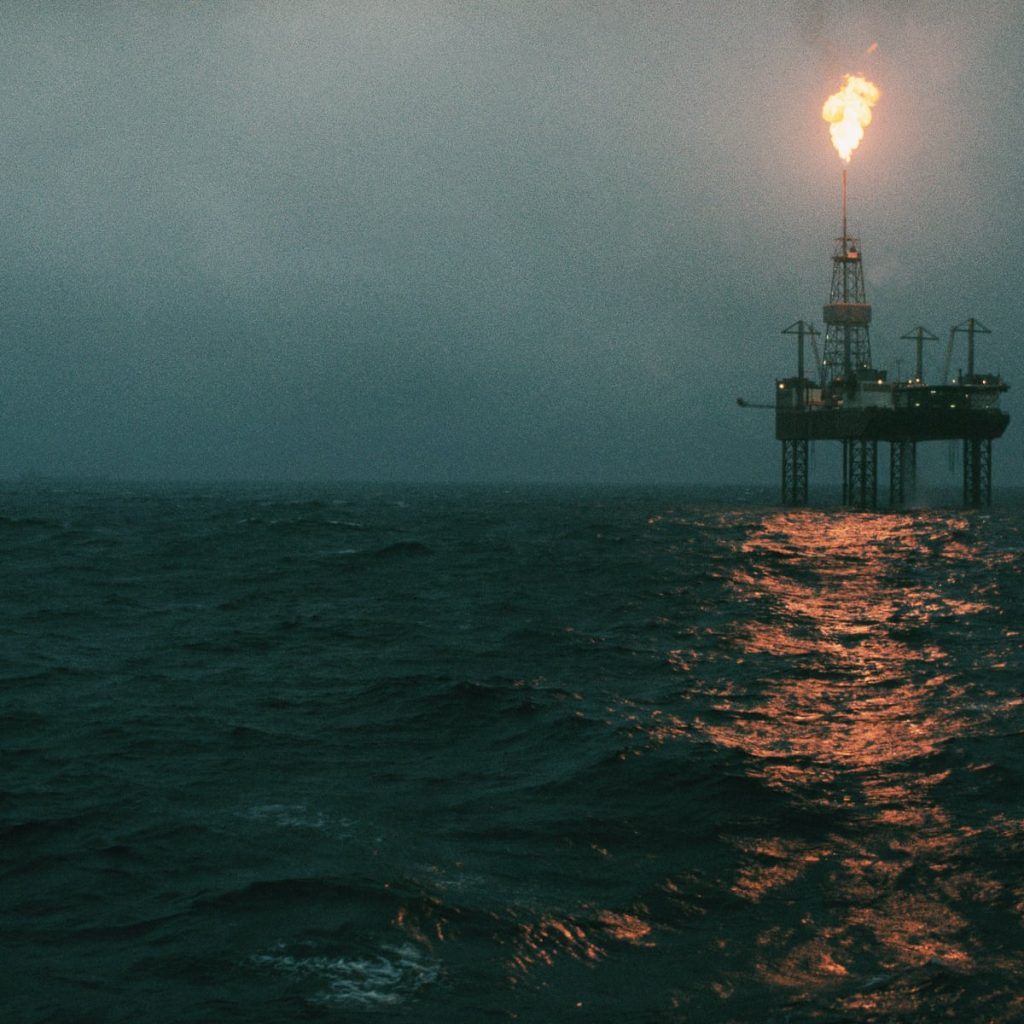
Image: Photograph: Emory Kristof/National Geographic/Getty Images
The Land of Recurring Contributions

All those sayings, aphorisms, cute quotables about giving back, making a contribution… That’s not what they meant:

I clicked on the link so you don’t have to, and discovered that my $75 contribution will keep happening every month automatically unless I unclick an already helpfully checked box that makes my contribution recurring.

As the kids say, it’s all over the internets, but no one has as much contempt for Republican voters as Republican politicians and right-wing media. Unsurpassed.

Be Moved

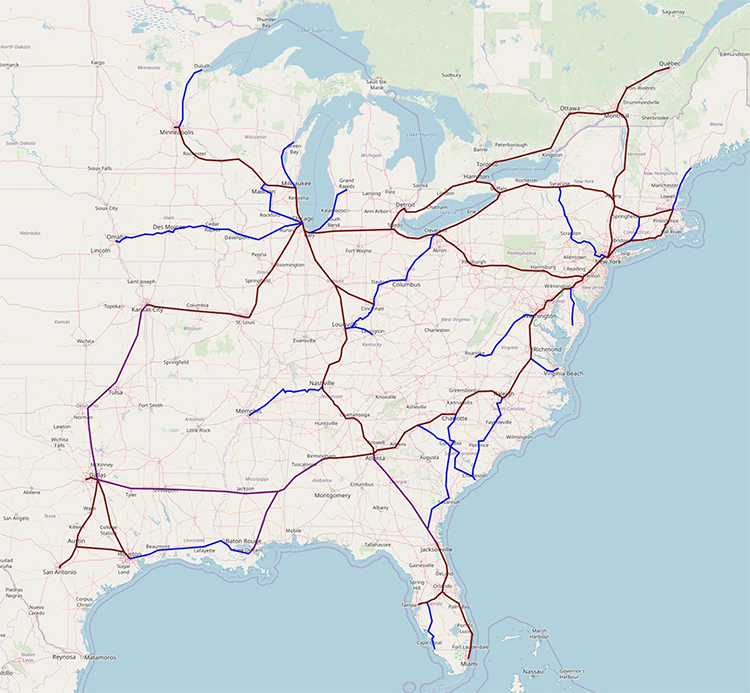
If you build it, will they take them? Trains, that is, super, high-speed and just regular intra-city transit. And Buses. Buses! But before even the lowest-frills fancy stuff, fix the bridges:

Most, if not all, Americans support the idea that bridges shouldn’t collapse as you drive over them, yet there are 44,741 bridges in the United States that are rated “poor” by the Federal Highway Administration. Nearly 45,000! That’s out of about 616,000, meaning that about 1 in 14 bridges indexed in the United States receive the government’s lowest rating.
But wait! It gets worse. The three ratings used — good, fair, poor — are simply reflections of the lowest rating a bridge gets on the condition of its deck, superstructure or substructure. (If you think of a standard highway bridge, the deck is what you drive on, the superstructure is what supports the deck and the substructure is what holds up the rest of it.) Those values are assessed on a zero-to-nine scale, with the average score for all three components being about 6.5 nationally.

There’s handy searchable map at that link where you can see the bridges in your area that need maintenance. Yikes! There‘s a are multiple tons of them.

It’s also important that the Biden Infrastructure bill includes, among many other things, no money for expanding roads. Stop expanding already uncross-able roads and intersections. The BIKE is the answer, not the ambulance. This is one of the subtle keys to the shift in transit. And I’ve written previously about taking Amtrak below Richmond, VA. The trains themselves are very dated, but it’s the rickety tracks beneath them that feel like such a hazard. It’s a disgrace, and like the state of the postal system, it’s decline by design. It’s been left in purposeful, deliberate disrepair.

So there’s plenty to fix, and feel good about while we’re doing it. Not feel triumphant – it’s not necessary. Just responsible for taking care of our sh*t and making it useful. Buy yourself a nice pen with what’s left over and write someone a letter. You might get one back. Write the next one on the train. Feel romantic, be moved.

Front Foot

Stay on it.

White House officials are preparing to present President Biden with a roughly $3 trillion infrastructure and jobs package that includes high-profile domestic policy priorities such as free community college and universal prekindergarten, according to three people familiar with internal discussions.
After completing the $1.9 trillion coronavirus relief package this month, Biden administration officials are piecing together the next major legislative priority. Although no final announcement has been made, the White House is expected to push a multitrillion-dollar jobs and infrastructure plan as the centerpiece of the president’s “Build Back Better” agenda.

This will do multiple things, with hundreds of billions of dollars to repair roads, bridges, sewers, waterways and railways, as well retrofitting thousands of schools and other buildings, the bill also includes $400 billion to combat climate change, with $$$ for transit, and importantly, R & D. And this isn’t pouring money into nowhere – people will have to do that building, digging, measuring, research. So… jobs. Yes, boring and crucial.

And Republicans will fight it because of reasons. Let them. Make them. Remember: no tax cuts, especially the most recent ones, have ever been paid for. And the bugaboo of inflation will be what they betting on to argue against infrastructure investment. Let them explain. From the back foot.

Planetary quandary as nomenclature

If you can get beyond the extraordinary and expected CEO worship, there are worthy bags to unpack on the subject of Capitalism struggling with the language of climate change:

Confusing climate terminology has become commonplace among governments, and in some cases can even understate more far-reaching goals. Kelly Levin at the World Resources Institute found that many European countries say their goal is carbon neutrality, but digging in the documents reveals the target covers all greenhouse gases. California, which would be the world’s fifth-largest economy if it were a country, makes the same mistake.

“These are growing pains, as we translate the science into what it means for business and society,” said Ateli Iyalla, managing director of North America for CDP, a group advocating emission disclosures. “It’s important to use the right language and get the terminology right to send the right signals to the marketplace.”

Suspicion of implied deliberate obfuscation is warranted, so caveat lector always. A fixation on the marketplace, kicking the can as far out as it can be painlessly imagined deserves skepticism. But this struggle is admitting a chief flaw of capitalism, as a system seeking to right itself when solutions beg its very existence. As a system ideology, capitalism will not be able to completely reconcile its culpability without a commensurately profitable framing, it’s just an impossibility, a sine qua non of the entire, roll-up-your-pants, build-the-deck-higher mentality in the face of literal and figurative rising seas.

We can be interested in this struggle as an intellectual, artistic matter, yet parsing its ongoing circulation throughout financial systems and wealth management strategies it must be seen as an altogether different sort of reckoning: signal-sending, profit-guarding and bottom-line-feeding. Until mass audiences awaken to lead with solutions – changes in mindset, how we live and and move about, big finance will continue to lead from behind. It’s all they really know how to do, reinforcing an atmosphere in which it is highly incumbent on all to compare its track record with any new directions they are offering.

Image info

Dude diligence

This reddit/hedge fund cage match is everything about green (almost) rolled into one! It’s almost too much (get it?):

Wall Street hedge funds are scrambling, and it’s all because of a online investing forum that has more than 4 million members who self-describe themselves as “degenerates.”

Reddit’s WallStreetBets forum has surged in popularity after retail investors within the group successfully staged a gravity-defying short-squeeze in GameStop at the expense of hedge funds that were betting the physical video-game retailer was on its last legs.

A short-squeeze occurs when investors who are betting against the stock are forced to close out their position by buying the stock, further adding fuel to the fire.

As of Thursday morning, GameStop had a year-to-date gain of more than 2,400%. The rally in GameStop crushed Melvin Capital, a roughly $12 billion hedge fund that has suffered a more than 30% decline due to its short position in GameStop.

OMG, shorter all hedge fund doods: Stop doing what we do all the time because you’re not qualified to run a casino like we so definitely aren’t running, not at all, nosiree!

Bonus fun:

One-Hundred-Year Storm

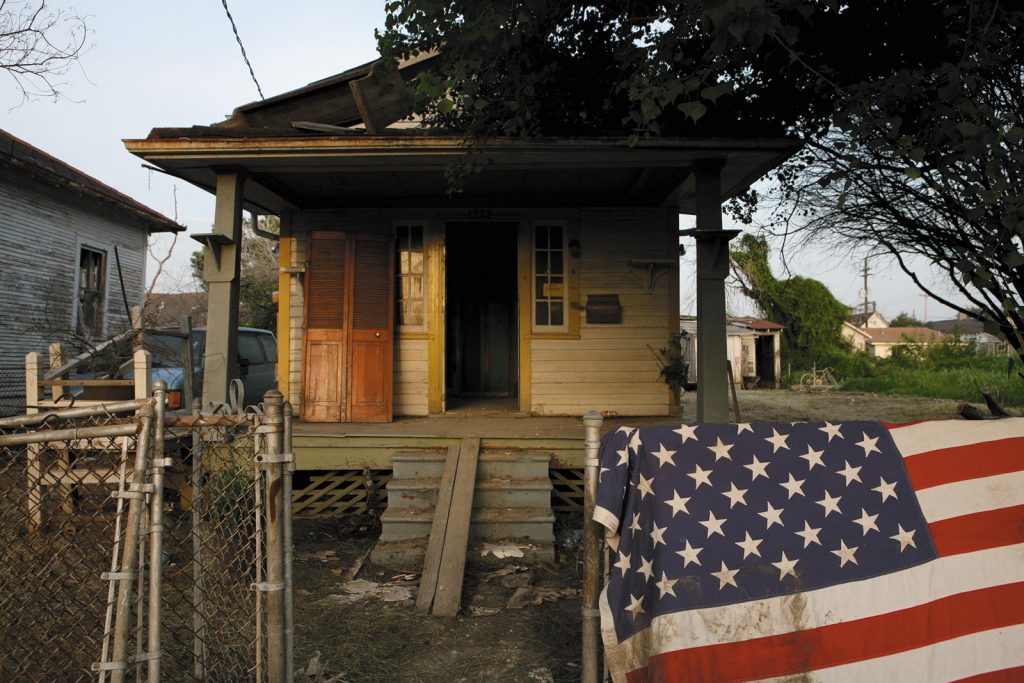
photo of house with flag over fence
A house damaged by Hurricane Katrina in the Lower Ninth Ward, New Orleans, 2005

With another hurricane approaching the Louisiana coast this weekend (Delta? does that mean they ran out names for this year? Yes, yes it does), the NYRB reviews a new book about New Orleans – Katrina: A History, 1915-2015:

“I ain’t proud to be American no more,” Dean Blanchard, a shrimp distributor, told a reporter in 2015.1 Ten years earlier, his business was nearly ruined when Katrina, one of the most ferocious hurricanes in American history, pummeled New Orleans, killing at least 1,440 people and causing $150–$200 billion in economic damage, including nearly $1.5 billion to the local seafood industry. Five years later, BP’s Deepwater Horizon rig exploded off the coast of Louisiana, spewing more than 134 million gallons of oil into the Gulf of Mexico and its coastlands and decimating food populations. A lawsuit brought by the Southeast Louisiana Flood Protection Authority to hold oil companies responsible for the environmental damage they had caused was opposed by the governor, then dismissed by a federal court. Blanchard became convinced that nothing—not government, not infrastructure, not the courts—was protecting him or his neighbors, that no one was fighting on their behalf.

Blanchard was not alone in this view. As Andy Horowitz, a historian at Tulane University, shows in his new book, Katrina: A History, 1915–2015, “The experience of Katrina, compounded with the oil spill, increasingly served Louisianans as a metonym for federal illegitimacy.” He argues that while President Obama described the oil spill as “the worst environmental disaster America has ever faced,” and the media presented it as “an efficient drama” unfolding over the course of eighty-seven days, “few people on the coast experienced that tight narrative arc.”

Disaster histories are usually written for entertainment, not diagnosis. They tend to begin in a calm, tranquil moment. Suddenly, there is a disruption: water from a tsunami breaches the nuclear power plant; Patient Zero leaves the market; the levee breaks. When political leaders arrive on the scene, they attribute the damage to an “Act of God,” “Mother Nature,” an unforeseeable error. Horowitz argues that Hurricane Katrina obliterated this narrative. “The more I have thought about Katrina,” he writes, “the more uncomfortable I have become with the idea of ‘disaster’ altogether.” Disaster, Horowitz believes, is a political category—“at best an interpretive fiction, or at worst, an ideological script”—one that’s usually invoked to defend or maintain the status quo. His book asks a necessary question: What happens to the story of this one moment in time if we stretch it forward and back, looking for causes and consequences that reach beyond the storm?

It’s all one story – the land development, the discovery of oil, the expansive canal digging, the sinking, the demolished wetlands, the unprotected infrastructure at risk from large storms exacerbated the very activity of said infrastructure – that bleeds out into a completely understandable loss of civic faith. A few get rich, many suffer, told and re-told over and over again, from slave markets to oil refineries. Katrina, a long time in the making, can but remind us of other slow-motion catastrophes coming due just now.

Taking the Slow Boat

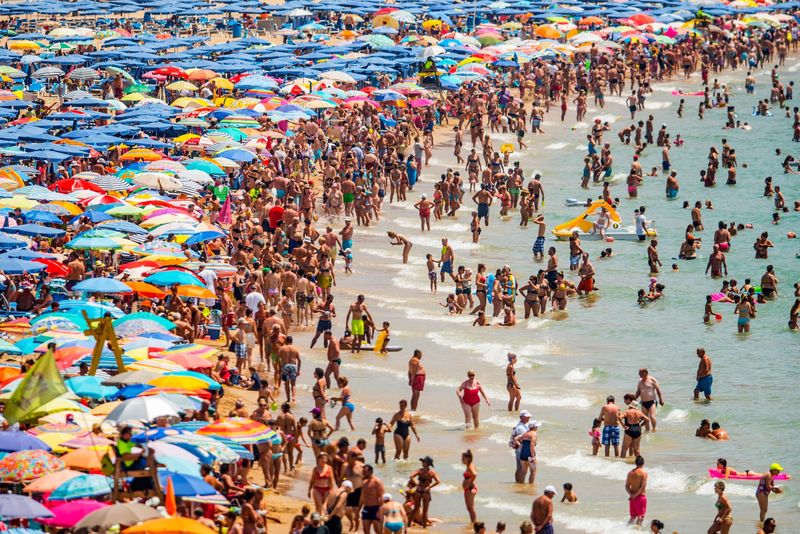
photo of crowds on a beach

People sunbathe at Levante Beach on July 22, 2015 in Benidorm, Spain. Photographer: David Ramos/Getty Images Europe

This being Amurrika and all, I started linking to the business press a little more regularly sometime ago, to be aware of how the world looks to those who see everything through the prism of money. Bloomberg Green has some good reporters and this digression on Mass Tourism’s Carbon Impact is valuable:

a model built by and for the masses, one that thrives on low-cost flights, all-inclusive hotel resorts, giant buffets and endless sangria. Spain, the world’s No. 2 destination with 83.7 million visitors in 2019, is a magnet for mass tourism (it’s no coincidence that package tours were invented not far from where I was standing). In total, the industry flew, accommodated, fed and entertained a good chunk of the world’s 1.5 billion tourists last year.

Globally, it was a booming sector before the pandemic, growing at about 4% every year, employing 10% of the world’s workers and representing 10% of global gross domestic product. The enormous cruise ships, fossil fuel-powered planes and the hotels in remote, water-scarce locations make it incredibly carbon intensive too. Total footprint is estimated at around 8% of overall human emissions.

The sector’s climate record before the pandemic was already discouraging. Efforts to lower the carbon footprint have mostly been limited to climate neutrality pledges and headline-grabbing small steps like eliminating mini-shampoo bottles, replacing plastic straws with paper ones and serving sustainable food on flights.

Just calculating the impact is hard. Any serious account should include carbon emitted directly from tourism activities, but also from the whole supply chain, also known as Scope 3 emissions. That would involve food, accommodation, transport, fuel and shopping.

Scope 3 emissions are an important benchmark, and we should be aware of how to think about carbon footprint. As for global travel, I have been an active participant for more than twenty years. I remember at one point looking into the cost/feasibility of traveling to Europe by ship instead of plane for a completely different set of reasons. Considering it again, it still makes sense – and is completely unaffordable vs. comparable flights. The reality of mass tourism is a conundrum – yes, people need to travel, to expand their mindfulness of and about the world. Yes, small communities without other industries need viable economic lifelines. Yes, it creates an environmental disaster in more ways than ten.

Things Fall Apart. Look at the photo up top. Look at what has become of Venice. Without factoring in the true costs of these experiences – cruise ships, quick trips, cheap tour packages – the viability of these this places and practices have already fallen into great peril. They are at risk, even as they continue unchanged. The cruise ship industry is revving their engines, despite the inherent contradictions of scale. We need to re-think broadly. Disperse the destinations. Stay longer, take longer to get there. Yes, it costs more. These experiences already costs more than we think.

Never having to say you’re sorry

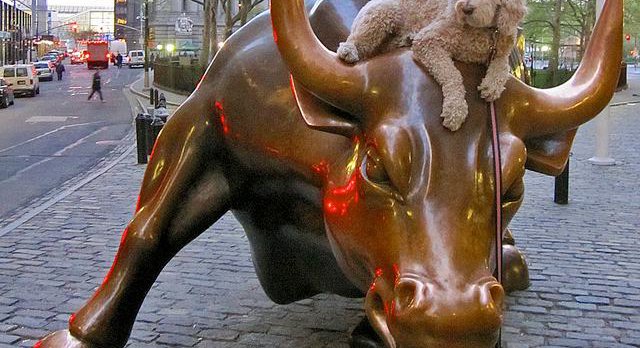
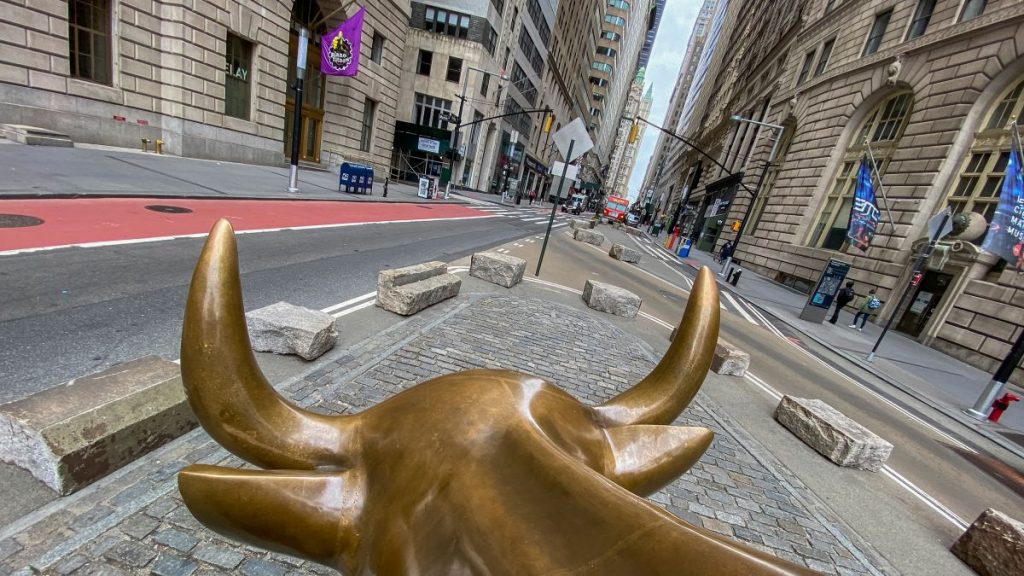
bull's eye view photo

For Wall Street, that’s what it means apparently. Torn over whether a Biden win brings joy or misery. Really.

Those with the rosier outlook point to Biden’s mostly pro-business inner circle, his significant campaign contributions from the financial industry and his longtime support of credit card companies located in his home state of Delaware. Plus, a Biden victory would likely be driven by U.S. voters seeking change because they believe the country is a mess. Wall Street thinks it has a strong argument to make that reining in lenders would be a fatal mistake when unemployment is sky-high and the economy remains ravaged by the coronavirus pandemic.

The enthusiasm, however, is tempered by fears over how much sway Biden will give progressives and their firebrand leaders, including Senators Elizabeth Warren and Bernie Sanders. That’s especially true when it comes to picking appointees to run the powerful agencies that police banks and securities firms, jobs that the activists are mobilizing to fill with industry critics. At a minimum, progressives want to ensure that the days are long over when Democrats appointed officials like Robert Rubin, Timothy Geithner and Lawrence Summers, who is a key Biden adviser.

The stakes for Wall Street couldn’t be higher. Centrist regulators would be less likely to overturn rule rollbacks approved under Trump that have saved financial firms tens of billions of dollars. Progressive agency heads, on the other hand, could pursue what the C-suite calls the “shame and investigation agenda.” Policies like taxes on trading, curbs on executive pay and even breaking up behemoth banks would be back on the table.

To wonder whether ‘Wall Street’ has some understanding of our current morass, much less the words ‘joy’ or ‘ misery,’ is to weep. Of course they do. Always check the business press if you’re wondering at all about the soul of a consumer society. Mantra for post-2016 world: it’s always worse than you think.

Image: Replica golden calf. Subtlety is NOT their strong point.

Powering Down

Necessarily ambitious climate targets to meet the Paris Agreement goals earlier must actually be designed to surpass them. As we’ve said often these efforts are results of broad collective action, by governments:

The centerpiece of Leonore Gewessler’s plan is a radical revamp of Austria’s public transportation networks, giving residents nationwide access to buses, trains and subways for a flat yearly fee that works out at 3 euros ($3.38) a day, encouraging citizens to leave their cars at home. Austria’s minister for climate, energy and transportation policy, is drafting new laws that’ll redistribute billions of euros toward more ecologically-friendly activities in the euro area’s sixth biggest economy.

“That’s the project that is very dear to my heart,” said Gewessler in her first interview in her ministry since the outbreak of the Covid-19 pandemic. Road traffic remains a “key concern” for Austria to meet its goal of reaching climate neutrality by 2040—a decade earlier than the target set by the European Union.

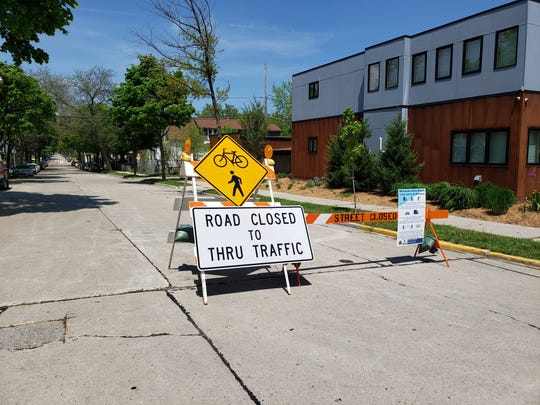
Note when this is happening – now. Even and especially during the pandemic. The localities we’ve heard about where streets have been restricted to pedestrian-only traffic requires another couple of steps to complete the process. Paired with (cheap!) alternative transportation options, this will seem like another thing we just had to do. (Narrator: Because. It. Is.)

Image via the Milwaukee Journal Sentinel