
The Oscars’ Lack of Diversity

oscar_0Not exactly a punchy title but… my own reaction to the monochromatic handing out of the little gold guys doesn’t feel so cheeky.

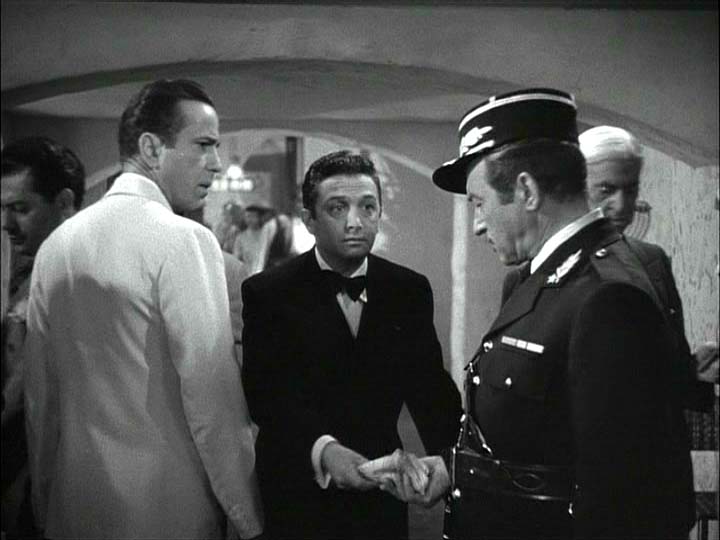
Is it the lack of good movies with stars of color? Decent roles for any other than white actors? The more questions you attempt to formulate, the more perverse this choosy reality seems. I will agree that it is positive that consensus seems to be congealing around the fact that something is wrong with this picture these pictures. But still, why is it that in 2016 only white actors are being recognized for their efforts in mass-marketed motion pictures? Even writing that sounds intentional and stupid.

Are we putting too much on the Academy?

“We absolutely are. This is not really about the Academy. The Academy is a reflection and a symptom of a very deep problem in Hollywood and, I would say, in American popular culture generally. I am fortunate enough to do a lot of my work in Los Angeles. I go to many meetings at studios in L.A. and you see, by and large the decision makers at the top of departments and organizations are almost uniformly white and largely male as well. The demographics are not the only story. The key there is not just the color of people sitting behind important desks, it’s the thought process. It’s what are deemed important stories. It’s what are deemed merely entertaining stories. I think when ‘Straight Outta Compton’ was green-lit and produced, people saw it only as an entertaining movie, not as an important movie because it was only about a hip-hop group. As opposed to seeing it as telling a story about a defining chapter in recent American history, which it actually does. It’s not just about hip-hop, which is important in and of itself, but it’s about the Rodney King riots, racial conflict and police brutality and all of these things make it important. Same with ‘Creed’.”

SMH, as the kids say (walking out of the theatre).

Trivialized media

Compter-sur-les-mains-en-ChineIranian blogger Hossein Derakhshan was sent to prison in 2008 for what he had written and advocated for online. When he was released in 2014, the internet had greatly changed:

There’s a story in the Qur’an that I thought about a lot during my first eight months in solitary confinement. In it, a group of persecuted Christians find refuge in a cave. They, and a dog they have with them, fall into a deep sleep and wake up under the impression that they have taken a nap: in fact, it’s 300 years later. One version of the story tells of how one of them goes out to buy food – and I can only imagine how hungry they must have been after 300 years – and discovers that his money is obsolete now, a museum item. That’s when he realises how long they have been absent.

The hyperlink was my currency six years ago. It represented the open, interconnected spirit of the world wide web – a vision that started with its inventor, Tim Berners-Lee. The hyperlink was a way to abandon centralisation – all the links, lines and hierarchies – and replace them with something more distributed, a system of nodes and networks. Since I got out of jail, though, I’ve realised how much the hyperlink has been devalued, almost made obsolete.

The piece is full of pull quotes, so read the whole thing. How little we notice just how much social media sites and our use of them has changed is a tribute to the ingenuity of engineers in Silicon Valley. They think about this stuff all the time, so we don’t have to! But the punchline is… we do have to. Derakshan’s perspective is a stark reminder of just how limited the use of social media has made our world – all beneath the aegis of connecting, sharing and informing. Frogs eventually do notice the water boiling. It’s crucial to set the irony aside, and reset the way online convenience has conditioned us already.

There’s a resolution. Happy 2016.

Image: Count on your hands in Chinese

Grey Lady Blushes, Again

pointsourcepollutionThis will not get enough attention, but the source pollution problem at the New York Times, as Cholly Pierce so precisely put it, is a devious issue of national proportions:

As is now obvious, somebody fed the paper bad information on San Bernardino murderess Tashfeen Malik’s social media habits. It was said that she was posting jihadist screeds on Facebook. The Times hyped the scoop by stating pretty clearly that the government—and the administration running it—slipped up. It was the inspiration for endless bloviating about how “political correctness is killing people” at Tuesday night’s Republican debate. Then comes FBI director James Comey to say that, no, there were no public Facebook posts that the government missed because there weren’t any at all.

More than a few people have noted that two of the three reporters who were fed this story also had their bylines on the notorious (and thoroughly debunked) piece about how the FBI had launched a “criminal inquiry” into Hillary Rodham Clinton’s alleged mishandling of classified materials in her e-mails.

Of the Clinton emails non-story, she wasn’t a target, it wasn’t a criminal referral and the emails weren’t classified. Other than that, great story! And the thing is, even pointing out this makes one sound like an HRC apologist, but nevermind.

The broader issue is, this is the problem if we’re only going to allow ourselves one national paper. The purchase of the major Las Vegas daily by its hometown casino magnate-cum-Republican kingmaker is further symptomatic of this self-replicating double-bind. The news as business, scandal as profit generator, reporters trained in the finer arts of the same and quaint rules of journalism secure under glass at the few J-schools left all equal an untenable republic. Remember: No Checks = No Balances.


What Does GreenLand Mean?

greenland_guardianRapid ice melts and calving glaciers are resulting in a dark snow phenomenon in Greenland. Look at these images in the Guardian and tell yourself over and over again that nothing is happening:

For most of us, science is an abstract subject but aerial photography is a powerful tool to translate what environmental science is telling us. It brings a different perspective to environmental problems. You can be very clear or very abstract to make images that are inspiring and beautiful, images don’t have to be read straight ahead. It’s sort of like teasing the viewer … to find clues in the image,’ say [photographer Daniel]Beltrá

In another coincidence I just noticed, this is the 1,001st post on the site.

The Frenetic End of Oil

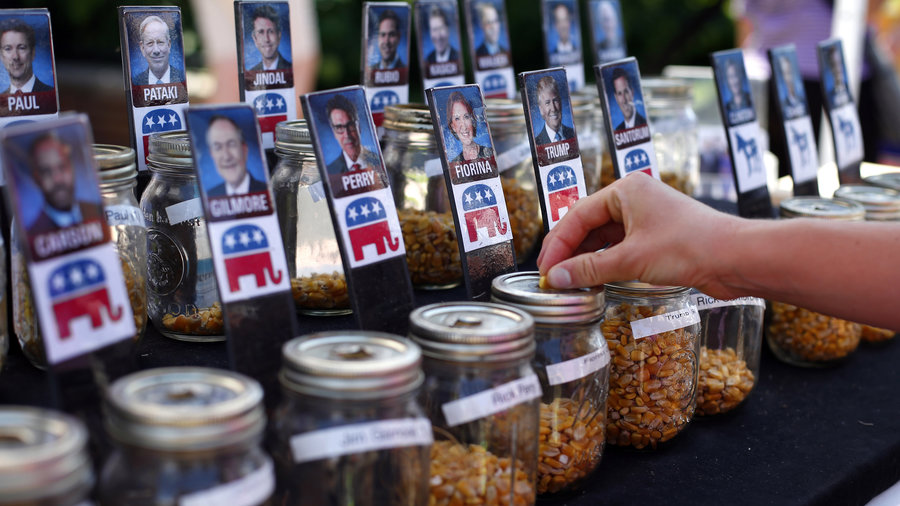
General Economic Imagery From North Dakota Ahead Of The Republican CaucusParis talks but clean energy patents fly, it seems.  This Bloomberg feature on the boom and bust of the Bakken oil fields of North Dakota has the look of a high speed news reel that is, maybe, not quite how we imagined it. But once the process shows itself from beginning to end so quickly in this way, you can imagine happening over and over again. The pollution, the waste, the overbuilding, the exodus:

The discovery last decade that fossil fuels could be tapped from deep beneath the windswept prairies of North Dakota acted like a magnet on American working people. By the thousands they came, from as far as Texas and California, fortune-seekers in a modern-day Gold Rush. Together with visionary companies like Continental Resources and industry behemoths ExxonMobil and Norway’s Statoil, they exploited a new technology called fracking — blasting the underground Bakken rock formation with sand and water and slurping up the crude that was hiding there for millennia — to increase oil output in the region 12-fold from 2006 to 2014. The bonanza helped drive the U.S. closer to energy self-sufficiency than it’s been since the 1980s.

The frenzied production exacted a price — oversupply was one reason the U.S. crude price took a nosedive, losing more than half its value from a June 2014 peak. The number of rigs pumping crude from the Bakken plummeted to about 70 from a high of 200, and the tide of workers began to ebb.

Meanwhile, clean energy patents are at their all time high, which may also be a frenzied if inelegant prologue to the next age that is also not as previously imagined. In what remains of the capitalist economy, money still rushes in first, not pretty, sometimes not even choosy. But at least we can be a little more sanguine about what’s left to choose from, that the new ideas are exploding with quiet steam instead of smokey emissions, that maybe growth now will be slow and visible like the gentle oscillation of giant windmills. I know, poetry is sometimes like the explicit sunset in the image: not sure whether it’s rising or setting unless we understand the direction we’re facing.

 Image: David Acker/Bloomberg, fishing in the frozen Missouri River.

Since 2001, the US has admitted roughly 750,000 refugees

Syr flagsand none have been accused of involvement in domestic terrorism aimed at the US homeland, as pointed out by The Economist and included in Juan Cole’s excellent list of why we shouldn’t be so cowardly about accepting refugees:

8. The US owes these refugees. Without the US invasion of Iraq in 2003, there would have been no al-Qaeda in that part of the world, and no al-Qaeda offshoots like Daesh/ ISIL. Why do the governors (most of whom supported the invasion of Iraq) think the US can go around the world sowing instability and being responsible for creating the conditions that lead to millions of refugees but then can avoid the responsibility of ameliorating those broken lives?

Number 8 is important but the whole list is good. As Pierce pointed out, when the president of France confirmed yesterday that they would accept 30,000 Syrian refugees, the argument is effectively over. Sorry, this pandering foolishness must end. Yes, people can be and are scared. But the ones we should be focused on are those forced to leave their homes with young children.

Image via Reuters.

Misleading Investors

gas-pump-climate-changeI guess if that’s how we’re going to see things. But it would be better to state at the outset that every instance of disbelieving, climate change skepticism rises from the deliberate misinformation campaign devised by fossil fuel extraction companies when their own research began to tell them that the delicious smell from the kitchen was their own bacon frying:

New York State Attorney General Eric Schneiderman released the results of an investigation that found one of the world’s largest coal companies had misled the public and its shareholders about the risks climate change could pose to its bottom line.

After several years of investigations, Schneiderman reached an agreement with Peabody Energy that won’t require the company to admit it broke the law and does not entail a fine or other penalty. Instead, Peabody must file revised shareholder disclosures to the Securities and Exchange Commission with new language acknowledging that “concerns about the environmental impacts of coal combustion…could significantly affect demand for our products or our securities.”

The agreement comes just days after Schneiderman issued a subpoena to ExxonMobil, kicking off an investigation into whether the oil giant has misled investors and the public about the basic science of climate change for decades. Exxon has denied any wrongdoing. While the two investigations have some similarities, Exxon could face tougher penalties than Peabody, said Andrew Logan, director of oil and gas programs at Ceres, an investor advocacy group. The allegations against Exxon stretch back much further in time and could potentially be more serious, so the attorney general could pursue more aggressive action against the company, Logan said.

The Exxon practice is the actual real story here, one that goes back to the late seventies. The companies were no fools; they invested their own money in real research because they wanted to know the truth. They just decided that it was more important that you didn’t know. And that you questioned any attempts by the government to reign in your freedom. They even gave you a few things you could say.

Framing the practice of climate deception as ‘no duty’ to be truthful with investors may make it seem like a victimless crime, we’re all adults here and all’s fair in love n’ bidness, but c’mon.

Green Opposition

Keystone-PipelineIt is enough to say that economics and environmental opposition have made building the Keystone XL Pipeline impractical. What this outcome may portend for the fates of other fossil fuels as the economics change may bare a little more fleshing out:

The company behind the Keystone XL pipeline has asked the US government to put its review of the controversial project on hold.

TransCanada says the pause is necessary while it negotiates with Nebraska over the pipeline’s route through the state.

The move came as a surprise as TransCanada executives have pushed hard to get approval.

Environmental groups oppose the 1,179-mile (1,897km) pipeline, saying it will increase greenhouse gas emissions.

Maybe they’re pulling it until President Carson can approve the travesty project. But perhaps the reckoning is that neither version of green opposition is sufficient to turn the tide against an legacy energy source – that the power of both and maybe every meaning of green is necessary to make the difference

RankBrain

File this under “cabbage truck,” “born” and “yesterday:”

Salish-language-signsArtificial intelligence sits at the extreme end of machine learning, which sees people create software that can learn about the world. Google has been one of the biggest corporate sponsors of AI, and has invested heavily in it for videos, speech, translation and, recently, search.

For the past few months, a “very large fraction” of the millions of queries a second that people type into the company’s search engine have been interpreted by an artificial intelligence system, nicknamed RankBrain, said Greg Corrado, a senior research scientist with the company, outlining for the first time the emerging role of AI in search.

RankBrain uses artificial intelligence to embed vast amounts of written language into mathematical entities — called vectors — that the computer can understand. If RankBrain sees a word or phrase it isn’t familiar with, the machine can make a guess as to what words or phrases might have a similar meaning and filter the result accordingly, making it more effective at handling never-before-seen search queries.

Key quotes from the Bloomberg article:

“Machine learning is a core transformative way by which we are rethinking everything we are doing,” said Google’s Chief Executive Officer Sundar Pichai on the company’s earnings call last week.

Unironically, we’ll assume. And

“It’s very carefully monitored,” Corrado said, nothing that Google periodically updates the system by feeding it a load of new data to help it better reason with new concepts.

Here’s a guess: A new, highly valued skill set becomes communicating with language and word combinations that the computer cannot understand. Weird, constantly changing pigeon combinations develop that mimic and often include the use of dying and/or dead languages. But this development coincides with the mass extinction of any ability to communicate, “search,” think or anything else with any language other than what the computer can understand. The race is on to talk and write beyond the reach of the learning machines. Think of it as sort of a dystopian, 1984-esque, Escape from Jeopardy-Humanities-Terminator cauchemar (see what we did there?), that I am not going to write but on the film about which I would like to have points.