More than a feeling

Brooklyn: A Personal Memoir
With the Lost Photographs of David Attie
by Truman Capote
Let this be the last election in which Republicans are allowed to vote against people voting. To win office, you must be required to win more votes, rather than suppress or decrease the number of voters. The only way to be prepared to govern – not reinforce your advantages, not reward your nests or feather your friends, however the saying goes. Unfettered capitalism has done more to undermine capitalist systems than an army of Engelses and a brigade of Marxes. Speaking of whom, To the Finland Station:

“To the Finland Station” is different. The structure is simple: the decline of the bourgeois revolutionary tradition after the French Revolution, as Wilson sees it reflected in the writings of Jules Michelet, Ernest Renan, Hippolyte Taine, and Anatole France; the emergence of revolutionary socialism, seen through the writings of Saint-Simon, the communitarians Charles Fourier and Robert Owen, and Marx and Engels; the triumph of Communism, illustrated by the careers of Lenin and Trotsky. There are things Wilson minimized that would have complicated this narrative: the persistence of a non-Communist socialist ideal in Western Europe; the liberal tradition in Russian politics (to which Nabokov’s father belonged); the success and failure of the Mensheviks, of whom Wilson did not make much. And, of course, if the book were being written now, the vicious side of Marxist and Leninist thought, mostly a subtext in Wilson’s account, would guide the narrative, and the story would touch down in Siberia or Berlin rather than at the Finland Station.

But we don’t read “To the Finland Station” as a book about the Russian Revolution anymore. What draws us now is the subtitle: “A Study in the Writing and Acting of History.” History is the true subject of Wilson’s book, and what he evokes is what it felt like to believe—as Vico and Michelet, Fourier and Saint-Simon, Hegel and Marx, Lenin and Trotsky all believed—that history holds the key to the meaning of life. The evocation is successful because when Wilson began writing “To the Finland Station” he believed in history, too. He thought that history had a design, and that the Depression was an event fully comprehensible within the context of that design: it was the long-predicted collapse of the capitalist order. “To the Finland Station” is valuable as a window on the nineteenth century, but it is also a poignant artifact of the nineteen-thirties, a time when many people thought that history was something you could get on the right side or the wrong side of. It was an idea indistinguishable from faith, and Marx was one of its prophets.

It’s a dirty foul that American school kids don’t learn about Jules Michelet. We must get beyond this aversion to learning about certain histories, be it socialism or the 1619 project, whatever. The less you know, well, the less you know and suddenly another Trump falls off the turnip truck yesterday and the corporate types get summoned to the cut of his jib, obscuring the more accurate assessments, ‘something just ain’t right with that boy.’

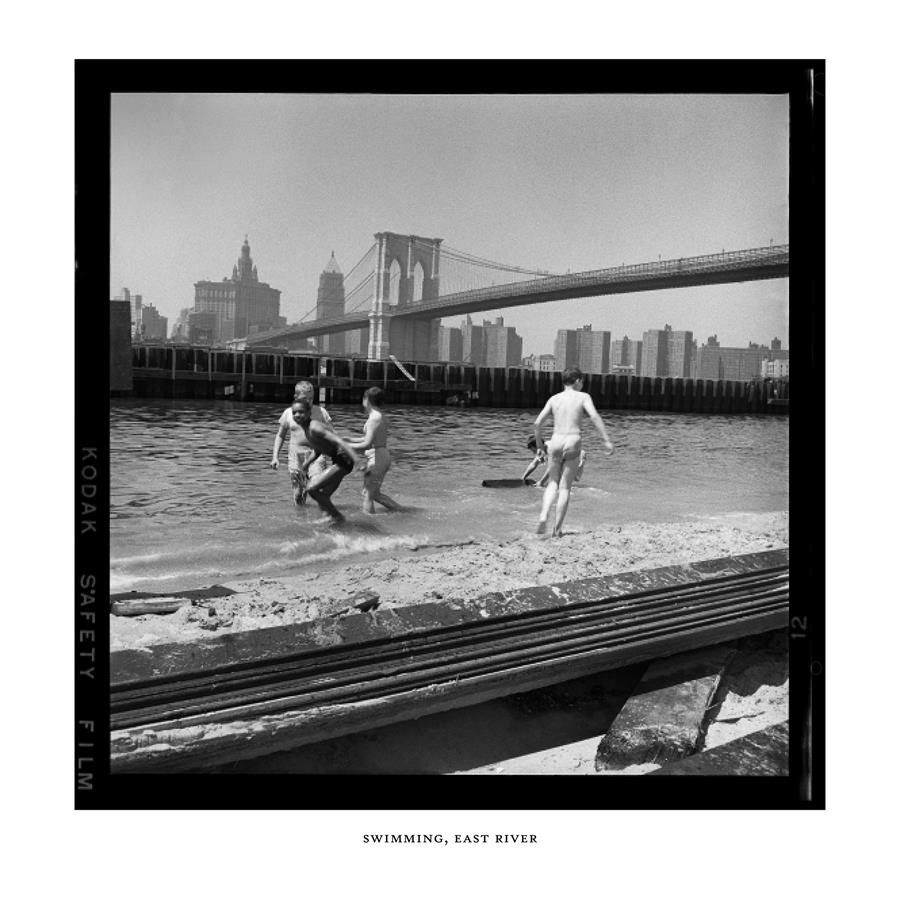
Image by David Attie, 1959, from the NYRB
Who’s the sucker?

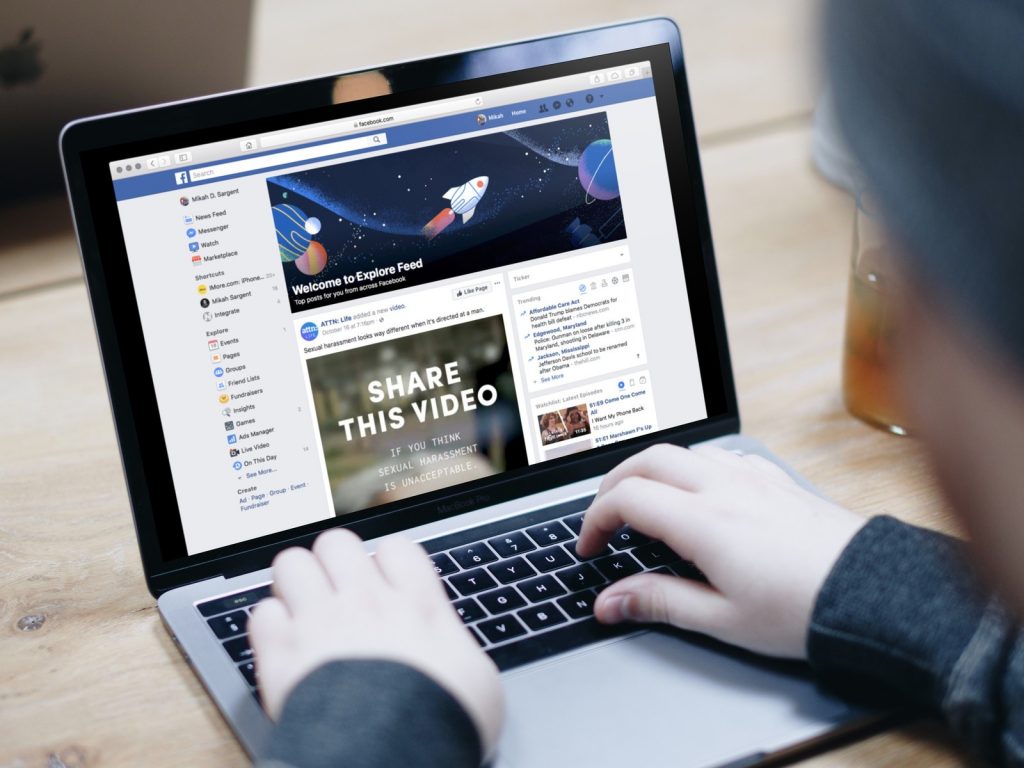
Or, in the case of facebook, if you can’t tell what the product is – it’s you:

Facebook is the prime online, global incubator of racist, quasi-fascist propaganda, conspiracy theories, state-run psyops and agit-prop operations, even in at least one case actual state-backed programs of population transfer and arguable genocide. But to really understand the problem with Facebook we need to understand the structural roots of that problem, how much of it is baked into the core architecture of the site and its very business model. Indeed much of it is inherent in the core strategies of the post-2000, second wave Internet tech companies that now dominate our information space and economy.

Facebook is an ingenious engine for information and ideational manipulation. Good old fashioned advertising does that to a degree. But Facebook is much more powerful, adaptive and efficient. That’s what all the algorithms do. That’s why it makes so much money. This is the error with people who say the fact that people do bad things with Facebook is no different from people doing bad things with phones. Facebook isn’t just a ‘dumb’ communications system. It’s not really a platform in the original sense of the word. (The analogy for that is web hosting.) Facebook is designed to do specific things. It’s an engine to understand people’s minds and then manipulate their thinking. Those tools are refined for revenue making but can be used for many other purposes. That makes it ripe for misuse and bad acting.

As Josh says, fB is in the middle of another round of bad publicity and they deserve every bit of it. Obviously also another meaning of being green, but we CAN learn, get older and [a bit] wiser.

And speaking of TPM and green, find some good media you trust and pay for it. Support it. Help it exist. TPM is a good one that I’ve read for many years now. But don’t believe me, go check it out for yourself. Hit ’em up.

Image via.

Patience or patients

The good news wrapped in the bad: COVID-19 seems to mutate slowly enough that a vaccine could be available by yearend or early 2021.

Opening schools for in-person instruction, at every level, would seem best AFTER that time. Do we have the ability/courage/wisdom to wait it out? Only complete answers accepted. Show your work.

Image: Plants listening to Puccini in Barcelona, via the Guardian.

Not the Same as it Ever Was

Things shutting down, a leadership vacuum and sports leading the way to a quieter next few weeks brings up a lot of possibilities that fall on the interesting/frightening continuum. What will be the new normal that follows this different normal?

Virtually every activity that entails or facilitates in-person human interaction seems to be in the midst of a total meltdown as the coronavirus outbreak erases Americans’ desire to travel. The NBA, NHL, and MLB have suspended their seasons. Austin’s South by Southwest canceled this year’s festival and laid off a third of its staff. Amtrak says bookings are down 50 percent and cancelations are up 300 percent; its CEO is asking workers to take unpaid time off. Hotels in San Francisco are experiencing vacancy rates between 70 and 80 percent. Broadway goes dark on Thursday night. The CEOs of Southwest and JetBlue have both compared the impact of COVID-19 on air travel to 9/11. (That was before President Donald Trump banned air travel from Europe on Wednesday night.) Universities, now emptying their campuses, have never tried online learning on this scale. White-collar companies like Amazon, Apple, and the New York Times (and Slate!) are asking employees to work from home for the foreseeable future.

But what happens after the coronavirus?

In some ways, the answer is: all the old normal stuff. The pandemic will take lives and throttle economies and scuttle routines, but it will pass. Americans will never stop going to basketball games. They won’t stop going on vacation. They’ll meet to do business. No decentralizing technology so far—not telegrams, not telephones, not television, and not the internet—has dented that human desire to shake hands, despite technologists’ predictions to the contrary.

Yet there are real reasons to think that things will not revert to the way they were last week. Small disruptions create small societal shifts; big ones change things for good. The O.J. Simpson trial helped tank the popularity of daytime soap operas. The New York transit strike of 1980 is credited with prompting several long-term changes in the city, including bus and bike lanes, dollar vans, and women wearing sneakers to work. The 1918 flu pandemic prompted the development of national health care in Europe.

It seems like a good time to wonder: do you have stuff to Read? Write? Paint? Plant? Play?

Work on other stuff, or just yourself. Rest, and stay healthy. Think about what ‘different’ might be like, how it could be better.

Tanker blinkers

It is very difficult to report on Climate Change. It even difficult to write about reporting on climate change. For example:

On the NYT Climate and Environment page right now has these as their stories:

Fossil Fuels Are to Blame for Soaring Methane Levels, Study Shows

Bezos Commits $10 Billion to Address Climate Change

Both are serious stories and neither can be taken as straight news as they scream out for flame and snark – not even looking at you, twitter. But it points up the challenges of treating climate developments as new when they have existed for more more than a decade and are only being admitted into polite, gray lady discourse. The very idea that plutocratic climate funds are any kind of answer to anything is almost as ludicrous as the story a little farther down the page about damming the North Sea to combat sea level rise. I’m sure they meant the other ‘damning,’ and perhaps could have used them interchangeably.

This is not [only] a complaint. That these stories are being reported out, written and published is something – it’s just an incomplete something. We probably need to cross reference these stories to get a more accurate picture. True multi-media. Bezos’ billions could go to greenlight feature films of stories about what’s happening. You can’t turn the tanker without starting to turn. The. Tanker.


The new Feather-Knocker-Over-er, from Ronco!

Well knock us over with a…

The “shareholder comes first” has for years been the mantra of the Business Roundtable, a group that represents the most powerful CEOs in America and their thinking.

The group’s new principles on the role of a corporation released Monday imply a foundational shift, putting shareholders on more equal footing with others who have an interest in a corporation to some degree — including workers, suppliers, customers and, essentially, society at large.

“We know that many Americans are struggling. Too often hard work is not rewarded, and not enough is being done for workers to adjust to the rapid pace of change in the economy. If companies fail to recognize that the success of our system is dependent on inclusive long-term growth, many will raise legitimate questions about the role of large employers in our society,” the statement reads.

First, let’s think about presenting this as “news” ( it grows increasingly difficult to choose which word gets ironi-quoted)? Not just news but it was above the fold – meat space term for the top story on the site, as though the NYT (WAPO and others) wanted to make sure it was very definitely seen and just as likely unread, per their habits. Great placement! Either it’s meant for the shallow consumption of millions or the verification by the 65 to 85 people who mean the most to them. Theories welcome.

Unusually, I’m not a pitchfork sharpener. But let’s at least be a little skeptical about this gambit. CEO’s are now worried about this? I wonder why? Hong Kong, maybe. Hmmm, let’s think about that, broaden the context of what they’re saying because this may well be being introduced to lead exactly nowhere, as in See, We Talked About That Once. Kind of like a window of purses at Barney’s. Isn’t that nice?

But Hong Kong – complicated (why?). Scary (for whom?). 2047, huh. Interesting. Those people got born and are here now. But look over here – robot cars! Greenland?! What a goob!

Seeing Green – the ‘color-blind’ age

Films – our most powerful cultural vehicle – are, like our decisions about climate justice and immigration cruelty, only as good as the people who are making them. For a long time, the film industry hid behind a financial rationale behind the dearth of black, Latinx and Native American directors. Then it had to get even more sophisticated.

The NYT takes us back to the 1990’s, when supposedly everything was changing:

But as the decade wore on, a wall was re-erected, black filmmakers now say, and many of the same people who had been held up as the faces of a changing industry watched as their careers ground slowly to a halt.

“I was told that I was in director’s jail,” said Matty Rich, whose emotionally incendiary 1991 debut film, “Straight Out of Brooklyn,” won a special jury prize at the Sundance Film Festival that year. Major film studios hailed him as a prodigy. But he’s made only one other film since — in 1994.

Darnell Martin, whose vibrant 1994 romantic comedy “I Like It Like That” was the first studio-produced film to be directed by an African-American woman (it won the New York Film Critics Circle award for best first feature), said she was later blacklisted in the industry for speaking out against racism and misogyny.

“You think, ‘It’s O.K. — you’re like every other filmmaker,’ but then you realize, ‘No,’” she said. “It’s like they set us up to fail — all they wanted was to be able to pat themselves on the back like they did something.”

The New York Times recently convened a discussion with six directors who were part of a wave of young black talent that surged 30 years ago this month — beginning with the success of “Do the Right Thing” in July 1989 — only to come crashing down, as Hollywood in the 1990s and 2000s reconstituted itself around films with white directors and white casts.

It may sound obvious – it is – but the way filmmakers speak with a forward voice and vision is of course connected to those individual filmmakers. Our tender baby steps on diversity are quietly arriving after a very extended epoch of everything-else-has-been-tried-to-prove-we-aren’t-racist. Some remain convinced that everything hasn’t been tried, but still… teeny, baby steps. For more on the racial politics of the movie industry,  see this interview with the author of The Hollywood Jim Crow.

On Bigging, and Failing

Everyone loves an end-of-year top ten list, and we can pick from this Biggest Tech Lies of 2018 almost at random:

5. If we’re bigger, it will create more competition. – Everyone who runs a pseudo-monopoly

The most devastating merger of the year was AT&T and Time-Warner’s unholy union into a media machine with a telecom background operating under an FCC with seemingly no interest in policing anti-competitive practices. We still don’t know what the worst of the consequences will be, but we’ve already seen it strong-arm rival cable providers into paying more for HBO and the shut down of a beloved streaming service that wasn’t too big to fail. When AT&T argued that it needed to be bigger in order to create more competition, no one thought that would mean it just wants to plan a bunch of streaming services that will compete with each other and line AT&T’s pockets no matter which one you choose.

We can argue the legality of big companies merging with big companies until we’re blue in the face, but bigness is one of the biggest problems in the world today. The bigger companies are, the more power they acquire and the more difficult it becomes to hold them accountable. Current antitrust regulations have proven inadequate, and they are even more useless when the FTC is so bad at enforcing them.

Companies like Facebook and Twitter are too big to enforce their own policies, Amazon is too big for small businesses to compete against, and telecoms are so big they write laws prohibiting your city from building its own network. Venture capitalists now want to feel that your startup can become either accomplish the impossible feat of toppling one of these giants or that you at least have a solid plan to be acquired by one of the big boys. Bigness doesn’t create competition, it pulls everything into a black hole that’s hostile to consumers and citizens around the world.

It’s practically every problem incarnate, joined as one: Giant companies. By existential ethos, they cannot care about workers, conditions or any negative externalities of the doing of their business. Even the construct ‘big problem’ is itself a kind exacerbated by terminology. In this way, the supposed empirical challenges of capitalism should have actually been understood as a roadmap, as they have been by some, no doubt. But these roads are a leading to a fundamental weakness, a dysfunction in the system itself. It could have been that this way of organizing an economy would work if and only if monopolies and all other rule violations were avoided and all participants observed the rules for the health of the system, if not for the board itself. But the entire endeavor has been predicated instead on getting away with as much transgression as possible. “Tie it up in court for years, damn the torpedoes.” There’s some corollary with ‘Ships being safer kept in the harbor,’ but, we’ll work on that.

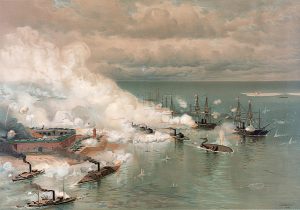
Image: Battle of Mobile Bay, by Louis Prang

What does Gilets jaunes mean?

Rumblings on the hustings, the corporate global economic order has Always been predicated on sacrificing the working class. Always:

It’s obvious now, however, that the new model not only weakened the fringes of the proletariat but society as a whole.The paradox is this is not a result of the failure of the globalised economic model but of its success. In recent decades, the French economy, like the European and US economies, has continued to create wealth. We are thus, on average, richer. The problem is at the same time unemployment, insecurity and poverty have also increased. The central question, therefore, is not whether a globalised economy is efficient, but what to do with this model when it fails to create and nurture a coherent society?

In France, as in all western countries, we have gone in a few decades from a system that economically, politically and culturally integrates the majority into an unequal society that, by creating ever more wealth, benefits only the already wealthy.

The change is not down to a conspiracy, a wish to cast aside the poor, but to a model where employment is increasingly polarised. This comes with a new social geography: employment and wealth have become more and more concentrated in the big cities. The deindustrialised regions, rural areas, small and medium-size towns are less and less dynamic. But it is in these places – in “peripheral France” (one could also talk of peripheral America or peripheral Britain) – that many working-class people live. Thus, for the first time, “workers” no longer live in areas where employment is created, giving rise to a social and cultural shock.

Switch out France périphérique for the Rust Belt. They are interchangeable, except that the former has not, as yet, voted straight fascist and retains the habit of taking to the street – as well as tearing up parts of it to throw at the police. It’s how different cultures tackle the same problem: the left-behindness, debt, low pay, high taxes, inequality, and ignorance upon which the limited successes of late capitalism depend. It’s certainly not pleasant, but people have long-understood this and attempted to warn us from the dragons – Dr. K, Joe Stiglitz, Thomas Piketty – nor it is unrelated to the bizarre vortex we’ve been documenting here for ten(!) years. And the Gilets jaunes are not solving this problem. But they are making us look, and we’re not even used to that.

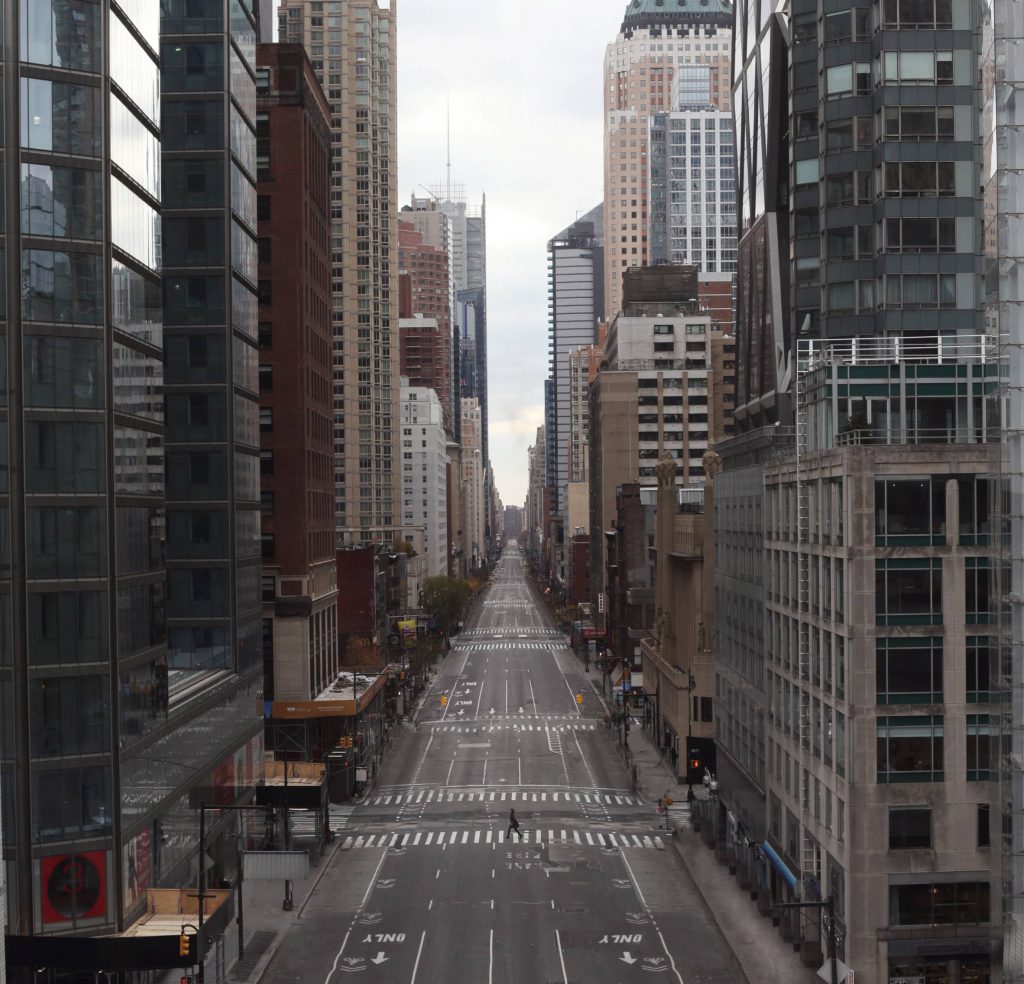
Image: Author photo of a different type of inundation, near Pont Neuf, 2016

Expensive solutions: having two drivetrains

While at first, this may appear to be an innocent discussion about plug-in hybrids versus straight electric vehicles, it turns out to be, you guessed it, a terrific metaphor:

Another challenge for automakers is that hybrids are relatively complicated, with widely varying ranges. Some can travel only on electrons, while others never do. Electric vehicles, meanwhile, can be measured on two simple metrics: miles per charge and price.

“It’s just a much more simple story,” said Tal at UC Davis. His team’s research has shown that people are far more ignorant about plug-in hybrids than fully electric vehicles. In general, he said, shoppers don’t spend much time deciding which car to buy—most effort goes into finding the best price for the model they’ve already set their mind on.
…
The death of the hybrid, while seemingly inevitable, may be a long and slow. A spike in gas prices in the next few years may even draw it out. “I can see them having a role until 2040,” Tal said. “But the problem will always be [that] it’s a more expensive solution having two drivetrains.”

We are absolutely lousy with other expensive-because-they-are-redundant solutions, and some (private schools, for-profit hospitals and health insurance) do triple the damage we can afford for the pain and pound of flesh they exact from the commonwealth. Reality shows seem cheap because [some]people think they don’t have/need writers. Roads and highways seem far more convenient that public transportation somehow, even at 0-miles-per-hour in rush hour that’s really two. Fb is free, see it doesn’t cost anything!

Hatred for irony remains an untapped and unfortunately renewable-into-infinity resource.