Always headed here

With a president suffering from main character syndrome coupled with a steadily deteriorating mental state,  so much ‘seems’ to be going on that keeping up with it in whole much less in part can itself feel maddening.

Two days ago, he gives a televised exposition of just how adrift he is, boxed in by an ill-considered military fiasco and hand-picked, grossly incompetent and corrupt underlings. Ardent, patriotic citizens try to keep up but mostly what’s on offer is the unwillingness to describe a massive, practically unimaginable strategic defeat.

In pondering what are we still wondering about, some well-framed context about some things we already know clicks a light bulb in a closet blocked behind an old armoire. It’s not reassuring but it is forward, and perhaps desperately needed correction against meaningless reassurances:

For more than a century, the political and moral imagination in much of the Persian ecumene was shaped by an urgent quest for alternatives to the pitilessly exploitative regimes of capitalist imperialism. For Gandhi, a historical experience that began in the late nineteenth century in South Africa made him see fascism and imperialism as inevitable features of capitalist states overdependent on violence—disguised and softened at home, extreme and explicit abroad. It was the fate of a later observer like Jalal Al-e-Ahmad, the twentieth-century novelist and essayist, to endure, while still analyzing, the insidiousness of neoimperialism: economic modernization under Western auspices that condemned postcolonial states to perpetual underdevelopment.

Given the religion-capitalism pairing that has defined the very essence of the American experiment since its inception (ask any Republican candidate for any office), it’s fair to ask whether we’ve always been headed here. Not karmically, though there is that; but just as a natural effect of the causes as they have hatched. Every other country and alliance has already figured out that dependence on the US is toxic to their national interests, while we try to make sense of the nonsensical. It feels sped-up, fast-forwarded, still a bit out front of our ability to conceive, believe. He is referred to as the American id. Maybe that’s it and this is all of the accumulated skullduggery, laid bare.

But I did learn a new word.
Artificial Everything

[Too] many conversations about encroaching technology and artificial everything – we should just call it that, as we have no real definition for intelligence, much less understand what it means – compel further examination. Let’s go in.

First off, let’s acknowledge a basic premise.

We’re edging along a process of abdicating our personal sovereignty by our own choosing. I can’t tell you not to install a front door camera and spy on your neighbors or not to let slopGPT be your therapist. But let’s at least acknowledge how much we submit to all of this voluntarily. It’s not the illusion of choice, but still actual choices that we make continually. All the while creeps a sort of helplessness about what is being done to us. It is imperative to maintain our wits at such a time – such as a time as may come, such a time as now.

It is necessary to demonstrate how modern imagination is captured – and defended. Among the multitude of familiar arguments on which to draw, public and private liberties, civic duty and overwhelming loss of self esteem among our fellow citizens compel a checklist on the rescue mission should one be required.

There is extraordinarily powerful hype and propaganda supporting the inevitability of artificial everything. The laziness of corporate media has made this so much easier; excellent at completing PR circles, not so very good or interested in explaining things, rewarded for the combination with diminished honor and loss of prestige. Though a quite visible slight of hand, effort to acknowledge this process reminds us that we remain far from powerless. The sheer vastness of all we’re not thinking about and discussing enough also require some work on our part, to investigate, to understand, but first just to care about. When we get to the place where this work is not optional – and hey, we like work. It’s one our fears about AE, that it will take work away from us –  we’ll be well on our way to better places. If you’re already there, congratulations. You’ve got plenty of work to do.

Image: Author photo of work on a wall.

Kicking over the tipping point

Dignity, restraint and action in a time of constitutional crisis. It’s amazing but, like the Steven Wright  joke where he realizes someone has been following him from in front, the Republican Party is re-enforcing community by galvanizing communities against it. And that for which it stands:

Within hours of taking office on Jan. 17, Spanberger signed an executive order that rescinded Youngkin’s order mandating that state agencies contract with ICE, but that alone left the agreements intact. She went a step further this week by actually pulling the plug and ordering four state agencies, including the state police and the Department of Corrections, to end their 287(g) agreements, terminating their role as force multipliers for federal immigration authorities.

“Virginians deserve to have their state and local law enforcement resources devoted to the safety and security of their communities, not federal civil immigration enforcement,” the governor said in her order. These agreements “improperly cede accountability and discretion over Virginia law enforcement to the federal government.”

That’s the result of people pressure. Forces of civil democracy aka you, me, and all of us. One neat trick to turn many disinterested and distracted people into pissed off voters. I have always detested irony but I’m willing to let this one slip.

Governors and lieutenants, secretaries of state, state attorneys general have always been important statewide races. Now they are critical. Let’s elect good ones. Find one, be one.

Of fulcrums and chasms

Given the very sleepy lead into 2025, despite the alarms blaring full bore, headwinds for clean energy seem to have roared to the forefront this year.

Tax credits expiring. Wind projects shelved or cancelled, often for extraordinarily petty reasons certainly consistent with the personality of leadership. Domestic US EV sales dipping.

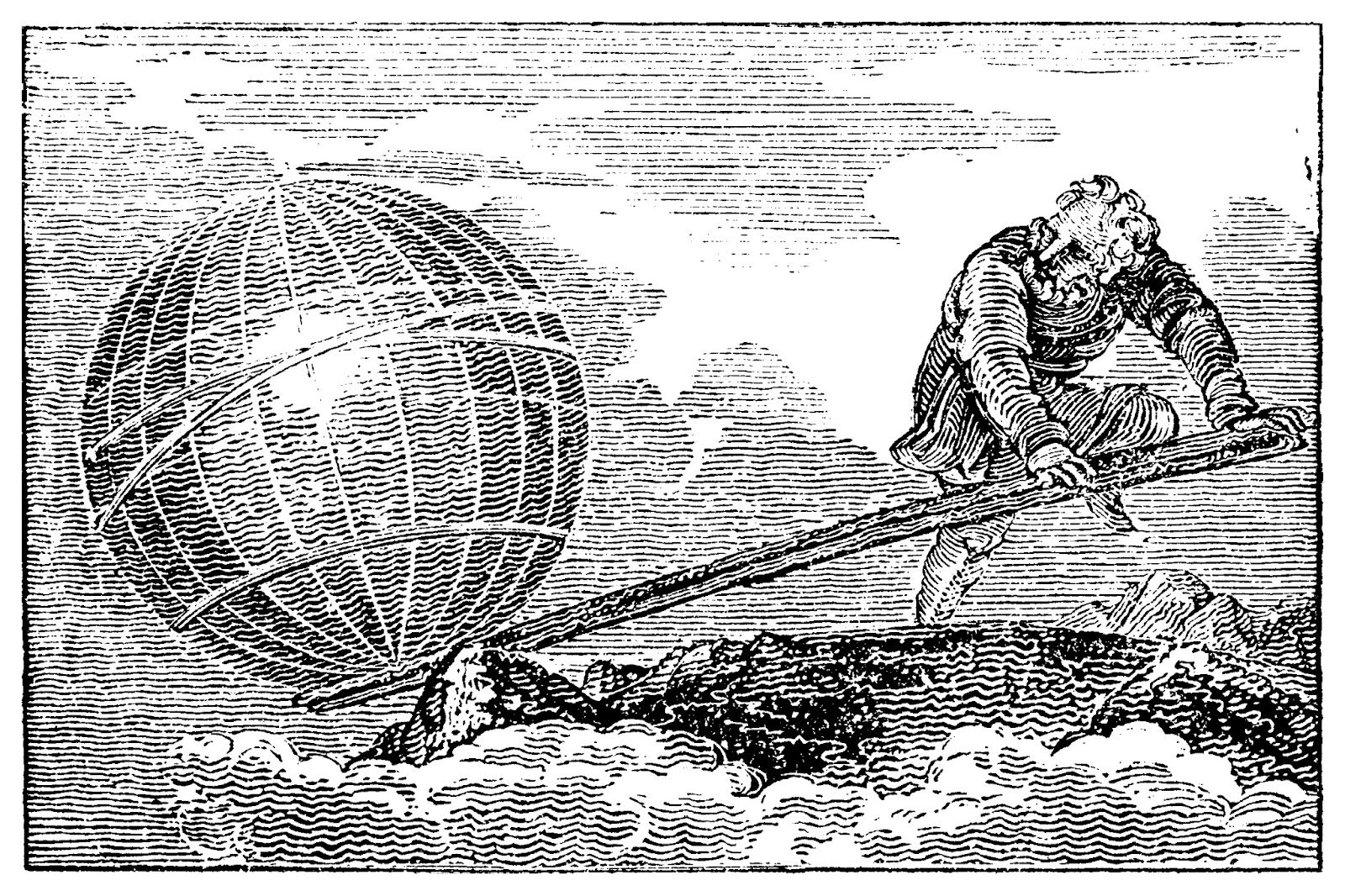
Despite the pettiness and short-sighted backwards-facing outlook, a cultural shift has been been leveraged into place. The ancient kind of leverage – with a rock and an iron bar:

“…as of the last three or four years, we finally have a tool, not at this point to stop global warming — it’s too late for that — but perhaps to at least shave some tenths of a degree off how hot the planet gets. And that tool is cheap energy from the sun and the wind and the batteries to store that power when the sun goes down or the wind drops. Alternative energy is the commonsense, obvious, straightforward way to make power on this planet, which is why 95 percent of new generating capacity around planet Earth last year came from these clean sources.

The authoritarian mindset –  which eschews progress on meaningful rights and resources for all in exchange for illusory safety from outside foes and forces – has always protected fossil fuel production by forgiving its destructive effects on people and planet in return for cheap energy. Another instant where the meaning of words carelessly cast aside returns for payment, with interest.

And now, that mindset is suspended over a chasm: destructive effects of global warming, coupled with cheap, clean energy increasingly available everywhere. Incompetent/compromised [let’s be honest] government is a distinct disadvantage. Can capitalism be saved?

Be neither depressed nor overly sanguine, as these were never the options. Instead, mock the laggards incessantly, especially your own. If you don’t know or feel unsure, find out. Use everything you have, make things. Row into the currents. Turn the beat around.

Image via

You knewESCO

UNESCO is the United Nations Educational, Scientific and Cultural Organization, a specialized agency of the United Nations with the aim of promoting world peace and security through international cooperation in education, arts, sciences and culture.

A sort of civilization interlocutor,  UNESCO helps set global norms and standards, develop tools for international cooperation, generate knowledge for public policies and build global networks of sites and institutions that reflect the world’s cultural and natural diversity of ‘outstanding universal value.’

So, for obvious reasons, the US is of course now withdrawing from UNESCO:

“Continued involvement in UNESCO is not in the national interest of the United States,” says Tammy Bruce, a spokesperson for the State Department, in the statement. Bruce asserts that UNESCO’s vote to admit Palestine as a full member in 2011 was “highly problematic” and “contributed to the proliferation of anti-Israel rhetoric within the organization.”

Audrey Azoulay, director general of UNESCO, denied the anti-Israel claims, arguing in a statement that they “contradict the reality of UNESCO’s efforts, particularly in the field of Holocaust education and the fight against antisemitism.”

“UNESCO has supported 85 countries in implementing tools and training teachers to educate students about the Holocaust and genocides, and to combat Holocaust denial and hate speech,” writes Azoulay, adding that the agency’s work has been “unanimously acclaimed” by leading Jewish organizations.

That’s according to the notoriously hot-headed Smithsonian Magazine.

Yes, all is political, everything. Must learn how to politics.

Instead, we choose to deal with highly complex political, scientific and cultural questions by magically making them simple and easy.  If only there was an international organization designed to serve as arbiter on such matters, rather than re-drawing them as cartoons stick figures.

Image: Credentials from my documentary film project a few years ago.

The Mountebanks Congregate

In the early-mid 2000s there existed an essential and amazing weblog called The Poorman. Its disappearance in the early teens was completely understandable, as these things go. But what happened to The Poorman? Who is and where is Andrew? I’m sure there are people who know. Yours is not one of those people.

However, among their truly too-numerous-to-count hilariously poignant bits of writing about the complete and utter moral corruption of the Bush II administration and the media super-structure that served as its lifeline at each and every turn was a very insightful post about the founding of this great nation and especially the writing of its constitution. I wish I could find it for you dear people, but alas the wayback machine does not provide all. And so, I will attempt to re-create its fundamental point here.

So, back in ye olden revolutionary and post-revolutionary times, about July to September 1787, committees of the Constitutional Convention hashed out drafts of said document in grand strokes and fine detail, style and arrangements by Hamilton, Madison et al. Per the Poorman’s apt telling, near the end of this period, say around the middle of August, the entire crew of slave-owning inspired statesmen reached a point where they were sure the document was finished. What needed to be codified in order for the young country to function and treat itself justly had been put down in as clear a language as possible, easy and simple for all to parse. They had done it. In a humbling, electric moment, tired yet buzzed with destiny, they gathered up their finished draft and went out from Independence Hall in Philadelphia to get some fresh air and ponder the reach of their elegant treatise.

In the glare of late morning, the exhausted but exhilarated committee members poured out onto the streets of Philadelphia. But when they saw their fellow countrymen on the streets, began talking to a few and listening to more and realized the depths of a flimflammery and skallywaggery already afoot in the young country, the collection of mountebanks, the depraved and ignorant if eloquent tip of the hateful and begrudging masses for whom their toil was meant to soigner, they turned heel and headed back inside. There was yet more work needed on the document of their dreams and duty, to assure the perpetual longevity of the country of people it was designed to protect from themselves.

So as an update to the mysterious and direly missed Poorman, the descendants of those people that ran the writers back into the Hall to perfect their document are now in charge of everything.

And re: Harvard – pour encourager les autres works both ways, MFs.

Chimurenga – who no know go know

Along with promoting some recent work, a new project is making clips from my Unscripted interviews available on social media. One of those we’ll get to eventually is with journalist and DJ Ntone Edjabe, founder and editor of Chimurenga, an innovative platform for free ideas and political reflection by Africans about Africa.

And this is one of the rare, correct uses of ‘innovative’ as an adjective. in newspaper form, the issues have a little of everything – poetry, photography, plays, terrific writing of all kinds and of course, news. However,  and I only started to understand this much later and not especially because of the times we are a’living in, Chimurenga’s journalism often presents news stories long after actual events. That is, rather than so-called breaking news – which honestly leaves us mostly flummoxed and discombobulated by its sheer volume (not to speak of those who work the sheer volume for their purposes, ahem) – Chimurenga presents news much later. Maybe more information has come available, maybe people still don’t understand a thing that happened… does this sound familiar?

It really changes the idea of news into information for action and understanding.

A sample of the excellent writing, in an article by saxophonist and composer Shabaka Hutchings:

In a lecture he gave on Afrofuturism, Kodwo Eshun used a phrase which resonated with me – “encoded language”. I believe there is an alternative vernacular present in both hip-hop and jazz which relates the two musics intrinsically, and which exists outside the orthodox analysis. This idea that music has layers of encoded information, passed down through generations, without explicit acknowledgement even from the participants, fascinates me. It speaks to the question of why certain elements of African musical stylings are propagated by the diaspora. Are there more stories within musical elements which survived the middle passage than we choose to admit? Are we in a position to grasp the meanings of these tales? Maybe the formulation of new myths is a valid way of approaching these questions, if only for the creative stimulus imagined answers can inspire.

Let us then try to explore the worlds of both jazz and hip-hop as vessels for an informational network outside the parameters of pre-packaged discourse. What happens when you take away the notion of harmonic movement in jazz as being central to its intrinsic meaning or the message the improvising soloist has to offer? What happens when you take the focus away from lyricism in hip-hop?

Yes, we could learn a thing or three – and wow do we need to. There’s so much more to all of this – and take that however you want. Chimurenga is supported by donations, if you are able. My interview with Edjabe is here.

Image: an issue of Chimurenga I keep in my office.


Evangelical A.I.

The SV pinheads just haven’t thought of that yet, but just wait. It’s going to be gross.

And while we all luxuriate in behavior modification and finding ways to excuse, forgive, or hide your glee, as the case may be, about all the destruction of systems and open bigotry being given full reign in this glorious moment, just a word: don’t be so quick to be quiet quitting your opposition to autocracy.

It’s great that we’ve gotten socialized to these terms – and to be clear, it’s not great and terms like that are garbage notions as much as anything. Not helpful or conducive to happiness.

Rather, it’s always in your interest to stand up for groups or people or a person under attack. Find a small thing to have courage about and build on it.

video: friends say.

Stunning-Kruger-incidence

This is perhaps over-determined, but how were we to know? Is it just the mildest coincidence that just when critical thinking skills are at their most needed, a mysterious and mostly useless tool is helping us file-down any remaining sharp points and edges?

A new paper from researchers at Microsoft and Carnegie Mellon University finds that as humans increasingly rely on generative AI in their work, they use less critical thinking, which can “result in the deterioration of cognitive faculties that ought to be preserved.”

“[A] key irony of automation is that by mechanising routine tasks and leaving exception-handling to the human user, you deprive the user of the routine opportunities to practice their judgement and strengthen their cognitive musculature, leaving them atrophied and unprepared when the exceptions do arise,” the researchers wrote.

I’m convinced that key ironies need to be mandatory elements of all strategic planning documents going forward, numerated AND annotated. Making dumb dumber and lazy lazier is sufficiently opportune that making us softer and doughier, paired nicely with a ’54 magnum of News You Can Trust and a much more recent vintage of doing your own research, births the inevitability of powerlessness. Aside from the button that releases the treats, of course.

The charge is that the hard work of cowing a populace to submit to not notice authoritarianism is far easier than imagined, and especially when people allow themselves to be confused about the difference between important things and trivialities.  When you’re not sure how to watch out for what you don’t know you need to watch out for, please note the lack of passive construct before proceeding.

Image: Discreet nose. Fruity. Smoke. Suave and rounded on the palate, almost sweet.