War o’clock

reverse osmosis. Desalination. The pressure water molecules seep through the semi-permeable membrane.

Stumbled is the word you’re looking for.

Don’t be shy about calling the administration incompetent, early and often. In point of barely disputed facts, calling them inept is being generous. Again, I remain in awe of just how much Trump is determined to cut carbon emissions. Inspiring if it wasn’t so deadly stupid. Rather than an entertainment show, government is boring and highly complex. Hire accordingly.

Meanwhile and on the subject of incompetence, massive industrial build out coupled with an extended drought has ‘leaders’ on the Texas coast hoping for a hurricane:

The imminent depletion of water supplies in Corpus Christi threatens to cut off the flow of jet fuel to Texas airports and other oil exports from one of the nation’s largest petroleum ports, triggering potential shockwaves through energy markets in Texas and beyond.

Without significant rainfall, Corpus Christi is headed for a “water emergency” within months and total depletion of the system next year, according to the city’s website. “The impacts are going to be felt tremendously through the state, if not internationally,” said Sean Strawbridge, former CEO of the Port of Corpus Christi Authority, the nation’s top port for crude oil exports, in a 40-minute interview Thursday. “This should be no surprise to anybody. We were talking about this over a decade ago.”

If using municipal water supplies for refineries and industry sounds familiar, it should. Take note, data and detention center targets. Everyone will get pulled is already engaged in these conflicts, some may not realize it yet. We definitely need more Texas Tribunes. What happened to newspapers, anyway?

Image: diagram for how desalination process. Not pictured – waste produced.

Artificial Everything

[Too] many conversations about encroaching technology and artificial everything – we should just call it that, as we have no real definition for intelligence, much less understand what it means – compel further examination. Let’s go in.

First off, let’s acknowledge a basic premise.

We’re edging along a process of abdicating our personal sovereignty by our own choosing. I can’t tell you not to install a front door camera and spy on your neighbors or not to let slopGPT be your therapist. But let’s at least acknowledge how much we submit to all of this voluntarily. It’s not the illusion of choice, but still actual choices that we make continually. All the while creeps a sort of helplessness about what is being done to us. It is imperative to maintain our wits at such a time – such as a time as may come, such a time as now.

It is necessary to demonstrate how modern imagination is captured – and defended. Among the multitude of familiar arguments on which to draw, public and private liberties, civic duty and overwhelming loss of self esteem among our fellow citizens compel a checklist on the rescue mission should one be required.

There is extraordinarily powerful hype and propaganda supporting the inevitability of artificial everything. The laziness of corporate media has made this so much easier; excellent at completing PR circles, not so very good or interested in explaining things, rewarded for the combination with diminished honor and loss of prestige. Though a quite visible slight of hand, effort to acknowledge this process reminds us that we remain far from powerless. The sheer vastness of all we’re not thinking about and discussing enough also require some work on our part, to investigate, to understand, but first just to care about. When we get to the place where this work is not optional – and hey, we like work. It’s one our fears about AE, that it will take work away from us –  we’ll be well on our way to better places. If you’re already there, congratulations. You’ve got plenty of work to do.

Image: Author photo of work on a wall.

The moral element

There are so many issues on which people can be or become confused about whether their choice stance is political, economic, or moral. The problem with the third in this sequence is that it makes the choice/stance much clearer on the first two than may be desirable or convenient.

Further, confusion about the rights of others that allows for a seeming choice where none exists creates space for degeneracy – bigotry, victimization, persecution, false equivalence – which turn into their own rationales for unfortunately familiar behavior. It’s sadly too easy to see why attacks on vulnerable people are wrong, so the convolution helps cover otherwise indefensible actions and positions, from anti-trans attacks all the way up to capitalism itself.

The fear that capitalism would be so much less forceful and thus successful with limits on its rapacious character is so embedded as to be dogma. It must always be fully unleashed to exist at all. We equate force with success, which inures to all the resulting destruction. Collateral damage hardly makes a dent as a concept anymore and it remains unclear whether that manifests from the inability to see outside of one’s own interests or the casual acceptance of casualties, whatever their nature. Either way, it’s quite the evolution. We have yet to grapple with the actual consequences of zero-sum, much less the reality that ‘externalities’ get less and less external the further on with this we go.

The concept of ‘easy solutions’ feeds misdirection from guardians of the status quo, no matter their futurist garb. Positive-sum deflates fascism and environmental catastrophe with great collaboration and distribution, and its tools sit idle, though ready. One of the new tricks taught by every old dog is that opposite of love is not hate, but indifference.

One need not be a philosopher or a socialist to recognize the moral character of our actions. No special training or knowledge is required, only courage.

Image: Symbol for the chemical element Beryllium; elements are amoral but Be is a divalent element that occurs naturally only in combination with other elements to form minerals. Just sayin’.

Kicking over the tipping point

Dignity, restraint and action in a time of constitutional crisis. It’s amazing but, like the Steven Wright  joke where he realizes someone has been following him from in front, the Republican Party is re-enforcing community by galvanizing communities against it. And that for which it stands:

Within hours of taking office on Jan. 17, Spanberger signed an executive order that rescinded Youngkin’s order mandating that state agencies contract with ICE, but that alone left the agreements intact. She went a step further this week by actually pulling the plug and ordering four state agencies, including the state police and the Department of Corrections, to end their 287(g) agreements, terminating their role as force multipliers for federal immigration authorities.

“Virginians deserve to have their state and local law enforcement resources devoted to the safety and security of their communities, not federal civil immigration enforcement,” the governor said in her order. These agreements “improperly cede accountability and discretion over Virginia law enforcement to the federal government.”

That’s the result of people pressure. Forces of civil democracy aka you, me, and all of us. One neat trick to turn many disinterested and distracted people into pissed off voters. I have always detested irony but I’m willing to let this one slip.

Governors and lieutenants, secretaries of state, state attorneys general have always been important statewide races. Now they are critical. Let’s elect good ones. Find one, be one.

About once in every 20 years

The inimitable John Doe, and Exene.

Will revisit this but as a history nerd lad I was rather affected by John Locke and the whole right to revolution thing:

the common Question will be made, Who shall be Judge whether the Prince or Legislative act contrary to their Trust? This, perhaps, ill affected and factious Men may spread amongst the People, when the Prince only makes use of his due Prerogative. To this I reply, The People shall be Judge; for who shall be Judge whether his Trustee or Deputy acts well, and according to the Trust reposed in him, but he who deputes him, and must, by having deputed him have still a Power to discard him, when he fails in his Trust? If this be reasonable in particular Cases of private Men, why should it be otherwise in that of the greatest moment; where the Welfare of Millions is concerned, and also where the evil, if not prevented, is greater, and the Redress very difficult, dear, and dangerous?

Of fulcrums and chasms

Given the very sleepy lead into 2025, despite the alarms blaring full bore, headwinds for clean energy seem to have roared to the forefront this year.

Tax credits expiring. Wind projects shelved or cancelled, often for extraordinarily petty reasons certainly consistent with the personality of leadership. Domestic US EV sales dipping.

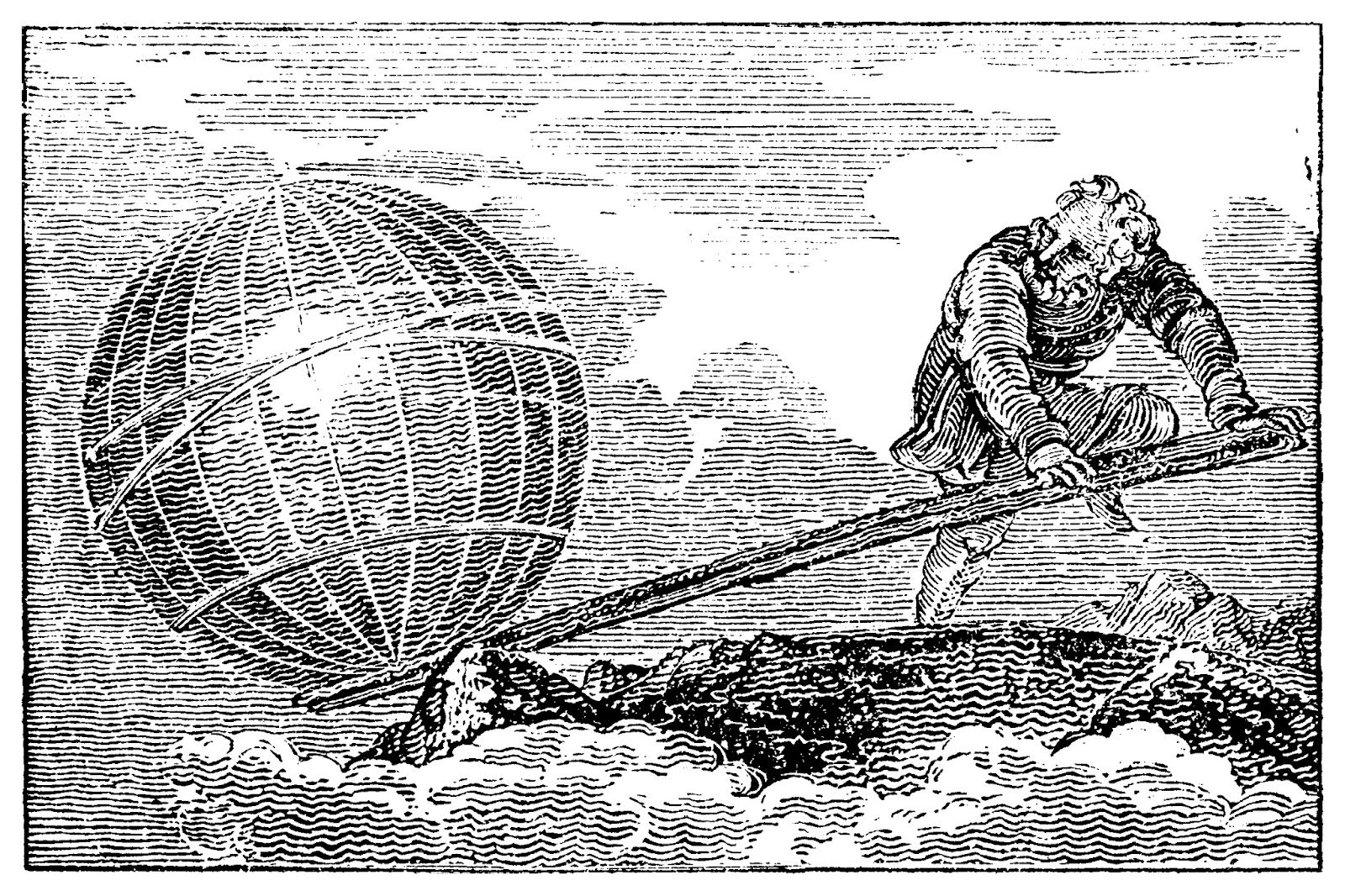
Despite the pettiness and short-sighted backwards-facing outlook, a cultural shift has been been leveraged into place. The ancient kind of leverage – with a rock and an iron bar:

“…as of the last three or four years, we finally have a tool, not at this point to stop global warming — it’s too late for that — but perhaps to at least shave some tenths of a degree off how hot the planet gets. And that tool is cheap energy from the sun and the wind and the batteries to store that power when the sun goes down or the wind drops. Alternative energy is the commonsense, obvious, straightforward way to make power on this planet, which is why 95 percent of new generating capacity around planet Earth last year came from these clean sources.

The authoritarian mindset –  which eschews progress on meaningful rights and resources for all in exchange for illusory safety from outside foes and forces – has always protected fossil fuel production by forgiving its destructive effects on people and planet in return for cheap energy. Another instant where the meaning of words carelessly cast aside returns for payment, with interest.

And now, that mindset is suspended over a chasm: destructive effects of global warming, coupled with cheap, clean energy increasingly available everywhere. Incompetent/compromised [let’s be honest] government is a distinct disadvantage. Can capitalism be saved?

Be neither depressed nor overly sanguine, as these were never the options. Instead, mock the laggards incessantly, especially your own. If you don’t know or feel unsure, find out. Use everything you have, make things. Row into the currents. Turn the beat around.

Image via

Sands through the hourglass

Or, Hey! You got pluralism in my diversity!

Hidden in plain, if at times dour, sight, an interview with Jill Lepore in CHE. She hits a couple of critical notes, per usual:

We’re in this appalling situation where civics education has a political balance that leans right, while the discussion of the diversity of the American past has a political balance that leans left. The problem with a civics education that leans right is that its version of the American past is inevitably going to be the story of the march of progress and prosperity and freedom. And the story that leans left is the story of atrocities and ongoing systematic inequalities. Both of those accounts of America are true, but neither of them is the entire truth. No child is equipped for life in a democracy if they are asked to receive either story as canonical.

One thing that really troubles me is that it’s now politically safe to talk about pluralism, but it is not politically safe to talk about diversity. Sure, those terms have different histories, and you could disambiguate them if you really wanted to, but ultimately they are kind of the same thing. I wish that civics initiatives would embrace the word “diversity” to depoliticize what they’re doing. And I wish that DEI programs that are still standing, of which I’m sure there are still some, would embrace the words “pluralism” and “civics.” There actually is a common project there. It’s possible to hold a common purpose across those different initiatives and to refuse to allow them to be politicized and demonized by the other side. To allow such a basic matter as what children learn in the third grade about their country to be determined by who’s won a seat in the Legislature in the last midterm election is outrageous. Those people should be ashamed of themselves.

[Narr: they are not ashamed of themselves]. And later, she suggests the reason people are unable to understand any common purpose beyond the accumulation of riches – which would lead to a downfall, except for the puny heights native to such  ambitions:

I teach at a university where the preponderance of our undergraduates go into finance, consulting, and tech jobs that they are recruited for almost the moment that they arrive in Cambridge, and whose time, instead of being devoted to academics, is devoted to securing positions in those industries. The pleasing of their parents, and the pleasing of those students, is the economic engine of the college and therefore of the university, in a way that I do not think is consistent with what a university is for. There are universities now that are creating centers for open inquiry. What is a university if not a center for open inquiry? Why would we need such a center? That anyone suggests such a center should raise a lot of eyebrows.

Successful marketing smears against the liberal arts notwithstanding, the underlying timidity about culture and civilization result in the increasingly inability to differentiate the real from the fake. It’s so complicated and new that people exchanged ideas on it using stone tablets. Adherents of classical learning become defensive  in conversations about earning potential, meanwhile West Point and the other three service academies continue to require philosophy, languages, history, and literature. Can you hold those competing notions in your head?

Just Fight

Trump Admin creative tactics to fight climate change, despite themselves.

See? It matters how news is contextualized.

Brazilian farmers were sure a Swedish-Finnish multinational was planting eucalyptus trees on public land. And they were right:

Surrounded by nearly 100,000 hectares (247,000 acres) of eucalyptus plantations, Baixa Verde is a rare example of a local victory over a multinational in Brazil. The rural settlement owes its existence to nearly two decades of legal battles over land rights – but the fight is not over yet.

After fighting to retain their land, the families now face an unprecedented security crisis marked by armed clashes, arson and death threats, part of a wave of violence driven by a land dispute that has escalated since 2024.

Conflicts over land rights have long been an issue in the region. Obtaining property titles is commonly deemed to legitimise land grabs from traditional communities, and local people had suspected that Veracel Celulose – a pulp-production company jointly owned by the Swedish-Finnish company Stora Enso and the giant Brazilian pulp manufacturer Suzano – was planting eucalyptus trees on public land.

In 2008, Ercilio Souza, one of the founders of the Baixa Verde settlement, and Juenildo Oliveira Farias visited government archives to review public documents. They found the page that proved the 1,300 hectares in dispute were owned by the government. “We always knew that it was public land,” says Souza.

With the document in hand, they assembled 91 local families and joined the Fight for Land Movement (MLT), a ​​political and social organisation fighting for agrarian reform. Its first action was to occupy an area of a eucalyptus plantation used by Veracel, accusing the company of using public land.

Stories like this one may quickly disappear but we should give them more credence, if not prominence (attaboy, Guardian). Rather than the binary – this is great/that is awful –take some time to unpack a story and understand its complexities as a throughway, as appropriate. Be critical. Withhold the benefit of the doubt until it is deserved.

Also, wtf, Swedish-Finnish conglomerate, get your act together.

Image: A eucalyptus plantation in Baixa Verde owned by Veracel Celulose.  Photograph: Sara Van Horn (Guardian)

Forward vs. Backwards

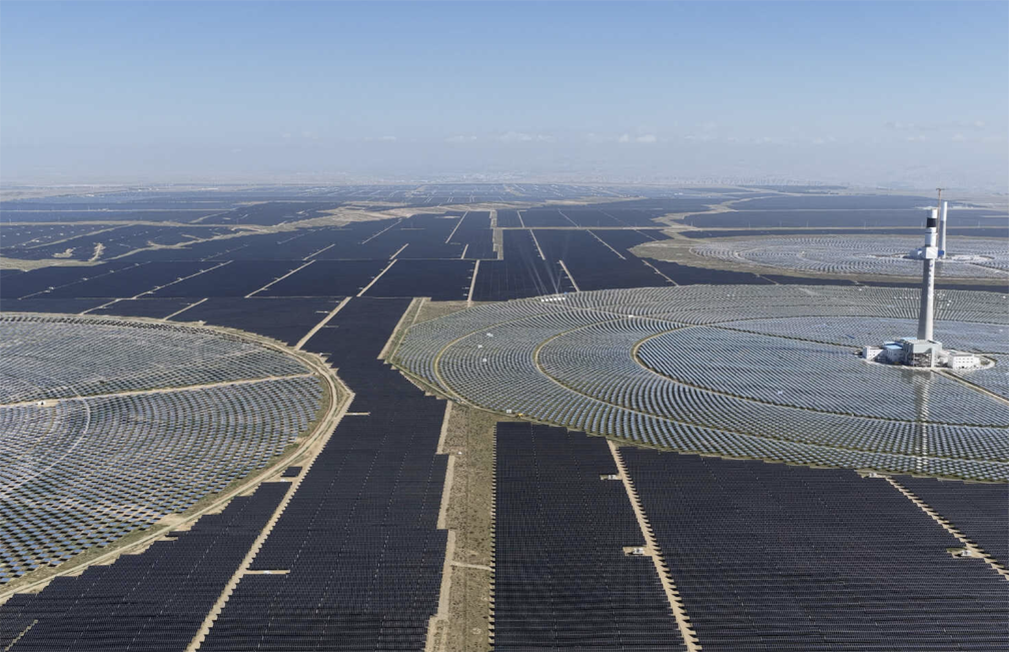
In the 2000 martial arts love story feature epic extravaganza Crouching Tiger, Hidden Dragon, the bandit/thief character Lo steals Yu Jialong’s comb during a raid, later letting her chasing him to a desert cave and across western deserts of Xinjiang where they eventually fall in love and then some. It’s great film for many other reasons that those but the point is, the film allowed us to see vast open spaces north of Tibet, in proximity to high-altitude plateau in the Qinghai region that China is now covering with renewable energy projects, and ‘covering’ is hardly a cromulent descriptor:

China’s clean energy efforts contrast with the ambitions of the United States under the Trump administration, which is using its diplomatic and economic muscle to pressure other countries to buy more American gas, oil and coal. China is investing in cheaper solar and wind technology, along with batteries and electric vehicles, with the aim of becoming the world’s supplier of renewable energy and the products that rely on it.
The main group of solar farms, known as the Talatan Solar Park, dwarfs every other cluster of solar farms in the world. It covers 162 square miles in Gonghe County, an alpine desert in sparsely inhabited Qinghai, a province in western China.
No other country on the planet is using high altitudes for solar, wind and hydropower on a scale as great as China’s on the Tibetan Plateau. The effort is a case study of how China has come to dominate the future of clean energy. With the help of substantial government-directed investment and planning, electricity companies are weaning the country off imported oil, natural gas and coal — a national priority.
Renewable energy helps China power 30,000 miles of high-speed train routes and its growing fleet of electric cars. At the same time, cheap electricity enables China to manufacture even more solar panels, which dominate global markets and power artificial intelligence data centers.
Electricity from solar and wind power in Qinghai, which occupies the northern third of the Tibetan Plateau, costs about 40 percent less than coal-fired power. Qinghai encompasses most of a region known among Tibetans as Amdo and includes the birthplace of the current Dalai Lama, now in exile.
Times link, and I’ll only add the article is predicated on ‘why’ China is doing this. And I do wonder why regarding a couple of things, but not that.
Image: NYT video

Fake intelligence not intelligent

Similar to the junk science being peddled at present to torture parents blame autism on Tylenol, as in it would be a terrible and cruel metaphor except that it’s actually happening.

Transpose that idiocy (generous interpretation) onto a much larger scale and you have the new dance craze known as AI. Well, the media is dancing, nonstop.

You can follow the money, and it just doesn’t make sense.

Check out the imagery, actually do not do that. It started as slop and it’s getting worse.

But science!, one might say. Surely, there are infinite uses! And there may be some for data set analyses on a massive scale – finding exoplanets and folding proteins. And yet, if we return to the most commonly propagated use case and raisin debt of the whole of the monstrous waste of natural resources as well as cash, it’s fake, broken turtles all the way down:

Gu and his team asked OpenAI’s ChatGPT, running on the GPT-4o model, questions based on information from 21 retracted papers on medical imaging. The chatbot’s answers referenced retracted papers in five cases but advised caution in only three. While it cited non-retracted papers for other questions, the authors note it may not have recognized the retraction status of the articles. In a study from August, a different group of researchers used ChatGPT-4o mini to evaluate the quality of 217 retracted and low-quality papers from different scientific fields; they found that none of the chatbot’s responses mentioned retractions or other concerns. (No similar studies have been released on GPT-5, which came out this August.)

The public uses AI chatbots to ask for medical advice and diagnose health conditions. Students and scientists increasingly use science-focused AI toolsto review existing scientific literature and summarize papers. That kind of usage is likely to increase. The US National Science Foundation, for instance, invested $75 million in building AI models for science research this August.

“If [a tool is] facing the general public, then using retraction as a kind of quality indicator is very important,” says Yuanxi Fu, an information science researcher at the University of Illinois Urbana-Champaign. There’s “kind of an agreement that retracted papers have been struck off the record of science,” she says, “and the people who are outside of science—they should be warned that these are retracted papers.” OpenAI did not provide a response to a request for comment about the paper results.

Quality indicators. Inventing a need for things the new thing said would no longer be necessary. Truly the wave of the future.

Be skeptical. Don’t abandon the ability to discern just yet.