4th Quarter Taco Bell Salute to the Troops

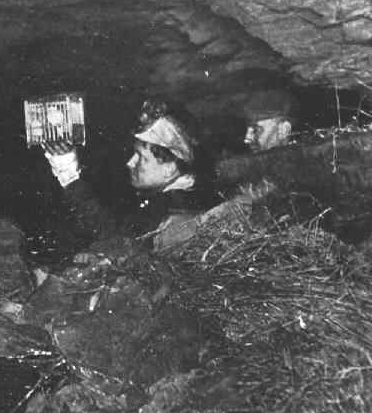
Colorado Soldiers Return HomeThe disconnect between American military and civilian life are only growing, and with it, an expanding impatience for the use of patriotism as a feel-good marketing tool. This earlier Atlantic piece by James Fallows about how we treat members of the armed forces set the stage; now comes Pierce with a specific bone to pick with our beloved NFL:

Propaganda is a messy business. We like to think of ourselves as the shrewdest of consumers, but we can be the biggest rubes who ever sat around the cracker barrel. We like to think we can tell truth from fiction, but we are still the country of the patent medicine salesman, the loaded dice, the Ponzi scheme, and the rigged wheel. It is in this country that Mark Twain placed Hadleyburg and reported about amazing jumping frogs. We are not now, nor have we ever been, the hardest mark in the room. The world can see us coming a mile off.

At the same time, our hackles go to DEFCON 1 whenever anyone intimates that we might sell our birthright for a bag of magic beans. This is particularly true when it comes to the government and our sports-entertainment-industrial complex. We demand the right to choose the people we allow to swindle us, and our politicians and our athletes are not on the list. We look on every government initiative as though it were aimed directly at our wallets. We look on our spectacle sports as the outward manifestations of dark, witchy forces that arrange strange outcomes and rig lotteries. These are the two most target-rich environments for conspiracy theories for a reason.

If there’s one thing we don’t like, it’s being called out. If there’s one thing we shouldn’t stand for, it is the military being used for anything beyond the purpose for which it exists. And before it happens (right), eliding this as any kind of ‘attack on our people in uniform’ is just the worst the kind of skullduggery, and/or roofing material upon the last refuge of scoundrels. And probably both. Just stop it.

Ode to a series

Any thinking person’s loathing of advertising must, by definition, equal respect for the perfect ending of Madmen.

jon-hamm-mad-men-series-finale

No exegesis here (see Edroso for that) but from a writer’s standpoint, choosing his conception of the most famous and well-known of products and advertising campaigns as the Don’s portal back to his life and career was as inspired as it is confirmation of the campaign’s emptiness. As a stand-in for all advertising, it’s a savage send-up. Nicely done, Mr. Weiner.

Related.

Where you live: the best places

They’re such a big target – and everyone who reads them knows how easy it is hit the logical lunacy of columns by Tom Friedman, David Brooks, and Maureen Dowd, among others. But this New York Times interactive feature on the best and worst places to grow up also leaves a bit to be desired.

Where to live

I don’t think its fact are wrong, per se; indeed they quite accurate, I’m sure. It’s just that there is far more to the story, which assumes that everyone is only living to earn as much as possible. Certainly, many people are. But do we have to cater every possible thought and thought process toward them? What if you are living to become the best person you can? Or to help make your community a vibrant, welcoming place? To use less energy? To achieve some kind of work-life-family balance? There are a whole host of reasons to live any place, and they can’t be completely disentangled.

Also, for counties where there is extremely bad income mobility for children in poor families, the accompanying text boldly suggests that families should move to a better, adjoining county. There are so many reasons that this would be a terrible idea in many cases that it undermines that case for the entire (and exhaustively robust) info graphic in the first place. That’s the take away? To move? What about the other factors that would surely follow? Besides the obvious impossibilities that would come into play for most people – this is akin to advice that, if your job doesn’t pay well enough, just get another, better paying job – the array of other impacts, less diversity, no public transportation, less nightlife and restaurants, driving (if applicable) back from the terrible place you lived where there was more going on after a few drinks to your Shangra-la out in the (gated, even) sticks, more TV watching, fewer neighbors… the whole thing becomes absurd when imagined within these all-too-likely outcomes.

It is great to acknowledge (and visualize) societal problems. But let’s don’t get too secure in the availability of easy answers.

Risk Denial

I know: EmPHAsis strikes again. But this is actually about the evolutionary arc of how climate change has been considered, the cost-benefit analysis it began with, and what’s left of that once the waters begin to rise:

“In the era before the Stern Review,” say Frank Ackerman and Elizabeth Stanton, “economic models of climate change were typically framed as cost-benefit analyses.” This framing has been preeminently exemplified by Nordhaus. Although he called global warming “the major environmental challenge of the modern age,” he did not express a sense of urgency about it. In his 2008 book, he said: “Neither extreme – either do nothing or stop global warming in its tracks – is a sensible course of action.” The central question, Nordhaus said, was: “How to balance costs and benefits.”

One especially startling statement came in a discussion about the sea-level rise that would be caused by the melting of the Greenland and Antarctic ice sheets: “Although it is difficult to envision the ecological and societal consequences of the melting of these ice sheets,” Nordhaus said, “this situation is clearly highly undesirable and should be avoided unless prevention is ruinously expensive.” It is startling to suggest that, if we find avoiding the melting of these ice sheets “ruinously expensive,” we should just let them melt.

Although Nordhaus has not been guilty of science denial – indeed, he has publically debated with deniers – his analysis, Stanton, Ackerman, and Ramón Bueno, have written, “could be called risk denial – accepting a (very optimistic) picture of the most likely climate outcomes, but paying little or no attention to worst-case risks.” This risk denial is dangerous, they said, because “[w]hen climate economists – and the policy makers they advise – fail to understand the well-established findings of climate science, the result is likely to be too little emission reduction, too late.”

Stern’s 2013 writings expressed a very different picture of what climate economists should be doing. Although the Review had already said that the “economics of risk” should be made central, his new writings put even more focus on it, saying that economists must present climate change as “a problem of risk management on an immense scale,” which most economists had not done.

What that becomes once it is done will be a further contortion into nuance, most likely. But insurance – the practice of risk management – will bring an important economic force to bear on the consequences of climate change, which will have at least as much power on the concept of denial as the fossil fuel industry. Will it be decisive?

D/B/A SIFIs

Tubman_20With some ferocity, I usually resist the impulse to delve into matters financial. But this Dr. K item on GE Capital seems both clear-cut and easy-to-understand:

Most economists, I think, believe that the rise of shadow banking had less to do with real advantages of such nonbank banks than it did with regulatory arbitrage — that is, institutions like GE Capital were all about exploiting the lack of adequate oversight. And the general view is that the 2008 crisis came about largely because regulatory evasion had reached the point where an old-fashioned wave of bank runs, albeit wearing somewhat different clothes, was once again possible.

So Dodd-Frank tries to fix the bad incentives by subjecting systemically important financial institutions — SIFIs — to greater oversight, higher capital and liquidity requirements, etc.. And sure enough, what GE is in effect saying is that if we have to compete on a level playing field, if we can’t play the moral hazard game, it’s not worth being in this business. That’s a clear demonstration that reform is having a real effect.

Bold is mine, because this is key, both to Dodd-Frank and what largely works for business in the U.S. today at the behemoth level. Orwellian language about fairness and tax burdens and putting America to work [again] is just that – all myth. The megacorps want every tactical advantage to operate as alpha predators, forcing all non-megacorp entities to use language like this to accurately describe their actions. It’s win-win, and very savvy of them. Terrible for everyone/thing else. But his little crack of light – an admission that they can’t play if those are the rules is telling, so let’s listen.

Image: will we put American heroine Harriet Tubman on the $20 bill?

On tomorrow’s Anniversary

Early morning, April 4, 1968, a shot rings out in a Memphis sky.

From Garry Wills’ monumental essay:

It is interesting to contrast him with another preacher’s son—James Baldwin. Baldwin became a boy preacher himself as a way of getting out into the secular world. King became a student as a way of getting into a larger world of religion, where the term “preacher” would not be a reproach. He needed a weightiness in his work which only that “Doctor” could give him. He needed it for personal reasons—yes, he had all along aspired to be “De Lawd”—and in order to make Southern religion relevant. That is why King was at the center of it all: he was after dignity, which is the whole point of the Negro rebellion. His talent, his abilities as a “quick study,” his versatility, his years studying philosophy and theology (for which he had no real natural bent) were means of achieving power. His books and degrees were all tools, all weapons. He had to put that “Doctor” before his name in order to win a “Mister” for every Southern Negro. They understood that. They rejoiced in his dignities as theirs. The Nobel Prize didn’t matter except as it helped them. As T.O. Jones put it, “There can never be another leader we’ll have the feeling for that we had for him.”

All’s Fare in Love and Mass Transit

126th-anniversary-eiffel-towerIn honor of today’s Google doodle of the anniversary of the Eiffel Tower, a word from the fair city – more than a mot, several in fact, on encouraging more transit use and social integration:

What if it were possible to travel as much as you’d like by train or bus within Connecticut, from Stamford to New Haven, Hartford, New London, Waterbury, Danbury, Putnam, and hundreds of other towns, and then to travel within them, all on one transit fare card at the monthly price of just $76?

That’s what, in essence, will occur beginning in September in Île-de-France, the region that surrounds and includes Paris and which is practically the physical size of Connecticut—albeit far more populous and benefiting from a far more extensive transit system.

The plan is to eliminate the current five-zone transit fare system for people holding weekly or monthly passes and replace them with a universal, unlimited fare. The universal card will apply to virtually all transit services within Île-de-France, which is the most populous region in France, with 12 million inhabitants spread over 4,638 square miles (for comparison, the city of Paris proper has 2.3 million residents in 41 square miles, and New York City, which has a universal fare card for Subways and buses, is 305 square miles).

Meanwhile, back at the front… of moving forward with big ideas that help people and planet. Nearer the rear, let’s make sure we continue to wage the battle on whether high speed rail makes sense and against climate scientists lining their pockets with melting glaciers.

The RASP Act

I tried to joke about this (R-A-S-P-E-C-T), but it’s really just pathetic:

OrwellLawmakers from at least four states have introduced model legislation from the right-wing group Americans for Prosperity (AFP) seeking to prohibit state funding for the Environmental Protection A

gency’s efforts to fight climate change.

On Thursday, Missouri state lawmaker Tim Remole introduced a resolution mimicking the text of AFP’s Reliable, Affordable and Safe Power (RASP) Act. Remole’s resolution “seeks to prohibit state agencies from using state money to implement EPA rules and guidelines,” specifically the EPA’s efforts to limit carbon dioxide emissions from power plants.

Nearly identical resolutions have also been introduced in Florida, Virginia, and South Carolina in 2015. Each one says the proposed limits on carbon emissions from power plants “will not measurably alter any impacts of climate change,” “conflicts with a literal reading of the law,” and would “effectively amount to a federal takeover of the electricity system of the United States.”

Why are people so intent on making Orwell look like some kind of naive piker? We’re talking working nights and weekends to make it happen. If we just call it this, then it will be fine? Alternatively, if we ban people from using these words, we can be confident that none of it is happening? People! The man wrote about this more than sixty years ago.

Model legislation indeed.


Engineering Catastrophe

I don’t know – you pick whether it’s a noun or verb. The effects are horrible either way:

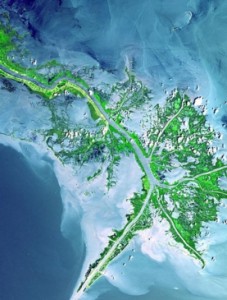
Tar-MatMillions of gallons of oil flooded the Gulf of Mexico every day — for 87 days. The biggest accidental oil spill ever. Five years later the effects of the Deepwater Horizon blowout still endure

A new study confirms a massive undersea oil mat near the unlucky oil well — Macondo 252 — that blew on April 20th, 2010. Considering this tar mat is the size of Rhode Island, the Gulf is clearly still feeling the af

fects of the catastrophe five years on. Gulf sea turtles stranding more frequently, dolphins killed, observed oil slicks hundreds of kilometers in length after the well was “capped” — a depressing list of unknown length.

Will it ever be possible to safely drill oil wells 35,000 feet into the seafloor through 4,000 feet of water from a unanchored floating 32,000 ton oil rig? You’ve got to hand it to the oil companies, the engineering is ambitious. But given the demonstrated risks to our greater resources, will it ever make sense?

Rhode Island. A tar mat the size of Rhode Island. Should there be drilling of more wells, as described above? Is further evidence needed? If you were attempt, for whatever reasons, to remain unemotional about this and look only at the evidence and reach a decision – including evidence of how you arrived at work this morning – what would the decision be? Asking for a friend.

Do Whales Need Ice?

It’s not a trick question, though at first the proposition can seem off-putting, if not unrelated. In the Chukchi Sea and the adjacent Beaufort Sea, off Arctic Alaska, bowhead, beluga, and grey whales are commonly spotted, while fin whales, minkes, humpbacks, killer whales, and narwhals are all venturing into these seas ever more often as the Arctic and its waters continue to warm rapidly.  Sounds harmless, rightbelugachukchi_small?

The problem, however, is that the major oil company Royal Dutch Shell wants to drill in the Chukchi Sea this summer and that could, in the long term, spell doom for one of the last great, relatively untouched oceanic environments on the planet. Let me explain why Shell’s drilling ambitions are so dangerous. Just think of the way the blowout of one drilling platform, BP’s Deepwater Horizon, devastated the Gulf of Mexico. Now, imagine the same thing happening without any clean-up help in sight.

You might have heard about “the sixth extinction,” the way at this moment species are blinking off at a historically unprecedented rate. The Arctic seas of Alaska, however, still are sanctuaries not only for tens of thousands of whales, but also hundreds of thousands of walruses and seals, millions of birds, thousands of polar bears, and innumerable fish from more than one hundred species, not to mention all the uncharismatic sub-sea life that eludes our eyes but makes up the food web — phytoplankton, sea urchins, sand dollars, and sea cucumbers, to name only a few. Think of the Arctic Ocean as among the last remaining marine ecological paradises on the planet.

Sometimes the question is not, ‘When will we learn?’ but ‘Will we learn?’ From the looks of current thinking on public education, the trends are not encouraging.