
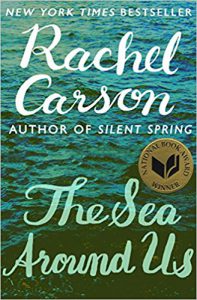
Jill Lepore’s New Yorker article on the great Rachel Carson is amazing, inspiring, and confirms the three intellectual giants of the twentieth century:
Shawn called her at home to tell her that he’d finishing reading and that the book was “a brilliant achievement.” He said, “You have made it literature, full of beauty and loveliness and depth of feeling.” Carson, who had been quite unsure she’d survive to finish writing the book, was sure, for the first time, that the book was going to do in the world what she’d wanted it to do. She hung up the phone, put Roger to bed, picked up her cat, and burst into tears, collapsing with relief.
“Silent Spring” appeared in The New Yorker, in three parts, in June, 1962, and as a book, published by Houghton Mifflin, in September. Everything is connected to everything else, she showed. “We poison the caddis flies in a stream and the salmon runs dwindle and die,” Carson wrote:
We poison the gnats in a lake and the poison travels from link to link of the food chain and soon the birds of the lake margins become its victims. We spray our elms and the following springs are silent of robin song, not because we sprayed the robins directly but because the poison traveled, step by step, through the now familiar elm-leaf-earthworm cycle. These are matters of record, observable, part of the visible world around us. They reflect the web of life—or death—that scientists know as ecology.
Its force was felt immediately. Readers wrote to share their own stories. “I can go into the feed stores here and buy, without giving any reason, enough poison to do away with all the people in Oregon,” one gardener wrote. They began calling members of Congress. E. B. White wrote to Carson, declaring the pieces to be “the most valuable articles the magazine had ever published.” At a press conference at the White House on August 29th, a reporter asked President Kennedy whether his Administration intended to investigate the long-range side effects of DDT and other pesticides. “Yes,” he answered. “I know that they already are, I think particularly, of course, since Miss Carson’s book.”
Which itself brings to mind (my recollection of) Abraham Lincoln’s words when he met Harriet Beecher Stowe: “So you’re the little woman who wrote the book that made this great war!”
But back to the 20th century giants, Jane Jacobs:
So perhaps now, on the 100th anniversary of her birth [2016], we should all be asking: what is it that Jane Jacobs made us want to see in the city?
Thinking about this question leads me to focus on the conditions that make a metropolis – the enormous diversity of workers, their living and work spaces, the multiple sub-economies involved. Many of these are now seen as irrelevant to the global city, or belonging to another era. But a close look, as encouraged by Jacobs, shows us this is wrong.
She would ask us to look at the consequences of these sub-economies for the city – for its people, its neighbourhoods, and the visual orders involved. She would ask us to consider all the other economies and spaces impacted by the massive gentrifications of the modern city – not least, the resultant displacements of modest households and profit-making, neighbourhood firms.
How do we see those aspects that are typically rendered invisible by modern narratives of development and urban competitiveness? In the early 1900s, the city was a lens for understanding larger processes – but half a century later, it had lost that role. It was Jane Jacobs who taught us again to view the city in a deeper, more complex way.
She helped us re-emphasise dimensions that were usually excluded – no, expelled – from general analyses of the urban economy. Indeed, I can imagine she would have affirmed without a quiver of doubt that, no matter how electronic and global the city might one day become, it still has to be “made” – and therein lies the importance of place.
And of course, Hannah Arendt
There is almost no politics in “Origins” beyond the decisions and processes that eventuated in total domination. It is a dark book, written in a dark time and reflecting on the darkest moment of modern European (and arguably world) history. But it is not without hope. In her preface, Arendt envisions a new form of transnational governance, insisting that “human dignity needs a new guarantee which can be found only in a new political principle, in a new law on earth, whose validity this time must comprehend the whole of humanity while its powerful must remain strictly limited, rooted in and controlled by newly established territorial entities.” And in her conclusion she insists that there is always the possibility of renewal: “But there remains also the truth that every end in history also contains a new beginning; this beginning is the promise, the only ‘message’ which the end can ever produce. Beginning, before it becomes a historical event, is the supreme capacity of man; politically, it is identical with man’s freedom . . . This beginning is guaranteed by each new birth; it is indeed every man.”
In her subsequent work, Arendt reflected at length about the revival of a politics of human dignity, autonomy and active citizenship. While she was highly critical of the depoliticizing tendencies of modern liberal individualism, she was a strong believer in the rule of law and in the importance of constitutional and extraconstitutional restraints on political power. This is most clear in her 1972 “Crises of Republic,” collecting four essays written in the midst of the legitimacy crises associated with the Vietnam War, the rise of the New Left and Black Power movements, and the deceit and authoritarianism of the Nixon administration.
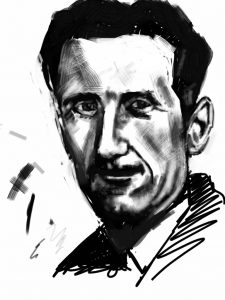
What other major figures might outflank them in impact and vital importance to the world as it was then, and as it is now? Russell? Derrida? Keynes? Orwell? It’s not even close. To be continued, hopefully.
 You can imagine, outside any pull of nostalgia, a time when the internet was just a novelty. Before companies began to dream about monetizing our personal data. Before political campaigns began to mine that data for habits and proclivities, before our vulnerability to having weaponized popularity used against us (if only for a few minutes)… you had, what? Techno-utopianism is perhaps the saddest kind: dry, unfulfilling, obviously not harmless. But the gamed-out essence of online anonymity maxed into inflated presence with no actual power behind it beyond its allure brags a special brand of nerdy cache. With computer technology we began trading in a kind of currency we had never considered before we were already doing so. That’s why it was new but felt so familiar.

 Hilarity ensues as the Trump ministration launches a trial balloon for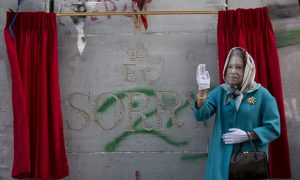
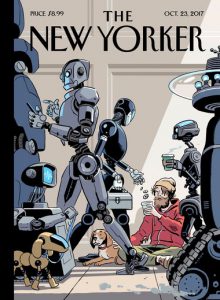
 So fB is headed for a showdown with the Mueller investigation, or at least the inauguration of a new transparency czar for the
 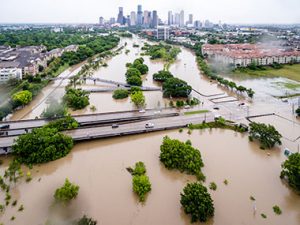 Include our brains. This report about Houston from last year outlines how unchecked development remains a priority in the famously un-zoned city, creating short-term economic gains for some while